
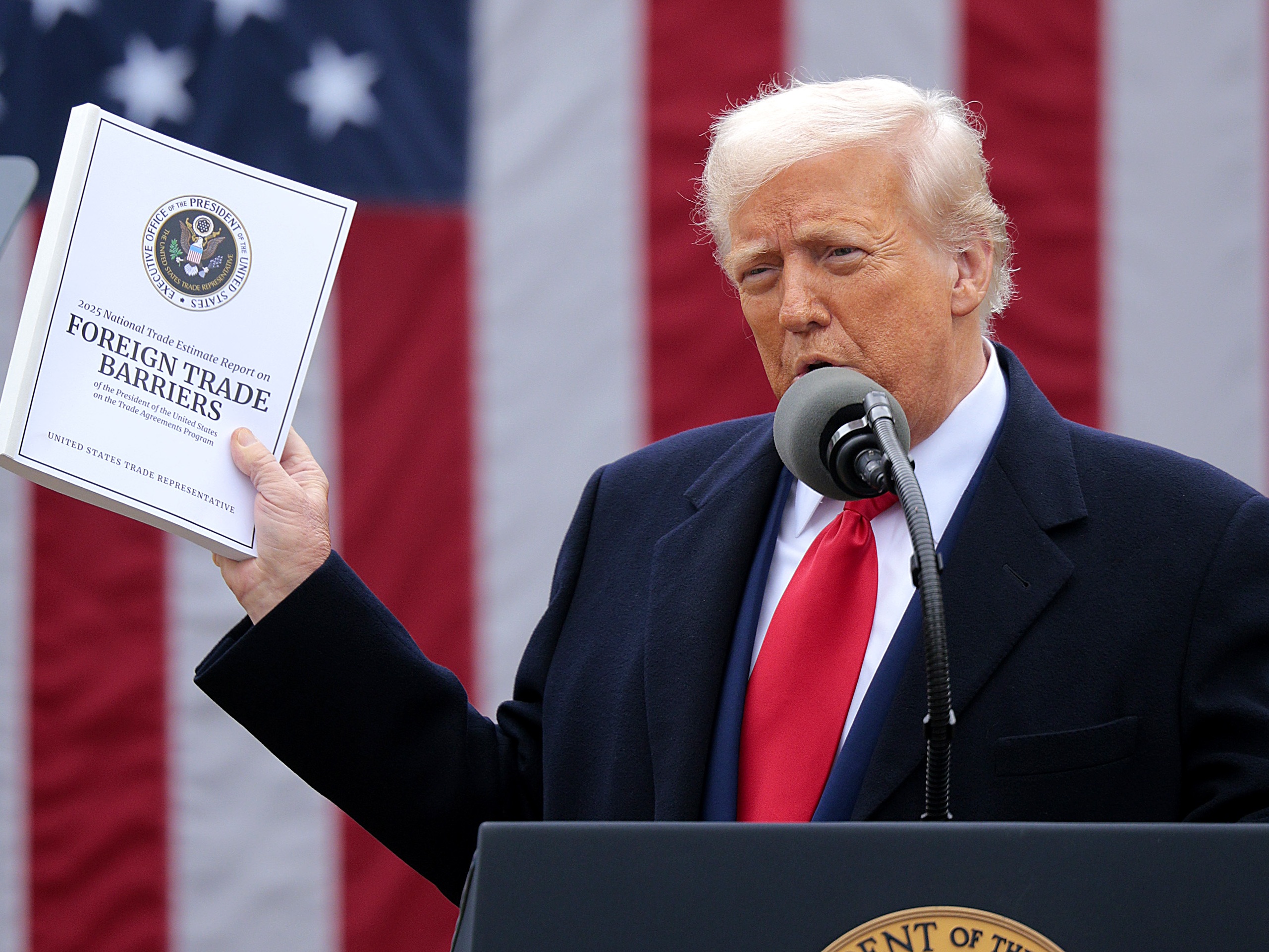
A US federal appeals court has ruled that most of the tariffs imposed by President Donald Trump were illegal and exceeded his presidential powers. The decision, made in a 7-4 vote by the US Court of Appeals for the Federal Circuit, rejected Trump’s argument that the tariffs were justified under the International Emergency Economic Powers Act (IEEPA).
The court determined that the IEEPA does not give the president the authority to impose tariffs, calling the levies “invalid as contrary to law.” The judges emphasized that setting tariffs is a power reserved for Congress, noting that the 1977 law was not intended to give presidents unlimited control over trade policy.
The ruling impacts Trump’s “reciprocal” tariffs, which applied to many countries globally, as well as tariffs on China, Mexico, and Canada. However, it does not affect tariffs imposed under other authorities, such as those on steel and aluminum.
This decision follows lawsuits from small businesses and US states challenging the tariffs, which were imposed after Trump’s 2024 executive orders set a baseline 10% tariff on most countries and additional reciprocal tariffs. A previous ruling by the New York-based Court of International Trade had declared the tariffs unlawful, but that ruling was put on hold pending appeal.
Trump criticized the ruling on his Truth Social platform, calling the court “highly partisan” and warning that removing the tariffs would “literally destroy the United States of America.” He argued that the tariffs were crucial for economic strength and national security.
Lawyers for the administration had warned that overturning the tariffs could lead to a financial collapse similar to the 1929 stock market crash, claiming the levies were essential to protecting US security and foreign policy interests.
The ruling, which will take effect on October 14 unless overturned, is expected to be appealed to the US Supreme Court. This case could become a significant test of presidential powers, especially as the Supreme Court has increasingly struck down broad executive actions not explicitly authorized by Congress. With six of the nine justices appointed by Republicans, including three by Trump, the court’s eventual stance could redefine the limits of presidential authority on trade.


