
Alphonsus Inyang, is the President of the National Palm Produce Association of Nigeria (NPPAN). In this interview with SEYI TAIWO-OGUNTUASE, he speaks on how Nigeria can transform its economy through strategic investment in tree crops; especially oil palm. He also speaks on the challenges of smuggling, insecurity, and weak policy coordination, while urging government to establish a dedicated Tree Crop Development Council, among other salient issues. Excerpts:
You talked about how the oil palm industry can generate N23 trillion if 2.5 million households are empowered with 150 palm trees each in their homestead. You also mentioned the N200 trillion tree plantation initiative. Can you expand on this?
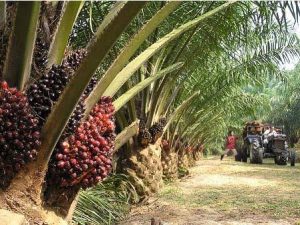
The oil palm is a tree of life, and every part of it is useful—the leaves, fronds, fibers, wastewater, fruit bunches, and even the tree itself. It has applications in the energy sector, food, industry, chemicals, and many other sectors.
Take ethanol, for example. Nigeria is a net importer of ethanol, spending billions of dollars annually. Yet the sap of the palm tree—when you cut it and liquid flows out—is ethanol. What are we doing about it? Nothing. We are wasting it away. Even the wild palm trees in Nigeria today are worth billions of dollars.
Every part of the palm tree has economic value. It is internationally traded, not just for local consumption. This is why I talk about empowering 2.5 million households with planting material—150 hybrid seedlings each. Families will not need to buy new farmland. They can plant in their homestead, along boundaries, in small farms, and in their neighborhoods.
Homestead farming is not being developed in Nigeria.
But in India, Malaysia, Vietnam, and Cambodia, it has been modeled so well that it is now taught as a university course: “homestead and neighborhood agriculture.”
If these families get 150 palm trees, they will plant them around their homesteads and in their neighborhoods. One hectare of such planting generates €791 annually in carbon credits through carbon finance—without even selling anything. This is because one hectare equals 150 palm trees, and that sequestration is already valuable.
President Tinubu has established the Climate Change Commission, which oversees carbon credits. That means these 150 palm trees already have financial value through carbon credits alone.
But beyond that, one hectare of palm trees contributes over N10 million to the economy—through biomass, biogas, biofertilizer, and other by-products. It also transforms the household into a millionaire family.
If 2.5 million families take part in this, planting and maintaining their palm trees just like their gardens, Nigeria would not only fight poverty but also emerge as a global player in palm oil production. Families can then harvest and sell to mill owners and off-takers.
Nigeria can become a world leader in oil palm production, not just for poverty alleviation but for strong participation in the global marketplace.
What role should government play in this vision?
President Tinubu is already doing a lot in several sectors. He has invested massively in infrastructure, like the Lagos-Calabar Coastal Highway at N16 trillion and other major road projects.
He has also created the Ministry of Livestock Development, which is a global best practice.
But one critical thing is missing—tree crops. Globally, countries that want to succeed in agriculture focus heavily on tree crops. Ghana has embraced tree crops like oil palm, cocoa, cashew, coconut, shea butter, gum arabic, coffee, and tea. They established the Tree Crop Development Authority (TCDA) in 2022, and the results are already clear.
In Indonesia, oil palm and other tree crops fall under the Coordinating Ministry of the Economy and the Ministry of Plantation Development. In Malaysia, they are under the office of the Deputy Prime Minister. These crops are not treated casually.
Nigeria needs the same approach. We need a Tree Crop Development Council or Commission—something independent, with a mandate to regulate, incentivise, and attract investment. Right now, under the Ministry of Agriculture, the focus is mainly on maize, rice, soybeans, and other short-gestation crops. When you mention oil palm, coconut, or cocoa, it sounds strange to them.
Just as livestock now has its own ministry, tree crops deserve focused attention. They need separate policies, strategies, and people to drive them. Look at Côte d’Ivoire: they have councils for coconut, cashew, and oil palm. They are Africa’s first self-sufficient producer of oil palm, number one globally in cashew, number seven in rubber, and number eight in coffee. They are global players.
Nigeria, by contrast, is lagging behind. Yet oil palm originated here. From the 15th century, we traded palm oil, and by the 17th century, we produced it in commercial quantities. Wherever you see oil palm in the world today, it came from Nigeria.
We need to reclaim that position, use oil palm to fight poverty, and develop both rural and national economies. That is why I am calling for a Tree Crop Development Council, which can eventually grow into a full Federal Ministry of Plantation and Tree Crops Development.
In addition, I want to call on the Federal Ministry of Agriculture and the Federal Ministry of Industry, Trade, and Investment to harmonize their positions on the oil palm development policy. This document has been in the works for too long.
Both ministries must work with critical industry stakeholders to agree on a direction, set targets, and create a roadmap. The international community is waiting for this policy.
Even the Council of Palm Oil Producing Countries in Indonesia is waiting, to know how best to support Nigeria. We cannot afford more delay.
How is Nigeria performing in the international market for palm oil? Are our farmers benefiting from exports?
Nigeria is currently number five globally, producing only about 1.5% of the world’s palm oil. Indonesia leads, followed by Malaysia, Thailand, and Colombia. Nigeria is fifth, which is not good enough for the birthplace of oil palm.
Worse still, we are a net importer. The palm oil Nigerians export mostly goes to African stores in Europe and America, where Nigerians insist on the unique taste and texture of Nigerian palm oil.
Meanwhile, massive volumes of palm oil are smuggled into Nigeria—through Cameroon, Benin Republic, Togo, Côte d’Ivoire, and even Ghana. These are unrecorded imports, and government must tackle this.
Palm oil used to be cheaper during certain months of the year, but that no longer happens. Why?
Those days are gone. Indonesia has implemented the B35 policy, which requires that 35% of all diesel sold must contain palm oil. By 2026, it will rise to B40, and by 2030, to B50.
This means Indonesia is keeping more of its palm oil for domestic use. They have also imposed export levies, making exports costlier. Palm oil accounts for 36% of Indonesia’s energy needs—it powers vehicles, industries, and is used in biodiesel and biogas. They are one of the world’s top 10 industrialised countries, and they protect their resources.
So, while they remain the world’s largest exporter, they are prioritising domestic use. For Nigeria, this means prices will remain high.
Our farmers also face rising production costs, and since Malaysia and Indonesia control 90% of the global market, their policies directly affect us. Indonesia alone produces 50 million tons annually, Malaysia 20 million tons, while Nigeria produces just 1.4 million tons. The gap is enormous.
Meanwhile, Nigeria’s demand keeps growing. Thirty years ago, we had only one noodle brand—Indomie—which needed flour and palm oil. Today, we have over 30 brands, all requiring palm oil. The same is true for detergents and margarine. When we were young, Blue Band was the only margarine available. Today, there are many brands, all made from palm oil. Industrialization is expanding, so demand is rising. If production doesn’t increase, prices will keep going up.
Is insecurity in any way affecting oil palm production?
Yes. Insecurity is one of the biggest drivers of rising food prices in Nigeria. Farmers are being killed, raped, and driven off their land. Many no longer risk farming in distant plantations. Instead, they farm only within their homesteads and neighborhoods, where they can quickly call for help in case of attacks.
Government must tackle insecurity. Without it, farmers cannot produce, and we cannot achieve food security.
