
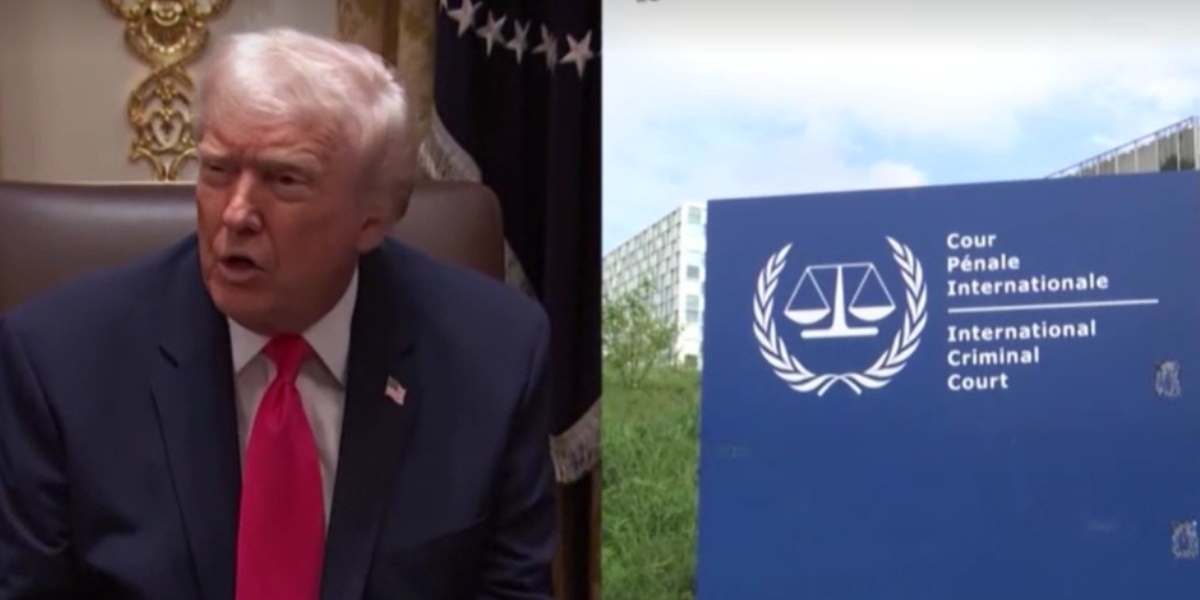
The United States has threatened sweeping sanctions against the International Criminal Court (ICC) unless the body agrees not to investigate or prosecute former President Donald Trump or senior US officials.
The warning marks a sharp escalation in Washington’s long-running confrontation with the court. According to a Trump administration official, the US has issued a set of demands to ICC member states, key American allies and the court’s leadership, warning that failure to comply could lead to penalties against additional ICC officials or even sanctions on the institution itself.
At the centre of the dispute is an extraordinary demand that the ICC amend its founding treaty, the Rome Statute, to permanently bar investigations into Trump and top US officials. The United States is not a signatory to the Rome Statute, which established the ICC in 2002 as a court of last resort empowered to prosecute individuals, including heads of state, for war crimes, crimes against humanity and genocide.
US officials have long argued that the court undermines American sovereignty. However, the current stance goes further by tying the sanctions threat to specific ongoing cases.
In addition to seeking immunity for US officials, Washington is demanding that the ICC abandon its investigations into Israeli leaders over the Gaza conflict and formally close a previous probe into alleged crimes committed by US troops in Afghanistan.
Last November, ICC judges issued arrest warrants for Israeli Prime Minister Benjamin Netanyahu, former defence minister Yoav Gallant and Hamas leader Ibrahim al-Masri over alleged war crimes and crimes against humanity linked to the Gaza war. The court also opened an investigation into the Afghanistan conflict in March 2020, which included potential crimes by US forces.
Although the ICC has scaled back scrutiny of the US role in Afghanistan since 2021, the Trump administration is now pushing for the inquiry to be officially terminated.
The threat to sanction the court represents a significant intensification of US pressure, signalling Washington’s willingness to use diplomatic and economic leverage to reshape international justice mechanisms and shield American and allied leaders from prosecution.
