
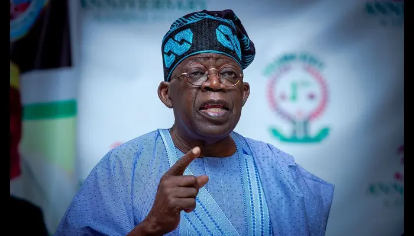
Fresh details have emerged on how President Bola Tinubu and the All Progressives Congress (APC) are mobilising to secure bloc votes from the South and North-Central ahead of the 2027 presidential election.
Sources at the APC national secretariat told Sunday PUNCH that the strategy is aimed at guaranteeing Tinubu’s re-election amid growing resistance from parts of the North. One senior party official described the plan as a “materialising countermeasure” that was initiated more than five months ago.
According to the source, the strategy was developed following intelligence reports warning of potential political threats from the core North and the emergence of an opposition coalition led by the African Democratic Congress.
The official identified the Chief of Staff to the President, Femi Gbajabiamila; Chairman of the APC Governors’ Forum, Hope Uzodimma; APC National Secretary, Ajibola Basiru; and Ikeja Federal Constituency lawmaker, James Faleke, as key figures driving the plan.
Northern discontent
In recent months, northern socio-political groups such as the Northern Elders Forum and the Arewa Consultative Forum have openly criticised Tinubu’s administration, warning that support for his second-term bid is not guaranteed. The groups have accused the President of marginalising the region in political appointments, infrastructure development and efforts to address insecurity.
Several political figures, including former Kaduna State governor Nasir El-Rufai; former Attorney General of the Federation, Abubakar Malami; and former APC National Vice Chairman (North-West), Salihu Lukman, alongside loyalists of the late President Muhammadu Buhari, have also been mobilising opposition to Tinubu in the North.
INEC data show that Tinubu polled 8,794,726 votes in the 2023 election, with 5,346,686 of those coming from the North, underscoring the region’s importance to his political fortunes. He won six northern states—Jigawa, Zamfara, Kogi, Niger, Benue and Borno—while PDP candidate Atiku Abubakar won nine northern states.
South, North-Central as fallback
To offset northern pushback, the APC has intensified efforts to consolidate Tinubu’s hold on the South and North-Central regions. A senior party source said the aim was to ensure that the President wins all southern states in 2027.
“The idea is to prevent a repeat of what happened in 2023, when opposition candidates won several southern states,” the source said.
In the last election, Atiku won Osun, Akwa Ibom and Bayelsa, while Labour Party candidate Peter Obi claimed Lagos and several South-East, South-South and South-West states.
According to the APC source, the party is working to reclaim those states through “targeted alliances, elite engagement and federal influence,” adding that recent defections of opposition governors to the APC reflect the implementation of the strategy.
“The South has largely been delivered. Apart from Abia and Oyo, most southern states are now aligned with the APC. Once we secure the South, we are already halfway to victory,” the source said.
When contacted, APC National Secretary Ajibola Basiru declined to comment, saying, “I don’t discuss strategy in newspapers.” Attempts to reach the party’s Director of Publicity, Bala Ibrahim, were unsuccessful.
North-Central push
Beyond the South, the APC is also targeting key North-Central states lost in 2023, including Plateau, Nasarawa and the Federal Capital Territory.
A senior party official said the region was critical to Tinubu’s re-election prospects.
“The North-Central is meant to be the final push. Once we secure the South and North-Central, votes from other zones will be neutralised,” the source said, noting that efforts were also underway to boost support in Kaduna and leverage the Vice President’s influence in Borno.
APC targets 80–90% votes
The Chairman of the North-Central APC Forum, Alhaji Saleh Zazzaga, confirmed that party leaders in the region were working closely with the Presidency and the APC national secretariat to deliver the zone in 2027.
He said the party was targeting 80 to 90 per cent of the region’s votes for Tinubu.
“We are consulting widely with clerics, youths and stakeholders. Tinubu has given the North-Central unprecedented attention through infrastructure and key appointments, including the SGF, INEC chairman and APC national chairman,” Zazzaga said.
He added that prominent business figures and political leaders were involved in the mobilisation effort and expressed optimism that the North-Central would produce a president after Tinubu’s second term in 2031.
Opposition kicks
Opposition parties, however, dismissed the APC’s strategy as hollow.
ADC National Publicity Secretary Bolaji Abdullahi described the ruling party as “self-deceived,” arguing that poor governance and declining popularity would undermine its plans.
“They are trying to mask their loss of public support by projecting control over states. Even their own chairman has admitted that APC governors have failed to deliver despite massive revenues,” Abdullahi said.
He added that recent defections to the APC were driven by personal ambition rather than public support.
Similarly, PDP National Publicity Secretary Ini Ememobong accused the APC of attempting to stifle opposition ahead of 2027.
“The ruling party appears bent on weakening opposition parties, which is dangerous for democracy. Nigerians should be allowed to freely choose who governs them,” he said.
The New Nigeria People’s Party (NNPP) also predicted defeat for the APC in 2027. Its spokesman, Ladipo Johnson, said the election would be a contest between the people and the ruling party.
“Having all the governors does not guarantee victory. What matters is the will of the people, especially amid widespread hardship,” he said, adding that mass voter turnout could neutralise manipulation.
Johnson maintained that public frustration over economic hardship would shape the outcome of the 2027 elections.
“In the end, it will be Nigerians themselves who decide. The people will speak,” he said.