
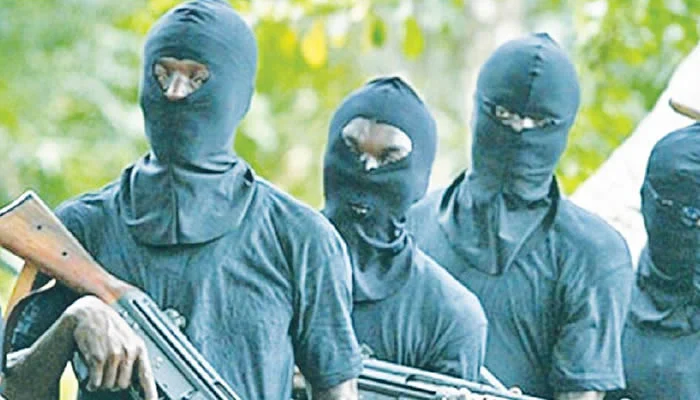
There are indications that suspected terrorists operating in northern Nigeria are relocating following missile strikes carried out by the United States on Thursday night.
Credible community leaders told Sunday PUNCH that unusual movements were observed as hoodlums migrated in small numbers after the Christmas Day attacks.
President Donald Trump announced on Thursday that the US military had launched deadly strikes against Islamic State terrorists in north-western Nigeria. The Federal Government later confirmed the operation, saying it provided support and that the strikes targeted areas used by the terrorists.
No fatalities were recorded in the locations hit. In Jabo, Tambuwal Local Government Area of Sokoto State, a missile struck farmland, while some buildings were damaged in Offa, Kwara State. Officials of Tangaza Local Government Area in Sokoto, however, disclosed that additional missile strikes targeted suspected hideouts of the Lakurawa armed group in parts of the Sokoto axis.
Although no deaths were reported, several residents sustained injuries and properties worth millions of naira were destroyed, particularly in Offa.
Influx of bandits in Benue
The Chairman of the Traditional Council in Gwer West Local Government Area of Benue State, Daniel Abomtse, has raised the alarm over an influx of armed herders into some communities following the US strikes.
Speaking to one of our correspondents on Saturday, Abomtse said he noticed the presence of armed herders in his domain and neighbouring Agatu LGA.
“I felt their movement in my local government as well as in Agatu. They have been running from Sokoto to coastal areas in Gwer West and Agatu with sophisticated arms and are grazing openly. They are in my domain,” he said.
While commending the US action, the traditional ruler urged President Trump to extend the operation to Benue, Kogi, Taraba, Niger and Plateau states.
“What President Trump has done is the best thing to have happened to Nigeria in a long time. I commend him for confronting a menace that has lasted about 16 years,” he added.
Efforts to confirm these claims from the spokesperson for the Benue State Police Command, Udeme Edet, were unsuccessful, as calls went unanswered and messages were not returned as of the time of filing this report.
Sokoto terrorists in disarray
Security sources and residents said the Christmas Day strikes disrupted bandit operations and forced them out of their hideouts.
Community leaders in Tangaza, Gudu and parts of Illela in Sokoto State told Sunday PUNCH that signs of dislocation and movement among armed groups had been observed since the attacks.
Some of the leaders, who spoke on condition of anonymity, said bandits were seen moving in smaller groups towards remote forest corridors, while others were believed to be attempting to cross into neighbouring border communities to evade aerial and ground surveillance.
A community leader in Tangaza said the airstrikes “sent a strong signal” and forced criminals to abandon familiar routes and camps.
“People are cautious, but there is relief that their hideouts were hit,” he said.
Sokoto State government officials said intelligence assessments were ongoing to determine the direction and scale of bandit movement. A senior official disclosed that security agencies had been placed on alert to prevent infiltration of safer communities, with border patrols and joint operations intensified to block escape routes.
A security expert, Bashar Umar, said the state government, in collaboration with the military and other security agencies, was strengthening surveillance across flashpoints, particularly in border local governments.
US scans Sambisa Forest
A United States congressman, Riley Moore, said the strikes prevented “deadly Christmas attacks in Nigeria.”
In a post on X on Saturday, Moore noted that Christians in Nigeria had been killed during the past two Christmas seasons.
“This year, thanks to @POTUS, radical Islamic terrorists were on the receiving end of 12 Tomahawk missiles as a present,” he wrote, adding that the strikes were only the first step toward securing the country.
Sunday PUNCH also learnt that the US had resumed surveillance operations in the Sambisa Forest, Borno State. A Sahel-focused terrorism tracker, Brant Philip, disclosed this on X, sharing flight-tracking data showing an aircraft operating over the area.
According to the post, the aircraft was a Gulfstream V, a long-range jet commonly modified for intelligence, surveillance and reconnaissance missions.
Experts warn of new tactics
A security analyst and Chief Executive Officer of Beacon Consulting, Kabiru Adamu, said fleeing terrorists might attempt to blend into civilian communities or seek support from international terror networks.
“There will be dislocation after the US strike. Terrorists will abandon known locations and may try to integrate with law-abiding communities,” Adamu said.
“They may also push a narrative that a Christian country is attacking Muslims in Nigeria to gain sympathy, support, funding and recruits. Propaganda, especially online, will be a key strategy.”
Similarly, a Professor of Political Science and Defence Studies at the Nigerian Defence Academy, Kaduna, Tar Usman, said the strikes would distract terrorists and disrupt their planning.
“The uncertainty of future strikes will create panic in their camps, which is good for us because it limits their capacity to plan attacks,” he said.
Usman cautioned, however, that terrorism would not end immediately, warning that insurgents could adopt new tactics, including blending into civilian populations.
A top government source told Sunday PUNCH that Nigeria and the US were collaborating to end killings, banditry and kidnapping, adding that some terrorists were fleeing towards Kogi and neighbouring states, but measures were being taken to flush them out.
