
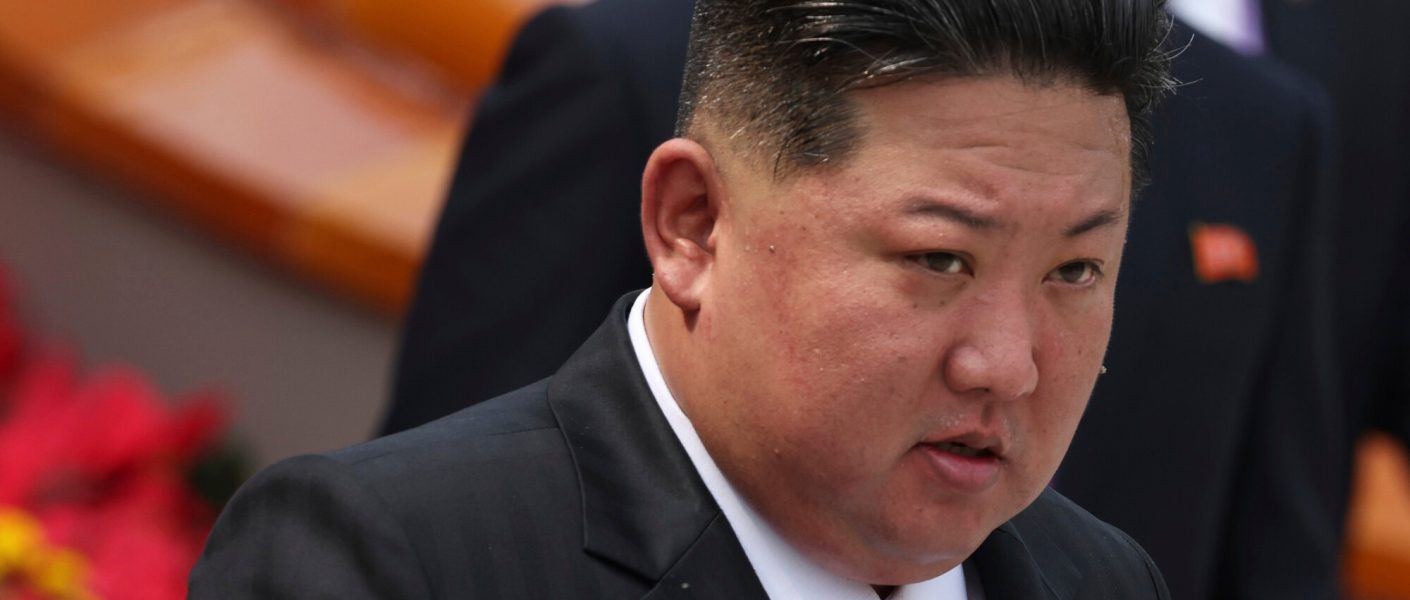
North Korean leader Kim Jong Un has dismissed a senior government official over problems linked to a factory modernisation project, a move widely seen as part of efforts to tighten discipline among top officials ahead of a major ruling Workers’ Party congress.
State media reported that Kim removed Yang Sung Ho, a vice premier in charge of the machine-building industry, for failures in the modernisation of the Ryongsong Machine Complex in northeastern North Korea. The project reportedly suffered setbacks and economic losses, which Kim attributed to what he described as irresponsible leadership.
Speaking at a ceremony marking the completion of the first phase of the factory’s upgrade, Kim said the project resulted in “not a small amount of economic loss” and accused officials of incompetence. He noted that Yang had already been criticised at a party meeting in December but failed to show a sense of responsibility afterward.
Using a striking analogy, Kim said Yang was “like a goat yoked to pull an ox cart,” questioning the judgment behind his appointment. “Could we expect a goat to pull a cart meant for an ox?” he asked, describing the episode as a mistake in personnel selection.
Public reprimands and dismissals of senior officials have long been a feature of Kim’s leadership style. Analysts say such actions are intended to intensify pressure on the ruling elite and demand stronger performance ahead of the Workers’ Party congress—the first in five years and one of the country’s most important political gatherings.
The congress is expected to assess past policies, set new political and economic priorities, and reshuffle key leadership positions. Observers believe Kim is using high-profile sackings to reinforce loyalty and accountability within the party.
Some analysts, however, argue that the problems at the Ryongsong factory reflect deeper structural challenges rather than the failure of a single official. They point to North Korea’s heavy emphasis on nuclear and missile development, persistent resource shortages, and the impact of international sanctions.
“Kim Jong Un has gone all-in on nuclear and missile programmes but has mismanaged the economy,” said Moon Seong Mook, a South Korea-based analyst. “He is simply shifting the blame for systemic failures onto a subordinate.”
North Korea’s economy suffered significant setbacks during the COVID-19 pandemic. Although modest growth has been reported in recent years, analysts say a sustained recovery remains unlikely due to the country’s centralised economic system, ongoing sanctions, and prioritisation of weapons development. They add that whatever limited growth exists has largely benefited the ruling elite and the defence sector, rather than the wider population.
The party congress, expected to open later this winter, is also likely to focus on economic management, nuclear policy, and closer cooperation with Russia and China.
Observers are also watching for any signs of renewed diplomatic engagement with the United States, amid speculation that shifting global dynamics could reopen channels for dialogue.