
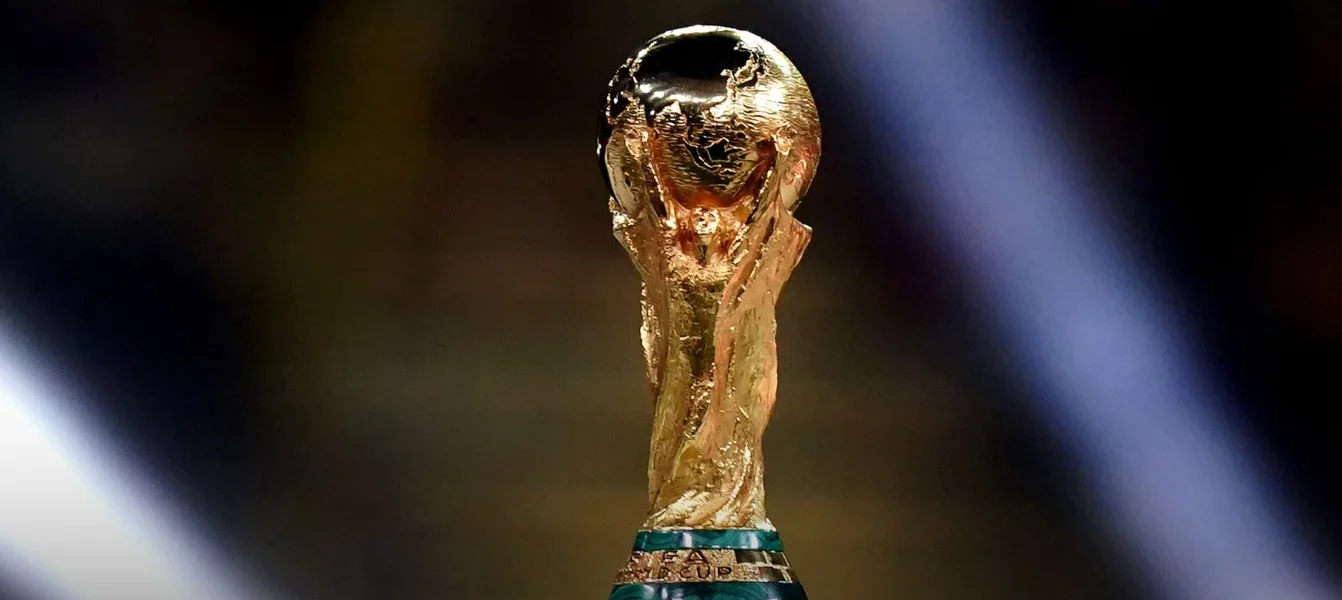
A senior official of the German Football Association (DFB) has called for serious discussions on a potential boycott of the 2026 FIFA World Cup following recent actions by United States President Donald Trump.
The tournament is scheduled to be jointly hosted by the United States, Canada, and Mexico, with 78 of the 104 matches set to take place in the US.
Tensions between the US and several European countries have escalated after President Trump threatened to take control of Greenland, a territory governed by Denmark. He also warned of imposing tariffs on eight European nations, including Germany, that opposed the move. Although the tariff threat was later withdrawn, diplomatic relations remain strained.
According to BBC Sport on Saturday, DFB vice-president Oke Göttlich questioned when discussions about a possible boycott should begin. “I really wonder when the time will be to think and talk about this concretely,” he said. “For me, that time has definitely come.”
The French government has stated that it does not currently support a boycott, while the Danish Football Association said it is “aware of the current sensitive situation.” Denmark is seeking qualification for the tournament through the play-offs.
Göttlich, who also serves as president of Bundesliga club St Pauli, likened the situation to the US-led boycott of the 1980 Olympic Games following the Soviet Union’s invasion of Afghanistan. “What were the justifications for the boycotts of the Olympic Games in the 1980s?” he asked. “In my view, the potential threat is greater now than it was then. We need to have this discussion.”
Germany has previously clashed with FIFA over political expression at major tournaments. During the 2022 World Cup in Qatar, FIFA warned players they could be booked for wearing the OneLove armband promoting diversity and inclusion. In response, German players covered their mouths during the team photo before their opening match against Japan, a gesture then-coach Hansi Flick said symbolised FIFA “silencing” teams.
Reflecting on that incident, Göttlich questioned football’s current approach to political issues. “Qatar was considered too political, and now we are completely apolitical?” he said. “That really bothers me. As organisations and as a society, we are forgetting how to set boundaries and defend values.”
He added that clarity is needed from political leaders and football’s governing bodies, including the DFB and FIFA, on where those boundaries should lie.
