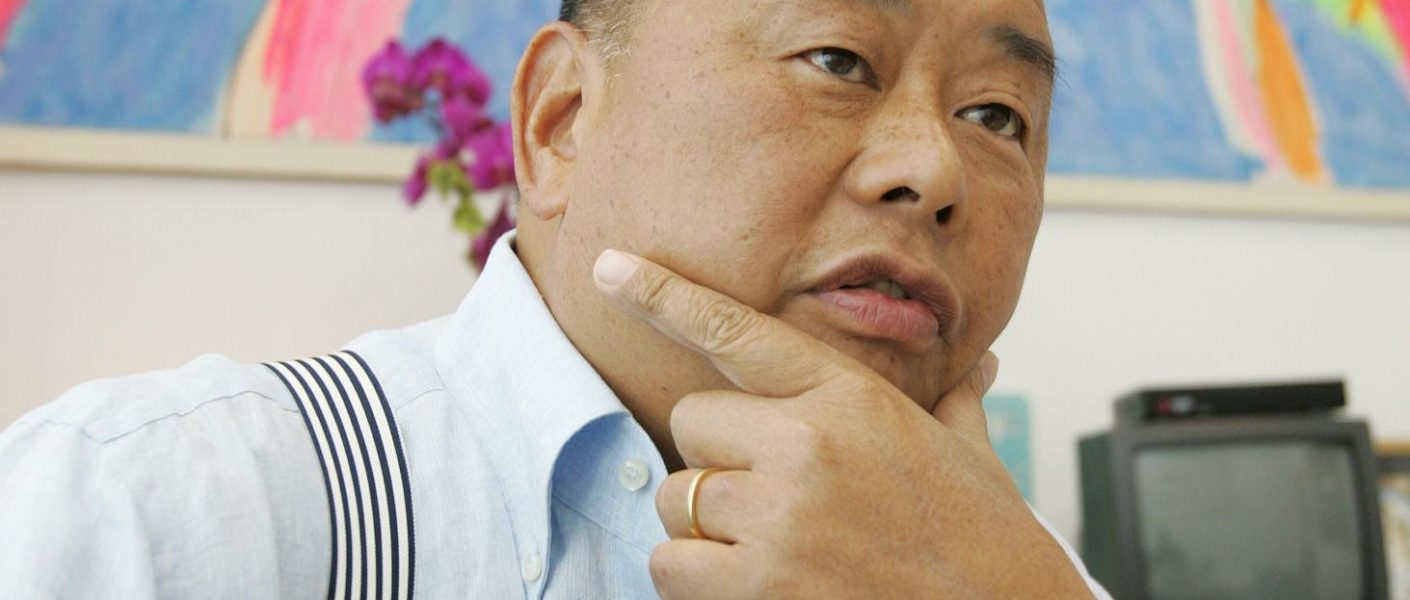
A Hong Kong court has sentenced media tycoon Jimmy Lai to 20 years in prison, concluding a years-long legal battle that has become a powerful symbol of Beijing’s sweeping crackdown on the once politically vibrant city.
The 78-year-old billionaire, a vocal critic of the Chinese government, is among the most high-profile figures prosecuted since Beijing imposed its national security law on Hong Kong in 2020. His sentence is the longest handed down under the law so far and effectively rules out any chance of parole until he is in his late 90s.
The ruling has triggered renewed international calls for Lai’s release. Supporters say pressure may intensify as US President Donald Trump, who previously vowed to “get him out,” prepares for a possible visit to China in the coming months.
Lai’s family condemned the sentence in emotional terms. His son, Sebastien, described it as draconian and “life-threatening,” while his daughter, Claire, called it “heartbreakingly cruel.”
“I have watched my father’s health deteriorate dramatically and the conditions he’s kept in go from bad to worse,” Claire said. “If this sentence is carried out, he will die a martyr behind bars.”
Lai is the founder of the now-defunct pro-democracy tabloid Apple Daily, which for years challenged Beijing’s authority and championed democratic freedoms. Authorities in Beijing and Hong Kong have rejected claims that his prosecution is politically motivated or an attack on press freedom, insisting he has received appropriate medical care while in custody.
Hong Kong leader John Lee accused Lai of using Apple Daily to “poison the minds of citizens, incite hatred, distort facts, deliberately create social division, glorify violence, and openly beg external forces to sanction China and the Hong Kong Special Administrative Region.”
Lai was convicted in December on two national security charges and one count of sedition. Appearing visibly thinner at sentencing, he smiled faintly as the verdict was read and acknowledged supporters and former colleagues in the courtroom.
Several former Apple Daily staff members were also sentenced, receiving prison terms ranging from six years and nine months to 10 years. The newspaper and its affiliated companies were fined six million Hong Kong dollars.
Since the national security law took effect, Hong Kong has undergone a dramatic transformation. Dozens of dissidents have been jailed, civil society groups and independent media outlets have closed, and the city’s once-boisterous political culture has largely fallen silent. Authorities maintain the law has “restored stability” following mass anti-government protests in 2019.
Supporters queued for days outside the West Kowloon court complex in hopes of seeing Lai, as police tightened security around the hearing.
“He is the flag of Hong Kong,” said 75-year-old Chan Chun-yee. “I don’t agree with everything he did, but I align with his spirit and what he pursued — freedom, democracy and justice.”
Judges overseeing national security cases have previously described Lai as a “mastermind of conspiracies,” citing his lobbying of US politicians and meetings with senior White House officials during Trump’s first term as evidence of sedition and collusion with foreign forces.
The court also found that Apple Daily repeatedly called for international sanctions against China and Hong Kong, with prosecutors saying the paper published up to 161 seditious articles.
Lai retains the right to appeal both his conviction and sentence, though such appeals often take years and rarely succeed. To date, only one person charged under Hong Kong’s national security law has been fully acquitted.