Oil prices surged to nearly $120 per barrel on Monday, March 9, following Iran’s announcement of a new Supreme Leader, before later easing to about $106.23 per barrel.
The appointment of Mojtaba Khamenei signaled the continued dominance of hardline leadership in Tehran, heightening fears of prolonged disruption to shipping through the Strait of Hormuz and sending ripples through global financial markets.
Brent crude, the global benchmark, rose to an early high of $119.50 per barrel before retreating to $106.23. West Texas Intermediate (WTI), the main U.S. benchmark, also climbed to $119.48 before dropping to around $101.25.
Regional tensions intensified as the conflict spread across key energy zones. Bahrain accused Iran of targeting a desalination plant vital to its drinking water supply, while Israeli strikes reportedly hit oil depots in Tehran overnight, leaving some facilities burning.
The war, now entering its second week, has increasingly affected areas critical to oil and gas production and transportation in the Persian Gulf. Concerns over the stability of supply routes have driven volatility across global energy markets.
Prices eased slightly after reports that Group of Seven (G7) nations were discussing the potential release of strategic oil reserves to stabilize global supply. Sources familiar with the talks said discussions were ongoing, although no official confirmation has been issued.
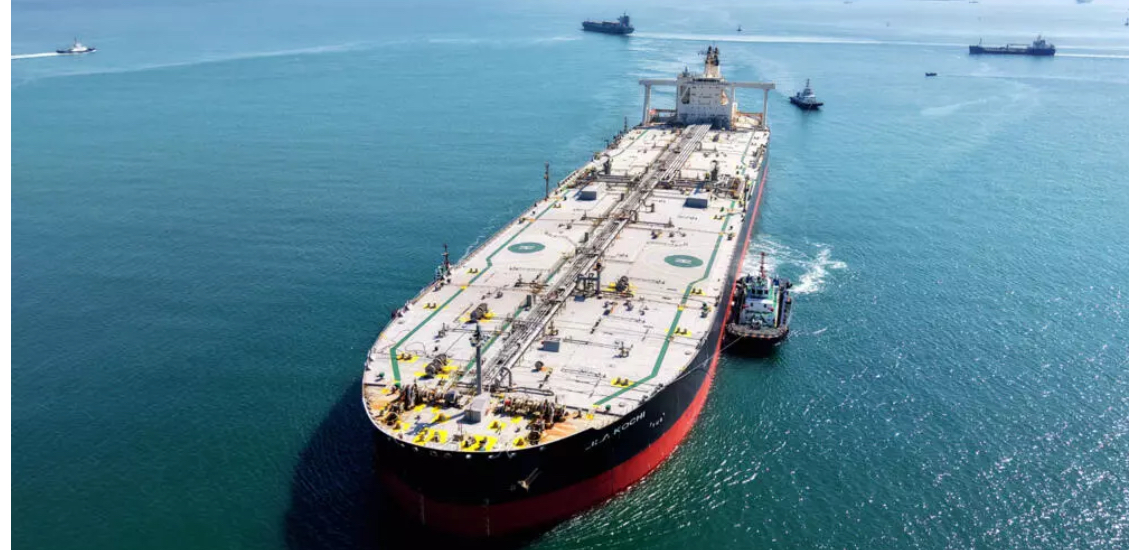
Approximately 15 million barrels of crude oil—about 20 percent of global supply—pass through the Strait of Hormuz each day. The narrow waterway, bordered by Iran to the north, serves as a major export route for oil and gas from Saudi Arabia, Kuwait, Iraq, Qatar, Bahrain, the United Arab Emirates, and Iran.
However, the threat of missile and drone attacks has forced many tankers to halt their movement through the corridor.
Several Gulf producers, including Iraq, Kuwait, and the United Arab Emirates, have reportedly reduced production as storage facilities fill up due to limited export capacity.
At the same time, attacks on oil and gas infrastructure by Iran, Israel, and the United States since the conflict began have further raised fears of supply disruptions.
U.S. President Donald Trump said over the weekend that he was not interested in negotiating with Iran, suggesting the conflict could only end if Iran no longer maintained a functioning military or leadership structure.
Hopes for de-escalation dimmed further when Iran officially named Mojtaba Khamenei as the country’s new Supreme Leader, succeeding his father, Ali Khamenei.
The surge in oil and natural gas prices is already driving up fuel costs worldwide, putting additional pressure on economies that rely heavily on energy imports, particularly across Asia.
The last time oil prices approached similar levels was in 2022 following Russia’s invasion of Ukraine.
Higher energy costs often drive inflation, squeezing household budgets and weakening consumer spending—one of the key drivers of economic growth in many countries.
Global stock markets reacted sharply to the developments. Japan’s Nikkei 225 fell by 5.2 percent on Monday, while U.S. futures dropped by more than 1.5 percent.
On Friday, the S&P 500 declined by 1.3 percent, and the Dow Jones Industrial Average briefly plunged by as much as 945 points before closing about 450 points lower. The Nasdaq Composite also fell by 1.6 percent.
In the United States, the average price of regular gasoline rose to about $3.45 per gallon, roughly 47 cents higher than the previous week, according to the AAA. Diesel prices increased even more sharply, reaching around $4.60 per gallon.
U.S. Energy Secretary Chris Wright said in an interview on State of the Union that fuel prices could fall below $3 per gallon again in the near future.
However, analysts warn that if oil prices remain above $100 per barrel for an extended period, the global economy could face significant strain.
Iranian officials said Israeli strikes on oil depots and a petroleum transfer facility in Tehran early Sunday killed four people. Israel’s military said the sites were being used to supply fuel for missile launches.
Iran’s Parliament Speaker, Mohammad Bagher Qalibaf, warned that the conflict could have far-reaching consequences for the global oil industry.
Iran currently exports about 1.6 million barrels of oil per day, much of it to China. Any disruption to those exports could force China to seek alternative suppliers, potentially pushing global energy prices even higher.
Natural gas prices have also risen during the conflict, though less dramatically than oil. Prices recently climbed to about $3.33 per 1,000 cubic feet, up 4.6 percent from the previous trading session after gaining roughly 11 percent last week.