
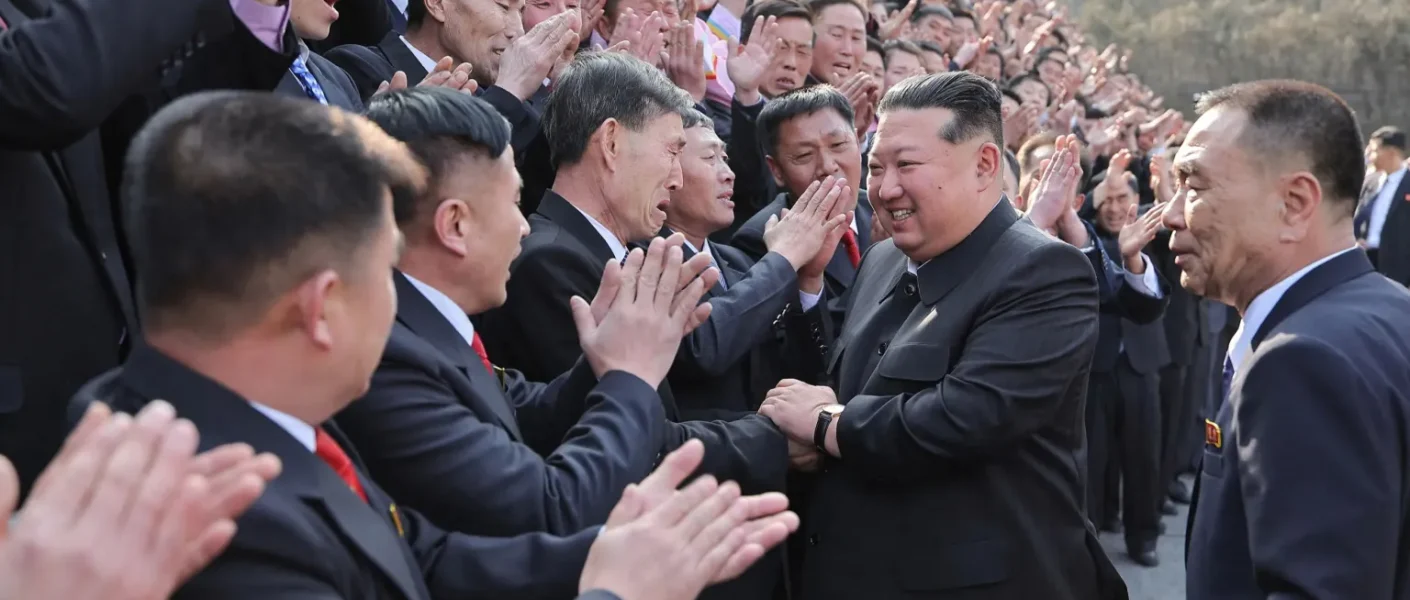
North Korean leader Kim Jong-un has claimed an overwhelming victory in the country’s latest parliamentary elections, with his ruling party securing 99.93 per cent of the vote.
Kim, who has been in power for over a decade, has pledged to make the country “less backward” as he prepares to lead the Supreme People’s Assembly (SPA) alongside his influential younger sister.
According to reports cited by Yonhap News Agency, the ruling Workers’ Party of Korea and its allies won all 687 seats in the SPA, following a tightly controlled voting process.
Eligible voters were presented with a single candidate approved by the ruling party and asked to either endorse or reject them. Official results showed 99.93 per cent voting in favour, with just 0.07 per cent opposing.
Authorities also reported a turnout of 99.99 per cent, highlighting the highly regulated nature of the electoral system.
The vote, held on March 15, selected deputies for the 15th Supreme People’s Assembly, which is set to convene in Pyongyang to decide key leadership positions and consider possible constitutional changes.
A notable outcome of the election is the scale of internal restructuring, with more than 70 per cent of deputies being new members — a move analysts say allows Kim to consolidate power by replacing older elites with loyal figures.
Among those expected to take prominent roles is Jo Yong-won, a close aide to Kim. In contrast, veteran official Choe Ryong-hae has reportedly been sidelined, signalling shifting power dynamics within the leadership.
Kim’s sister, Kim Yo-jong, and Foreign Minister Choe Son-hui were also elected as deputies, further strengthening the inner circle.
The upcoming session is expected to reaffirm Kim’s position as head of the State Affairs Commission, cementing his authority as the country’s supreme leader.
Lawmakers may also consider constitutional revisions, including redefining relations with South Korea, with observers suggesting Pyongyang could formally designate the South as a hostile state — a significant shift in policy.