
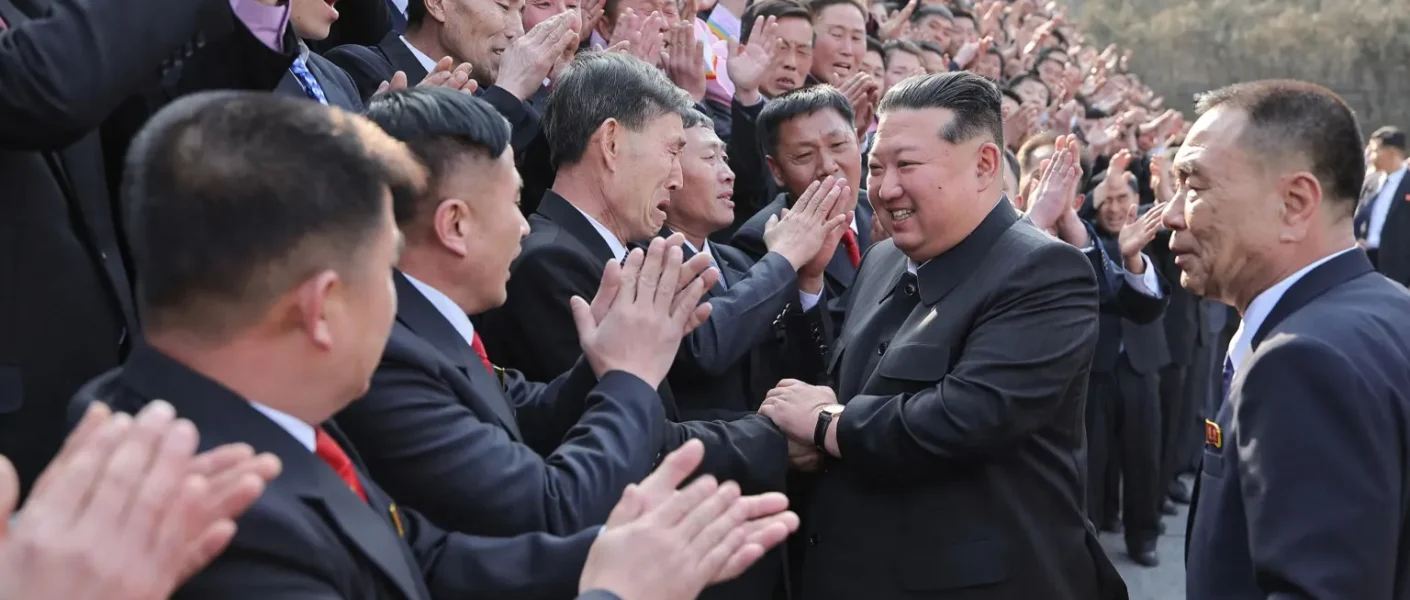
North Korean leader Kim Jong Un has claimed an overwhelming victory in the country’s latest parliamentary election, with official results showing his ruling party secured 99.93 percent of the vote.
According to reports from Yonhap News Agency, the Workers’ Party of Korea and its allies won all 687 seats in the Supreme People’s Assembly (SPA), reinforcing Kim’s firm grip on power. The election, held on March 15, followed North Korea’s long-standing system in which voters are presented with a single candidate approved by the ruling party.
Citizens aged 17 and above were required to either approve or reject the candidate, with authorities reporting an almost perfect turnout of 99.99 percent. In the final tally, just 0.07 percent of votes were recorded against the candidates, highlighting the tightly controlled nature of the electoral process.
The newly elected deputies will form the 15th Supreme People’s Assembly, which is set to convene soon in Pyongyang. The session is expected to confirm key leadership positions, including Kim’s reappointment as head of the State Affairs Commission.
Beyond the headline results, the election signals significant internal changes within North Korea’s political structure. More than 70 percent of the newly elected deputies are fresh faces, suggesting a major reshuffle aimed at consolidating loyalty within the regime.
Key figures expected to rise include Jo Yong-won, a close aide to Kim, while veteran official Choe Ryong-hae has reportedly been sidelined. Kim’s sister, Kim Yo-jong, along with Foreign Minister Choe Son-hui, are also among those elected, further strengthening the inner circle of leadership.
Analysts believe the reshuffle may allow Kim to remove older power bases and reinforce his authority with trusted allies.
The upcoming parliamentary session could also bring major policy shifts, particularly regarding relations with South Korea. Observers suggest constitutional revisions may formally designate South Korea as a hostile state, marking a significant escalation in the North’s political stance.
As the new assembly prepares to meet, the election outcome underscores the continued consolidation of power around Kim Jong Un and his closest allies.