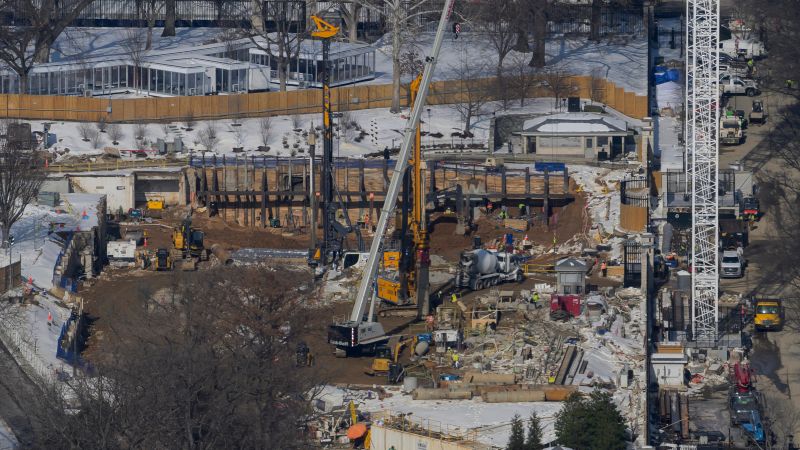
A federal judge on Tuesday, March 31, blocked former U.S. President Donald Trump from proceeding with plans to construct a proposed $400 million ballroom at the White House.
In his ruling, Judge Richard Leon stated that the president does not have the authority to undertake such a major project without approval from Congress. “The President of the United States is the steward of the White House for future generations of First Families. He is not, however, the owner,” Leon wrote.
The judge paused enforcement of the decision for two weeks to allow time for an appeal but cautioned that any construction carried out during that period could be reversed depending on the outcome of the case. The Trump team has already indicated plans to challenge the ruling.
At the heart of the case is whether a president can authorize a large-scale development at the White House without congressional consent. Leon concluded that federal law requires lawmakers to approve the project before any work can proceed. “Unless and until Congress authorizes this project through legislation, construction has to stop,” he said, while noting that both the administration and Congress could still collaborate to advance the project legally.
Trump, a former real estate developer, has been closely involved in the design of the ballroom, including its layout and materials, and has described it as potentially “the greatest ballroom anywhere in the world.”
The proposed structure would cover approximately 89,000 square feet—far larger than the White House’s main Executive Mansion, which spans about 55,000 square feet. Trump had argued that the project did not require congressional oversight and aimed to complete it by summer 2028.
The lawsuit was brought by the National Trust for Historic Preservation, which argued that the administration acted unlawfully by moving forward without legislative approval. The group welcomed the ruling, calling it a win for the American public.
Judge Leon also underscored that Congress retains authority over federal property and spending, adding that lawmakers could still approve or fund the project if they choose.