
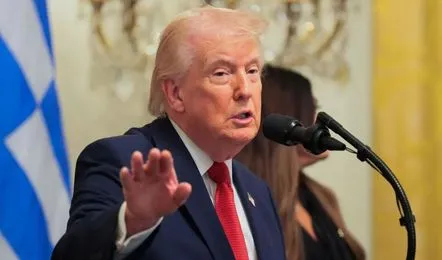
The foreign policy approach of the administration of Donald Trump has reintroduced a level of unpredictability into global diplomacy, characterised by aggressive rhetoric, transactional demands, and a readiness to distance itself from alliances that no longer serve immediate interests. From threats involving sovereign territories to sweeping tariffs affecting even traditional partners, Washington’s posture has signalled that predictability is no longer a defining feature of American diplomacy.
For many countries, this shift has raised concerns. In Africa, particularly for key U.S. partners such as Angola, the consequences are becoming increasingly significant.
European allies were among the first to experience the strain. Discussions surrounding the potential acquisition of Greenland highlighted that even longstanding alliances within NATO were not immune from strategic recalculations. The episode signalled a shift toward a more utilitarian view of partnerships rather than one based on longstanding mutual commitments.
Speaking recently in Tokyo, Emmanuel Macron delivered a subtle but pointed response to the evolving U.S. approach. Without mentioning Trump directly, the French president stressed the importance of stability in international partnerships.
“Predictability has value,” Macron said, emphasising that Europe offers consistency in its alliances. He added that while some countries claim to move faster than their partners, their positions can shift quickly, sometimes resulting in decisions that affect allies without prior consultation.
His remarks came shortly after Trump criticised France for declining to participate in a U.S.–Israeli military campaign in the Middle East. Macron clarified that France had not been consulted and was never part of the operation.
Similar concerns are now surfacing in Africa. During the 11th Summit of Heads of State and Government of the Organisation of African, Caribbean and Pacific States (OACPS), Angolan President João Lourenço issued a carefully worded critique of what he described as a resurgence of resource-driven geopolitical interventions.
Without naming specific countries, Lourenço warned that military actions around the world are often justified as preventive or defensive measures but ultimately serve the goal of controlling vital resources such as oil, gas, and strategic minerals.
His remarks suggested parallels between modern geopolitical competition and historical colonial practices. Several Angolan media outlets interpreted the comments as an implicit criticism of policies associated with the Trump administration.
The context of Angola’s relationship with the United States makes the remarks particularly significant. In recent years, Washington had sought to strengthen ties with Luanda partly to counter the growing influence of China in the region.
A key development came in 2023 with U.S. support for the Lobito Corridor, a major infrastructure initiative intended to transport critical minerals from the Democratic Republic of the Congo to Angola’s Atlantic coast. The project was widely seen as a strategic step toward deeper economic cooperation between the two nations.
However, shifts in Washington’s foreign policy priorities—marked by scepticism toward multilateral agreements and changing aid policies—have introduced uncertainty into that partnership.
For Angola, which sits atop vast reserves of strategic minerals increasingly vital to global industries, reliability in international alliances is critical. Lourenço’s remarks therefore reflected not only a broader critique of global power dynamics but also a signal that Angola may be reassessing the stability of its partnerships.
While delivered in diplomatic language, the message was clear: as global competition for resources intensifies, countries like Angola are wary of alliances shaped by short-term political shifts rather than long-term strategic commitment.
— Peter Johnson, researcher specialising in African affairs.
