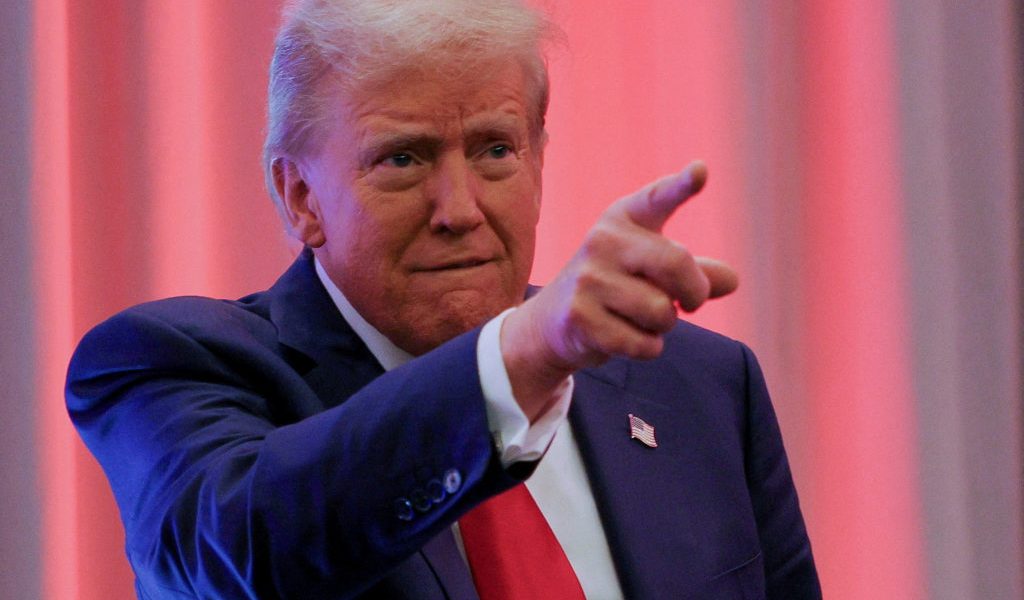
U.S. President Donald Trump has said the naval blockade on Iran could continue for months, arguing it is a more effective way to pressure Tehran into abandoning its nuclear ambitions than direct military strikes.
His comments triggered a surge in global oil prices, with Brent crude climbing to $126.41 and West Texas Intermediate reaching $110.31 before easing slightly.
Trump is set to meet Admiral Brad Cooper, head of U.S. Central Command (CENTCOM), on Thursday to assess further military options. CENTCOM recently reported a “significant milestone,” stating that it had turned back the 42nd commercial vessel attempting to bypass the blockade. Officials estimate that 41 tankers carrying about 69 million barrels of oil—worth more than $6 billion—are currently stranded and unable to be sold by Iran.
Defending the strategy, Trump described it as a form of economic pressure, telling Axios that the measures would intensify in the coming weeks.
The blockade comes amid mounting geopolitical tensions. Talks between Washington and Tehran have stalled, while Vice President JD Vance reportedly canceled two planned trips to Pakistan aimed at mediation, citing uncertainty over Iran’s leadership structure following Israeli strikes on senior officials.
Russian President Vladimir Putin has warned of “serious consequences” if the U.S. and Israel escalate military action. At the same time, Trump has threatened to scale back U.S. troop deployments in Germany after Chancellor Friedrich Merz declined to support the blockade or a proposed peacekeeping mission in the Strait of Hormuz.
The United Nations Development Programme has cautioned that the crisis, combined with rising fertilizer costs, could push up to 30 million people into poverty worldwide. Within Iran, the national currency has plunged to record lows, deepening economic hardship.
Despite the pressure, Iranian Parliament Speaker Mohammad Bagher Ghalibaf dismissed the blockade as an attempt to destabilize the country internally. Regional tensions remain elevated as well, particularly in Lebanon, where recent Israeli strikes have reportedly caused military casualties despite an existing ceasefire, and a UN-backed report warns that more than 1.2 million people face acute hunger amid the instability.