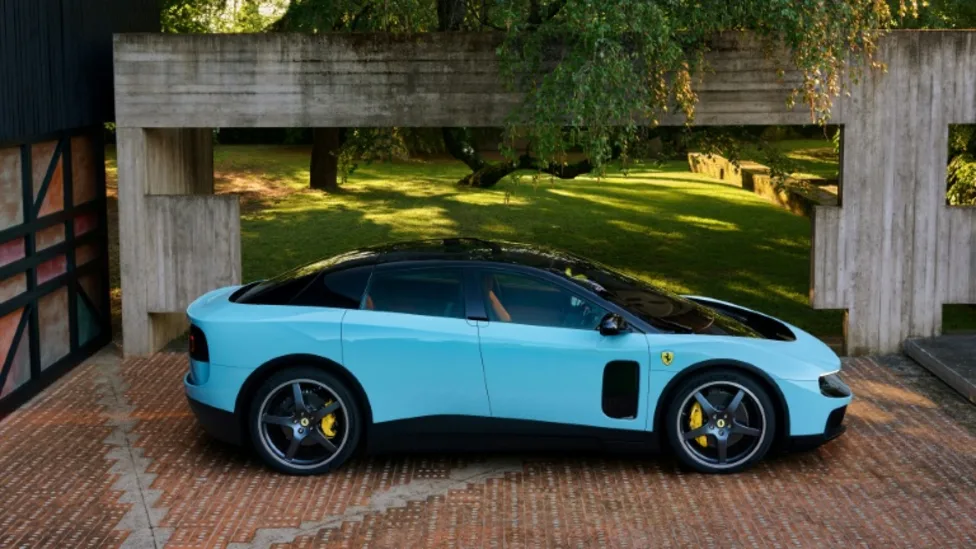
Luxury carmaker Ferrari has revealed its first-ever fully electric vehicle, marking a major turning point for the iconic Italian brand as it enters the high-end EV market.
The new model, called the “Luce” — Italian for “light” — was unveiled during a launch event in Rome attended by more than 200 journalists and guests.
Priced at €550,000 (around $640,000), the luxury electric car is expected to begin deliveries in the final quarter of 2026.
Ferrari developed the four-door Luce with the help of former Apple design chief Jony Ive and his creative collective LoveFrom. The vehicle is also Ferrari’s first five-seater, designed to attract wealthy families seeking both performance and comfort.
Ferrari CEO Benedetto Vigna described the car as the result of “five years of work.”
The Luce features four electric motors — one for each wheel — producing more than 1,000 horsepower and a top speed exceeding 310 kilometres per hour. Ferrari said the EV will also have a driving range of more than 500 kilometres.
Despite being fully electric, Ferrari said the car was engineered to maintain the emotional feel of its traditional sports cars by amplifying natural vibration sounds from the electric powertrain.
The launch represents a bold move for Ferrari at a time when some rival luxury brands, including Porsche and Lamborghini, are reportedly slowing down their EV plans because of weaker-than-expected demand.
Ferrari hopes the Luce will appeal to a new generation of buyers who are more interested in advanced technology and luxury electric vehicles than traditional petrol-powered engines.
The company also sees the model as an opportunity to strengthen its presence in markets like China, where electric vehicles are already dominant and large petrol-powered cars face heavy taxes.
The Luce features a larger body design with expansive glass styling, moving away from Ferrari’s classic aggressive sports car appearance.
Inside, the car combines traditional Ferrari luxury with leather, glass, anodised aluminium surfaces, and physical controls, rather than relying entirely on touchscreen technology like many modern EVs.