
US President Donald Trump has admitted that talks between the United States and Iran have slowed down, just days after claiming an agreement to end the ongoing conflict was close to being finalized.
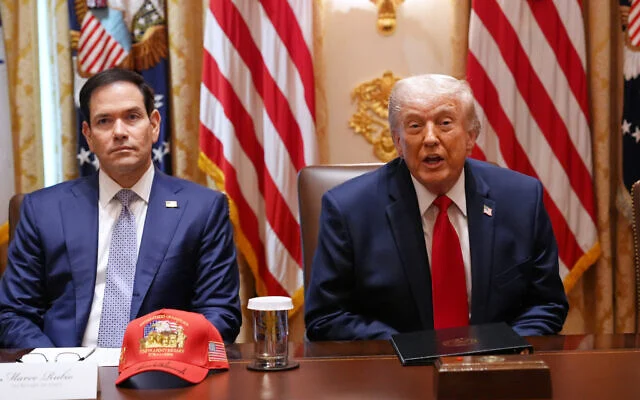
Speaking during a cabinet meeting at the White House on Wednesday alongside Secretary of State Marco Rubio and Defense Secretary Pete Hegseth, Trump said Iran appeared interested in reaching a deal but stressed that the US was still unhappy with the current direction of negotiations.
“Iran wants to make a deal,” Trump said. “But we’re not satisfied.”
He also warned that if diplomacy fails, the United States may “have to just finish the job.”
The conflict between both nations began on February 28 following large-scale US-Israeli strikes linked to Iran’s nuclear program. Although a fragile ceasefire has been in place since April 8, negotiations have reportedly stalled over issues including regional diplomacy, sanctions, and control of strategic waterways.
Earlier this week, Trump suggested that Gulf nations such as Saudi Arabia and Qatar should normalize relations with Israel under the Abraham Accords as part of a broader regional settlement linked to the Iran talks.
However, Saudi officials reportedly reaffirmed that Riyadh would only recognize Israel if there is a clear and irreversible pathway toward the creation of a Palestinian state.
When asked whether joining the Abraham Accords would become a condition for any Iran deal, Trump declined to give a direct answer.
“I’m not going to tell you what’s contingent and what’s not,” he said.
The White House also dismissed reports from Iranian state media claiming that a proposed agreement included the lifting of the US naval blockade around Iran and the withdrawal of American forces from the region.
Trump strongly rejected suggestions that Iran would retain control over shipping through the Strait of Hormuz.
“No, the strait is going to be open to everybody,” Trump stated. “It’s international waters. Nobody’s going to control it.”
He also issued a warning to Oman regarding regional shipping security, saying countries in the region would have to cooperate with US demands.
Despite the tensions, Secretary of State Marco Rubio said some progress had been made and stressed that the administration still preferred a diplomatic solution.
Defense Secretary Pete Hegseth claimed Iran’s military capabilities had weakened following the joint US-Israeli campaign, saying ongoing naval pressure was damaging Tehran’s economy.
Trump concluded by saying the US was still aiming for a stronger agreement with Iran.
“We can make a good deal right now, but maybe not a great deal,” he said.
