
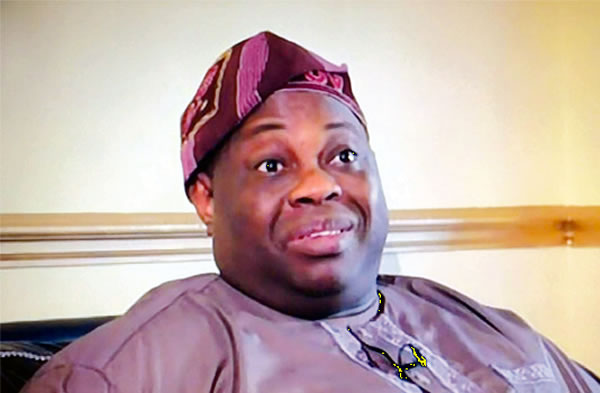
Ovation Magazine publisher and media entrepreneur, Dele Momodu, has said he expects the 2027 presidential election to be primarily contested between President Bola Tinubu and former Vice President Atiku Abubakar, suggesting that other contenders may struggle to match their political influence.
In a statement titled “Time for National Reconciliation, Re-Orientation & Reconstruction” posted on his X account on Monday, Momodu argued that Nigeria’s political landscape is increasingly pointing toward a showdown between the incumbent president and the candidate of the African Democratic Congress (ADC).
“The 2027 presidential election is expected to be a major contest between President Bola Ahmed Tinubu and his biggest challenger, Alhaji Atiku Abubakar. It promises to be a battle of titans,” he said.
While acknowledging the possibility of another third-force movement emerging ahead of the election, as happened in 2023, Momodu expressed doubt that such a platform would possess the political strength needed to overcome the two leading figures.
“A third force may emerge, as it did in 2023, but it is unlikely to have the firepower and momentum required to displace the two elder statesmen,” he stated.
Momodu also called on the ADC to present itself as a bridge between Nigeria’s established political class and a new generation of leaders. He advocated a combination of experienced politicians and technocrats as a way to promote national unity and strengthen governance.
In addition, he cautioned against the growing influence of ethnic and religious divisions in the country’s politics, warning that unchecked tensions could deepen existing challenges and undermine national stability.
“The North and the South will reunite in a contest shaped by ethnic and religious rivalries. The current tensions and uncertainty cannot be allowed to continue because they pose a danger to everyone,” he said.
Momodu further expressed concern over what he described as the decline of ideology and statesmanship in Nigerian politics. He urged political leaders to embrace reconciliation, national unity, and principled leadership, drawing inspiration from the legacies of prominent founding figures such as Nnamdi Azikiwe, Ahmadu Bello, and Obafemi Awolowo.