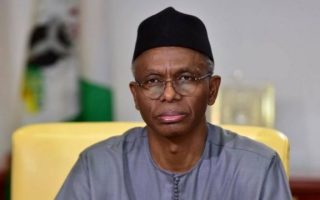
Prominent Islamic cleric, Sheikh Ahmad Gumi, has defended his visit to Ibadan, Oyo State, rejecting claims that he was promoting the Islamisation of the South-West or advancing a northern religious agenda.
The cleric stated that as a Nigerian citizen, he has the right to travel freely across the country and that no individual or group can prevent him from visiting any part of Nigeria.
In a Facebook post on Tuesday, Gumi said his attendance at an event in Ibadan was not based on an invitation from any Muslim organisation or individual in the South-West, but rather in his capacity as a representative of a coalition of northern Islamic scholars.
“I was in Ibadan not at the invitation of any South-West Muslim individual or group, but as a representative of the Coalition of Northern Muslim Ulama,” he wrote.
He added: “Can anybody stop me from going anywhere in Nigeria?”
Gumi also suggested that growing Islamophobia was influencing political discourse in parts of the South-West and contributing to the controversy surrounding his visit.
“I now understand how Islamophobia is shaping politics in the South-West and why I was dragged into local political controversies,” he stated.
The cleric’s comments come amid ongoing discussions following reports surrounding the abduction of several individuals in Oyo State.
Recently, one of the victims kidnapped in Oriire Local Government Area, Mrs. Rachael Alamu, principal of Community High School, Esiele, dismissed claims that the abductors demanded the implementation of Sharia law in Oyo State as a condition for their release.
In a video recorded while in captivity and later circulated online, Alamu stated that the kidnappers neither demanded Sharia law nor requested a ₦1 billion ransom. According to her, the abductors instead sought the release of some of their associates allegedly being held by authorities.
Gumi’s controversial visit to Ibadan took place on November 19, 2025, when he attended the Southern Nigerian Ulama Summit at the University of Ibadan as a guest speaker.
During the visit, he also participated in meetings with prominent Islamic scholars from both northern and southern Nigeria.
The cleric maintained that his presence at the event was purely religious and educational, dismissing suggestions that it was connected to any political or ideological agenda.