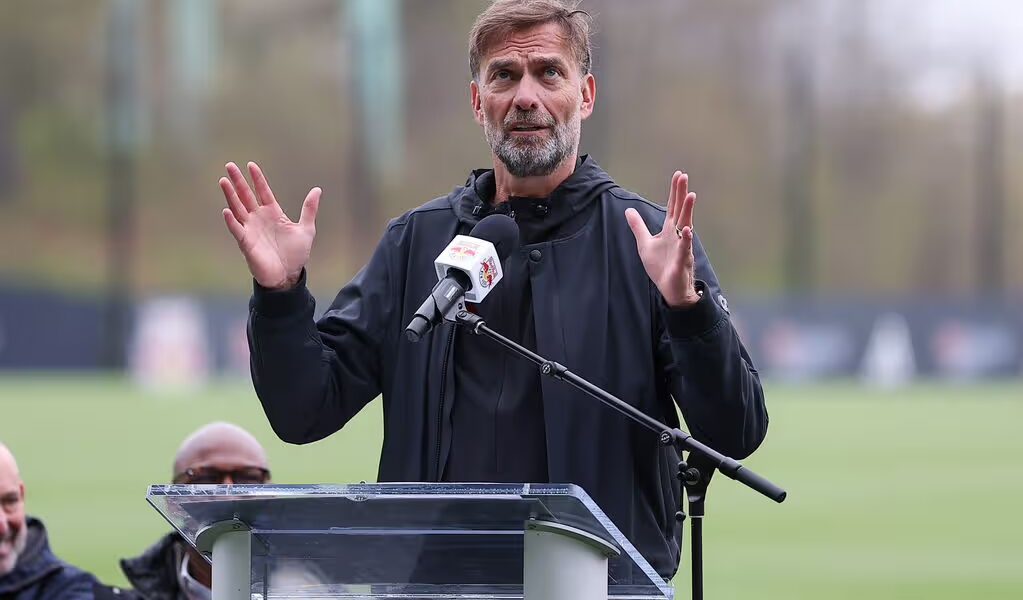
Former Liverpool manager Jurgen Klopp has launched a strong criticism of the hydration breaks being used at the FIFA World Cup, arguing that commercial interests are taking priority over the game itself.
Klopp questioned whether the scheduled three-minute breaks, which take place around the 22nd minute of each half, are genuinely designed to protect players from extreme heat or simply provide additional advertising opportunities for broadcasters and sponsors.
Speaking on German television network ZDF, the German coach described the interruptions as a marketing tool disguised as a welfare measure.
According to Klopp, football is increasingly being controlled by decision-makers far removed from the realities of the game.
“When I saw the players standing around during the heat breaks while television timeouts dictated the rhythm of the match, I asked myself who the World Cup really serves — the fans, the players, or the advertisers?” he said.
The former Liverpool boss argued that the stoppages disrupt the natural flow of matches and risk turning football into a secondary attraction.
“A World Cup match should flow naturally,” Klopp said. “Instead, the game is being interrupted so commercials can be shown. Football risks becoming background entertainment for an advertising spectacle.”
FIFA previously defended the introduction of hydration breaks, saying the measure was implemented to protect players competing in high temperatures across host nations including the United States, Canada and Mexico.
The governing body said the decision was based on experiences from previous tournaments, including the FIFA Club World Cup held in the United States.
However, the breaks have attracted criticism after several broadcasters used them to air additional commercials. During one World Cup match, commentator Ian Darke highlighted the commercial aspect by noting that a hydration break was “powered by Powerade.”
Klopp is not alone in questioning the policy. Mauricio Pochettino has also expressed reservations, stating that hydration breaks should only be used when weather conditions are genuinely extreme.
“I don’t like it,” Pochettino said. “If the conditions are extreme, then it makes sense. But when the weather is reasonable, it becomes unnecessary.”
Despite the criticism, broadcasters are expected to benefit significantly from the tournament’s massive global audience. Television executives have already predicted record commercial returns during the six-week competition.
Klopp’s comments have reignited debate over the balance between player welfare, commercial interests and preserving the traditional flow of football’s biggest tournament.