FIFA President Gianni Infantino has defended the independence of the organisation’s judicial bodies following criticism over the decision to overturn the suspension of United States forward Folarin Balogun.
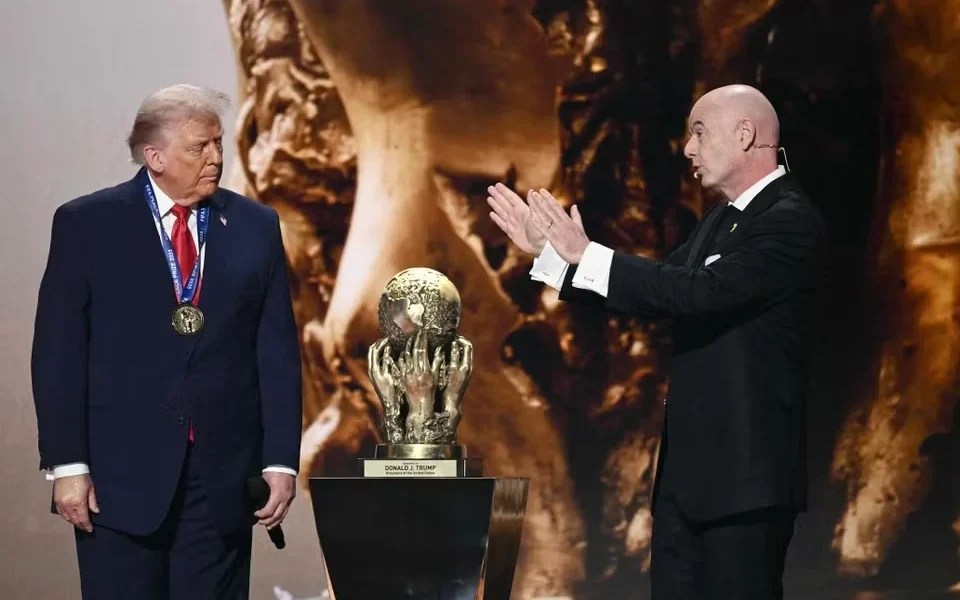
Infantino maintained that the ruling was reached independently through FIFA’s disciplinary process, despite confirming that he discussed the matter with US President Donald Trump.
The controversy followed FIFA’s independent Disciplinary Committee’s decision to reverse Balogun’s red-card suspension, sparking debate within the football community over the timing of the ruling and speculation about possible political influence after Trump publicly claimed he had intervened on the player’s behalf.
In a statement released on Monday, Infantino stressed that FIFA’s judicial bodies operate independently of the organisation’s leadership.
“I have seen the public comments regarding the decision of the independent FIFA Disciplinary Committee related to the suspension of Folarin Balogun, and I would like to reiterate a fundamental principle of FIFA’s governance.
“FIFA’s judicial bodies are independent. They operate autonomously, apply the FIFA Disciplinary Code, and decide cases based on the applicable regulations and the specific facts before them. Their independence is essential to the credibility and integrity of football, and this must always be respected,” he said.
Infantino acknowledged receiving a phone call from Trump but insisted the conversation had no bearing on the committee’s decision.
“Yes, I regularly discuss matters related to the FIFA World Cup with the President of the United States, and on this matter, I did receive a call from President Donald Trump, just as I receive calls from heads of state, government officials, football stakeholders and business executives from around the world on many different issues.
“During our conversation, I explained that there was an ongoing legal process involving FIFA’s independent judicial bodies and that the case would be decided in due course by the competent bodies. That is how FIFA’s system works, and it is a principle that I will always uphold,” Infantino added.
The FIFA president said he respects the decisions of the organisation’s judicial institutions regardless of whether he personally agrees with them.
“I read the decisions of the FIFA Disciplinary Committee when they are issued. Sometimes I am surprised by them. Sometimes I agree with them, and sometimes I disagree.
“What I always do, however, is respect those decisions and the autonomy of the bodies that make them. Whether we personally like a decision or not is irrelevant. Respect for independent institutions and the rule of law is what protects the integrity of our competitions and the credibility of FIFA at all times.”
The decision to reinstate Balogun has reignited debate over FIFA’s governance and the independence of its disciplinary structures.
FIFA has consistently maintained that its judicial bodies—including the Disciplinary Committee, Ethics Committee and Appeal Committee—operate independently of both the FIFA Council and the president. The principle was strengthened through governance reforms introduced after the corruption scandals that rocked world football in 2015.
Under FIFA statutes, member associations can face sanctions if governments are found to have improperly interfered in football administration.
The latest controversy has therefore attracted significant attention because it involved a direct conversation between the FIFA president and the sitting US president while an active disciplinary case was still under consideration. However, Infantino insisted the discussion was limited to explaining the legal process and did not amount to interference.
Neither FIFA’s Disciplinary Committee nor its Appeal Committee has suggested that external representations influenced the outcome, maintaining that the ruling was based solely on the FIFA Disciplinary Code and the evidence presented.
With Balogun’s suspension overturned, the United States international remains eligible for selection, although the controversy is expected to fuel further debate over the relationship between football governance, judicial independence and political influence.