
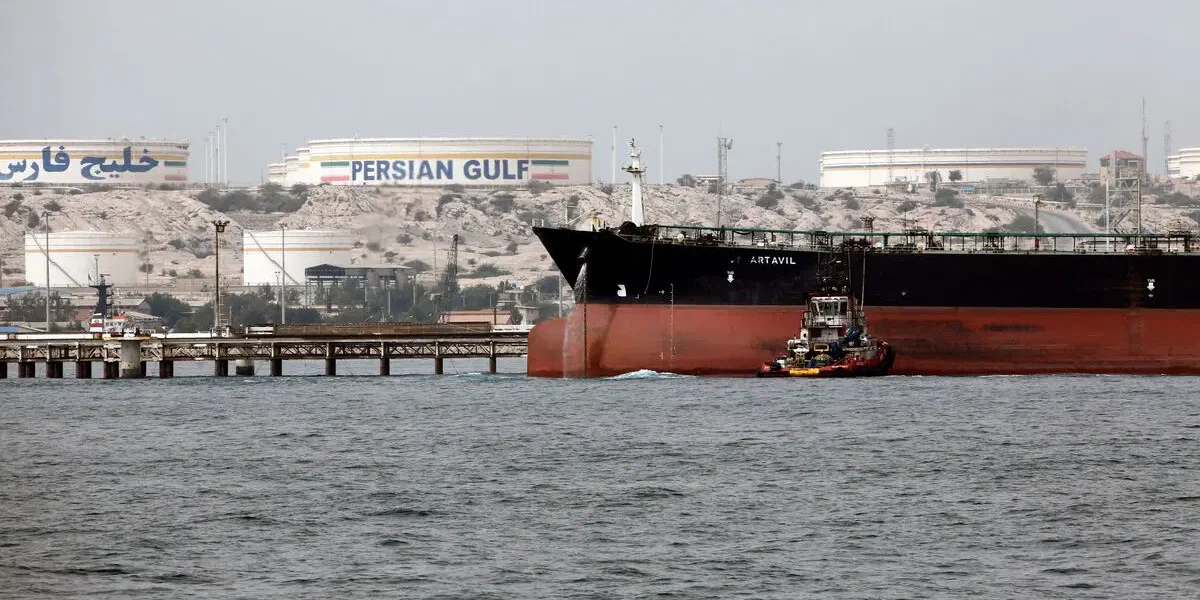
The United States has revoked a temporary sanctions waiver that allowed Iran to continue exporting oil after a series of attacks on commercial tankers in the Strait of Hormuz, further escalating tensions between Washington and Tehran.
The U.S. Treasury Department announced on Tuesday that it had cancelled the special licence introduced in June, which had permitted Iran to extract, market and transport crude oil and other petroleum products until August 21.
A U.S. official said the decision was a direct response to the attacks on three commercial vessels in one of the world’s busiest shipping routes.
“Iran’s actions in the Strait were wholly unacceptable to the United States and will be met with consequences,” the official told AFP.
Despite the move, the official said diplomatic efforts between Washington and Tehran would continue, adding that any future economic relief would depend on Iran’s willingness to meet the terms of ongoing negotiations.
According to the United Kingdom Maritime Trade Operations (UKMTO), the first incident occurred overnight when a projectile struck a commercial tanker, causing a fire on board. Two more vessels were later attacked, with one reportedly hit by a drone.
All three incidents took place near the coast of Oman.
The attacks came shortly after Oman proposed creating an alternative shipping corridor through its territorial waters, a plan strongly opposed by Iran, which has sought to impose transit fees on vessels using the Strait of Hormuz.
Qatar confirmed that one of the targeted ships was its liquefied natural gas carrier, Al-Rekayyat, and blamed Iran for the attack.
“We hold Iran fully legally responsible for this attack and for any resulting damages or repercussions,” Qatar’s Foreign Ministry spokesperson, Majed Al Ansari, said.
Iran rejected the accusation through its state news agency, IRNA, describing Qatar’s claims as unacceptable.
The renewed violence has disrupted a week of relative calm in the region and raised fresh concerns about global energy supplies and maritime security.
Following the attacks, global oil prices climbed by more than two per cent as markets reacted to fears of further instability in the Strait of Hormuz, a vital route through which a significant portion of the world’s oil exports passes.
Security analyst Andreas Krieg of King’s College London said the attacks appeared intended to discourage commercial vessels from using any alternative shipping route that bypasses Iranian oversight.
The latest developments have cast fresh uncertainty over efforts by the United States and Iran to ease regional tensions through ongoing indirect negotiations.
