The United States launched fresh strikes on Iran on Thursday, while Tehran retaliated against American allies in the Gulf, as tensions escalated around the strategically important Strait of Hormuz.
The latest confrontation marks the sixth day of renewed hostilities despite a preliminary agreement reached in June that was intended to end the conflict.
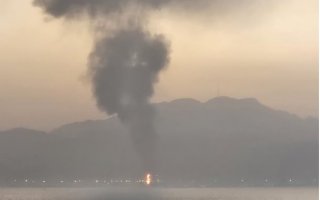
According to the US Central Command (CENTCOM), American forces targeted several Iranian military installations, including sites in the coastal city of Bandar Abbas, with the aim of reducing Iran’s capacity to threaten maritime traffic in the Strait of Hormuz.
CENTCOM said earlier operations also struck coastal defence systems and cruise missile positions on Greater Tunb Island in the Gulf.
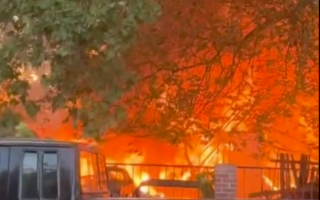
Iran’s state news agency, IRNA, reported explosions in several parts of the country, including Lorestan Province in the west and Semnan in the north. Air defence systems were also activated in parts of Tehran.
Shortly after the strikes, Gulf nations allied with Washington reported security incidents. Kuwait said it intercepted Iranian drones, while Bahrain activated air raid sirens.
At the centre of the conflict is the Strait of Hormuz, a critical global shipping route through which a significant share of the world’s oil and gas supplies passes.
Iran imposed a blockade on the waterway after the outbreak of war following US-Israeli strikes on February 28, using control of the strait as leverage against its adversaries. Although the route was briefly reopened after last month’s US-Iran agreement, Tehran recently declared it would remain closed until what it described as ongoing American aggression ceases.
Iran’s military announced that it had launched drone strikes against US military facilities in Jordan in response to the latest attacks, according to state broadcaster IRIB.
Earlier, the US military reported that one of its aircraft disabled an unmanned oil tanker allegedly attempting to breach the naval blockade around Iranian ports.
In Iraq, Kurdish authorities said the US-led coalition intercepted and destroyed eight explosive-laden drones over Erbil, the capital of the Kurdistan Region. Residents reported hearing explosions and seeing smoke near the US consulate.
Iraqi Prime Minister later condemned the drone attack, though he did not identify those responsible.
Despite the renewed military exchanges, diplomatic contacts between Washington and Tehran have not completely collapsed.
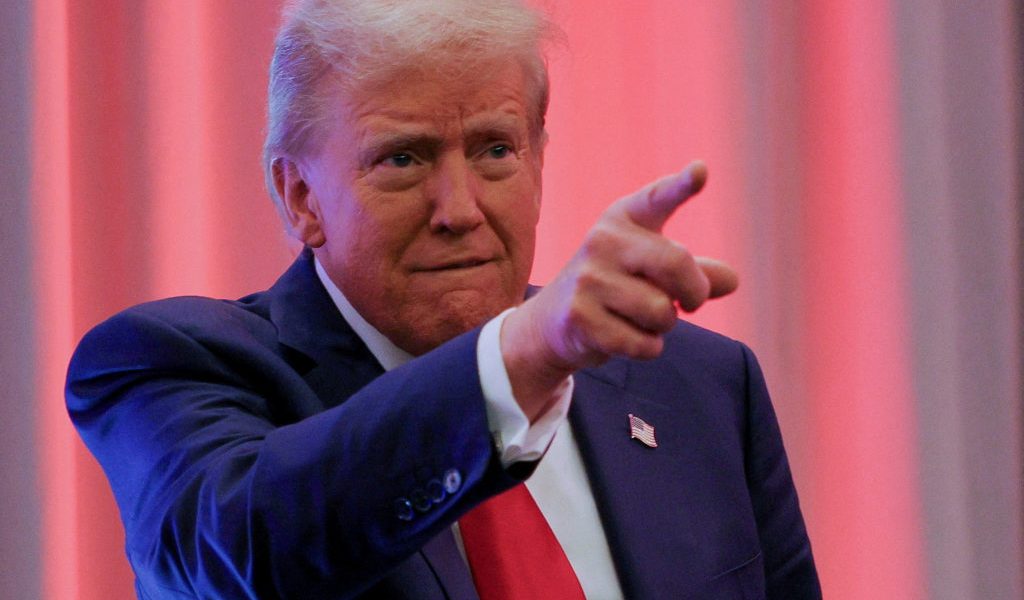
US President Donald Trump warned that Iran could face more severe consequences if it refuses to return to negotiations, saying further strikes could target key infrastructure, including power plants and bridges.
Iranian negotiator Mohammad Bagher Ghalibaf responded by questioning the value of the existing memorandum of understanding, arguing that Tehran had no reason to uphold an agreement from which it was not benefiting.
Maritime traffic through the Strait of Hormuz remains significantly reduced. Shipping tracker Kpler reported only 21 vessel transits on Tuesday, while global oil prices rose amid concerns over supply disruptions.
The United States has also reinstated a blockade on Iranian ports.
The renewed conflict has heightened fears among civilians on both sides of the Gulf. Residents in Iran and neighbouring countries have expressed growing concern over the possibility of a wider regional war.
Meanwhile, President Trump announced that an American citizen, identified by her lawyer as Dena Karari, had been released by Iran after being detained since December 2024. He described the move as a gesture of goodwill.
Iranian government spokesperson Fatemeh Mohajerani said at least 30 people have been killed in the latest wave of US strikes since last week. The military also reported that nine personnel died in attacks carried out on Wednesday in the country’s southeast.
State media further reported that a hospital in Ahvaz, southwestern Iran, was evacuated following nearby US airstrikes, with patients transferred to other medical facilities.