
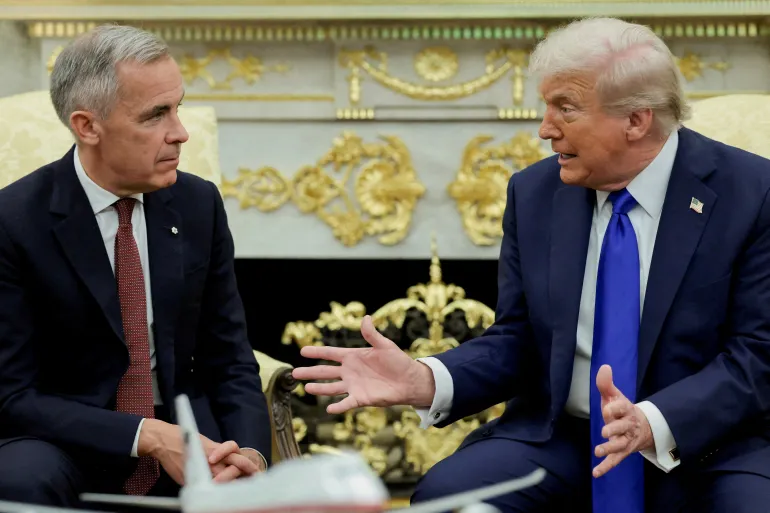
US President Donald Trump has signed executive orders imposing new 50 per cent tariffs on a broad range of Canadian imports, accusing Canada of unfair trade practices and discrimination against American products.
According to the White House, the tariffs will take effect in 30 days and will apply to products including wine, hockey sticks, cement, and several other Canadian exports.
The administration said the measures were introduced under Section 338 of the Tariff Act of 1930, marking the first known use of the provision. The move follows the US Supreme Court’s decision earlier this year to strike down several of Trump’s previous tariff measures.
The White House confirmed that the new tariffs will not apply to energy products, potash or goods already covered by sector-specific tariffs. However, products previously exempt under the United States-Mexico-Canada Agreement (USMCA) will no longer receive preferential treatment.
Responding to the announcement, Canadian Prime Minister Mark Carney said his government was prepared to intensify negotiations with Washington and had already proposed measures aimed at resolving trade disputes and modernising the USMCA.
Carney criticised the tariffs as another unilateral action by the United States, arguing they violate the terms of the North American trade agreement. He maintained that Canada’s previous trade measures were introduced only in response to earlier US actions and reaffirmed Ottawa’s commitment to protecting its economic interests.
The White House defended the decision, accusing Canada of retaliating against US trade policies since 2025. It also cited the removal of American alcoholic beverages from store shelves in several Canadian provinces, Canada’s dairy supply management policies, and restrictions affecting US vehicle exports.
US Trade Representative Jamieson Greer said the tariffs are intended to hold Canada accountable for what the administration considers discriminatory trade practices against American businesses.
Trade experts, however, questioned the legal basis for the move, noting that Section 338 has never previously been used to impose tariffs and could face court challenges.
Scott Lincicome of the Cato Institute argued that the provision has largely been superseded by more recent trade legislation, while former US trade official Ryan Majerus described the move as legally risky but potentially intended to strengthen Washington’s position in ongoing USMCA negotiations.
Industry leaders also warned that the new tariffs could trigger further retaliatory measures.
Chris Swonger, President of the Distilled Spirits Council of the United States, welcomed the administration’s focus on Canada’s restrictions on American alcohol but cautioned that a prolonged trade dispute could further strain businesses already facing economic challenges.
Analysts also challenged some of the administration’s claims regarding Canada’s dairy policies, noting that several disputed measures stem from Canada’s trade commitments with the European Union. They warned that any legal battle over the tariffs could create prolonged uncertainty for businesses and consumers on both sides of the border.
