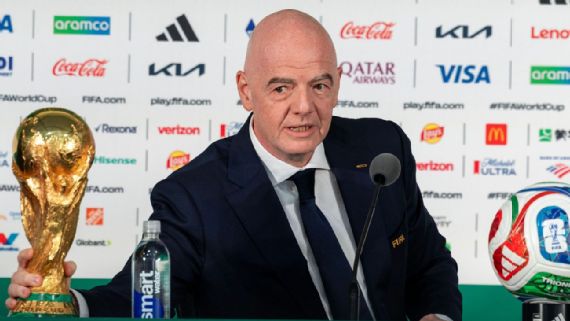
FIFA President Gianni Infantino has launched a strong defence of the 2026 FIFA World Cup, accusing critics of spreading “hate and false rumours” instead of recognising what he described as one of the most successful tournaments in football history.
The tournament faced criticism over a range of issues, including visa delays, allegations of political influence in FIFA’s decision-making and controversial refereeing and disciplinary decisions.
However, in a lengthy statement shared on his personal Instagram account and FIFA’s official platforms, Infantino dismissed the criticism, arguing that many commentators had overlooked the tournament’s positive impact.
“To all of you who missed watching kids, babies, grandparents and parents come together for the beautiful game, I say sorry that the matches are now over and sorry that you missed all that joy and togetherness,” he wrote.
“Sorry that you were so consumed by hate and criticism that you missed it all.”
The FIFA president appeared to take aim at sections of the media, saying those “behind their pens and papers” and “behind their screens” were spreading misinformation while FIFA worked to deliver a world-class sporting event.
Infantino claimed the tournament was held without major security incidents, describing it as an event filled with “joy, happiness, unity and togetherness.” He said around seven million spectators from more than 200 countries attended matches across the three host nations of Canada, Mexico and the United States.
He praised the governments of the host countries, law enforcement agencies, volunteers and FIFA staff for helping stage what he called “the most outstanding FIFA World Cup.”
Responding to criticism over visa issues, Infantino acknowledged that a small number of applications had been rejected but said millions of supporters, players and officials were successfully granted entry.
“You mentioned the few people denied visas and overlooked the millions who were approved, from all parts of the world,” he wrote.
Infantino also defended FIFA’s handling of controversial refereeing and disciplinary decisions, arguing that disputed calls and appeals are common across many of the world’s top domestic football leagues.
Without directly addressing any specific case, he suggested it was inconsistent for critics from countries with similar systems to condemn FIFA over comparable decisions.
The FIFA president also highlighted football’s role in bringing people together across political and cultural divides. He pointed to the participation of countries facing conflict and humanitarian challenges, saying the tournament demonstrated that football should promote peace, inclusion and unity rather than division.
“Our world needs love, not hate; tolerance, not division; celebration, not mourning,” he wrote.
Concluding his message, Infantino urged critics to reflect on the emotions and connections created by football instead of focusing solely on controversy.
“Please take a moment to reflect, meditate, pray, or watch a football match and truly observe the faces, the eyes, the emotions,” he said.
“May football rise above all hate.”