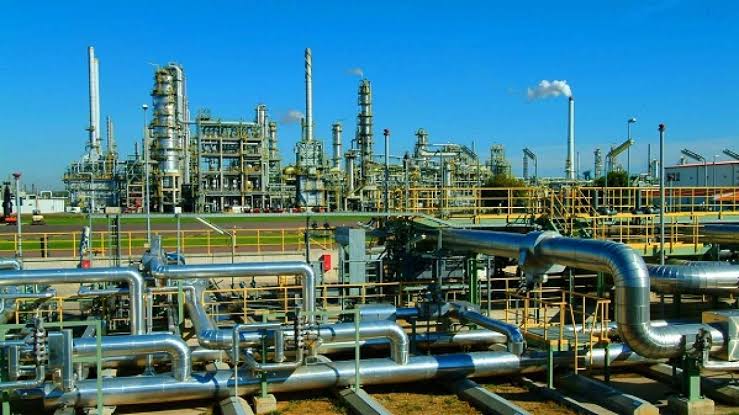
The Nigerian Midstream and Downstream Petroleum Regulatory Authority (NMDPRA) says Nigeria plans to allocate its crude oil production to the domestic market by 2030 as the country expands its local refining capacity.
According to a report by S&P Global, Nigeria produced about 1.74 million barrels of crude oil per day in June and is targeting production of three million barrels per day by 2030.
For decades, Nigeria has exported much of its crude oil to refineries in Europe and Asia while importing significant quantities of refined petroleum products. The government is now seeking to reverse that pattern by strengthening domestic refining, improving energy security and retaining more value within the Nigerian economy.
The NMDPRA said Nigeria’s current domestic refining capacity stands at approximately 1.12 million barrels per day.
The authority has also engaged the Nigerian Upstream Petroleum Regulatory Commission (NUPRC) over enforcement of legal requirements compelling crude producers to supply domestic refineries.
NMDPRA chief executive officer Rabiu Umar said the Dangote refinery is playing a significant role in expanding Nigeria’s refining capacity, particularly with plans to increase its processing capacity to 1.4 million barrels per day.
Umar said authorities are working to address crude supply shortages experienced by local refineries and ensure compliance with the Domestic Crude Supply Obligation under the Petroleum Industry Act.
“The Federal Government wishes to end the pattern where much of the country’s crude volumes are exported and refined products imported,” Umar said.
“We are engaging the Nigerian Upstream Petroleum Regulatory Commission to ensure that every molecule of our three million b/d that we hope to achieve in the coming years is refined locally.”
According to NUPRC data published on August 10, Nigerian crude producers supplied 53.7 million barrels to domestic refineries during the second quarter of 2026.
Of that amount, approximately 52.6 million barrels went to the Dangote refinery. The regulator said the refinery had been offered 68.1 million barrels, a volume that would have fully met its crude requirements.
Despite its growing role in Nigeria’s fuel supply, the Dangote refinery has previously reported difficulties securing sufficient and reliable domestic crude supplies. The refinery has consequently sourced crude internationally to support its operations and expansion.
S&P Global reported that the Nigerian National Petroleum Company (NNPC) had initially been expected to supply most of the refinery’s crude requirements. However, its ability to do so was constrained following the refinery’s launch in 2024 due to existing forward-selling commitments.
Under the Petroleum Industry Act, which came into effect in 2021, the NUPRC has the authority to impose Domestic Crude Supply Obligations on upstream operators and require a specified proportion of crude oil and condensate production to be made available to domestic refiners.
An NUPRC spokesperson confirmed that discussions were ongoing among government agencies and industry stakeholders regarding enforcement of the provision.
“We have been holding meetings involving the NMDPRA, Ministry of Finance, and crude suppliers on the enforcement of this provision of the law,” the spokesperson said.
In May, the NUPRC revealed that upstream producers offered approximately 68.7 million barrels of crude to domestic refineries during the first quarter of 2026 but ultimately supplied less than half of that amount.
The commission attributed the shortfall between crude oil offered and volumes eventually delivered largely to disagreements over pricing between producers and domestic refiners.
If Nigeria successfully achieves its production and refining targets, the move could significantly reshape the country’s petroleum industry by reducing its reliance on imported refined products and increasing the amount of crude processed within the country.