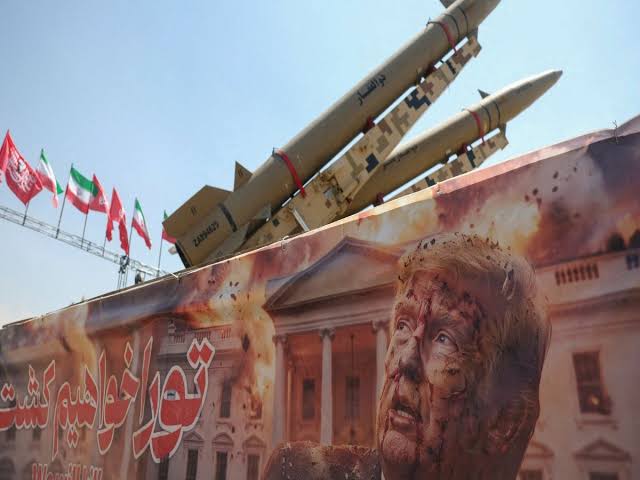
Iran and the United States have exchanged strikes overnight into Monday, marking their first direct military confrontation in more than a month and raising fears that weeks of relative calm could come to an end.
The latest escalation began on Sunday when the US military carried out a targeted strike on two Iranian rocket launchers on Larak Island, near the strategically important Strait of Hormuz.
Captain Tim Hawkins, a spokesperson for the US Central Command (CENTCOM), said the strike followed the detection of Islamic Revolutionary Guard Corps (IRGC) personnel preparing to deploy sea mines in the critical shipping route.
CENTCOM said the operation was necessary to eliminate what it described as an imminent threat to commercial shipping and safeguard vital global energy routes. Iranian state media, however, reported that military personnel and civilians were killed in the strike.
The IRGC condemned the US operation as a “strategic and deadly mistake” and retaliated with missile and drone attacks targeting US military installations in Jordan.
Jordan’s armed forces said its air defence systems intercepted eight incoming projectiles over the country’s airspace before they could reach civilian areas.
The exchange represents the first direct military clash between Washington and Tehran since late July, disrupting the US administration’s recent shift from direct military action towards intensified economic pressure on Iran.
Global oil markets reacted to the renewed tensions, with Brent crude rising 2.8 per cent to $90.57 a barrel, while US crude gained 2.7 per cent to $85.64 per barrel.
In recent weeks, US President Donald Trump has focused on increasing economic pressure on Iran rather than launching further military operations, arguing that Washington’s financial strength would push Tehran “toward a very big victory.”
The US Treasury Department has also threatened severe new sanctions against countries that continue economic ties with Iran, describing the campaign as an “economic D-Day.”
US Treasury Secretary Scott Bessent told Reuters on Sunday that the department was likely to announce new secondary sanctions against Iran every week, initially targeting banks.
“You’re going to see a lot more of these every week,” Bessent said ahead of a meeting of Group of 20 finance leaders.
“We’re starting with the banks, and we’re telling the banks it’s not okay to have Iranian money and to aid the regime.”