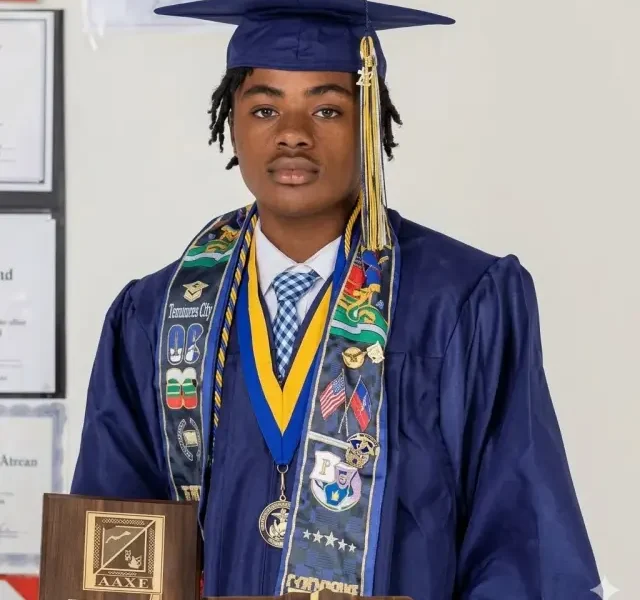
A 20-year-old Haitian-born college student in Ohio, United States, has died by suicide after reportedly losing his Temporary Protected Status (TPS) protections amid the Trump administration’s decision to terminate Haiti’s TPS designation.
Pierre Damas Bel died on Monday after walking into oncoming traffic on Interstate 70, according to the Ohio State Highway Patrol. Police said Bel had parked his vehicle on the right shoulder of the highway before entering the roadway.
“Bel succumbed to fatal injuries at the scene,” the Ohio State Highway Patrol said in a statement, adding that the incident remains under investigation.
Ohio Governor Mike DeWine described Bel’s death as a “horrible, horrible tragedy.”
“He graduated from high school here. He was well liked. He was in the junior ROTC. And, I’m told by those that knew him that he had great dreams about what he could do in this country and what he could contribute to this country,” DeWine said.
The governor also questioned whether the immigration measures affecting people like Bel were in the country’s best interest.
“I think we have to ask ourselves: Is this really good? Is it what we want done to people like this, being picked up and facing deportation? Do we want that being done in our name?” he added.
Bel’s father, Pierre Ronal Bel, told The Haitian Times that his son had become increasingly distressed after being required to wear an ankle monitor for several weeks.
Bel was among Haitian immigrants in the Springfield, Ohio, area who were required by the Department of Homeland Security to wear electronic monitoring devices following legal developments that cleared the way for the administration to end Haiti’s TPS designation.
The move potentially affects hundreds of thousands of Haitian nationals who could face the loss of their protected status and possible removal from the United States.
“In his last days, I did not recognize him as he was such an energetic kid who loves life, friends and family, and education,” his father said in a statement read by Springfield pastor Carl Ruby.
According to reports, Bel’s father said his son felt he was being “treated like an animal” after receiving the ankle monitor.
The father also told The Washington Post that Bel left home shortly before 8 a.m. on Monday and called him soon afterward, saying he was not feeling mentally well.
“I told him, ‘Come home so that we can talk?’ I had my youngest to take to school. I took him to school,” his father said.
Later that morning, police arrived at the family home and informed him that his son had died.
About a month before his death, Bel had publicly described the emotional impact of wearing the ankle monitor.
“I came to this country to pursue my education. I didn’t come here to commit a crime or hurt anyone,” he wrote on social media.
“Yet now I’m walking through the streets of the United States with a GPS monitor on my leg, carrying a feeling of shame and humiliation that I never imagined I would experience,” he added.
Bel said he had come to the United States to study, build his future and pursue a better life, questioning how he could participate in college sports while wearing a GPS device.
Pastor Carl Ruby said Bel’s family believed the student’s death was connected to the immigration policies affecting Haitians with TPS.
Ruby said the family believed Bel had been subjected to teasing by fellow students at Wright State University over the ankle monitor before his death.
“I’m sitting with a family right now whose son threw himself in front of a semi-truck today after being teased by fellow students at Wright State about his ankle monitor,” Ruby wrote on Facebook.
He added that the family wanted attention drawn to what they described as the role of the Trump administration’s immigration policies in Bel’s death.
The circumstances surrounding Bel’s death remain under investigation by authorities.