
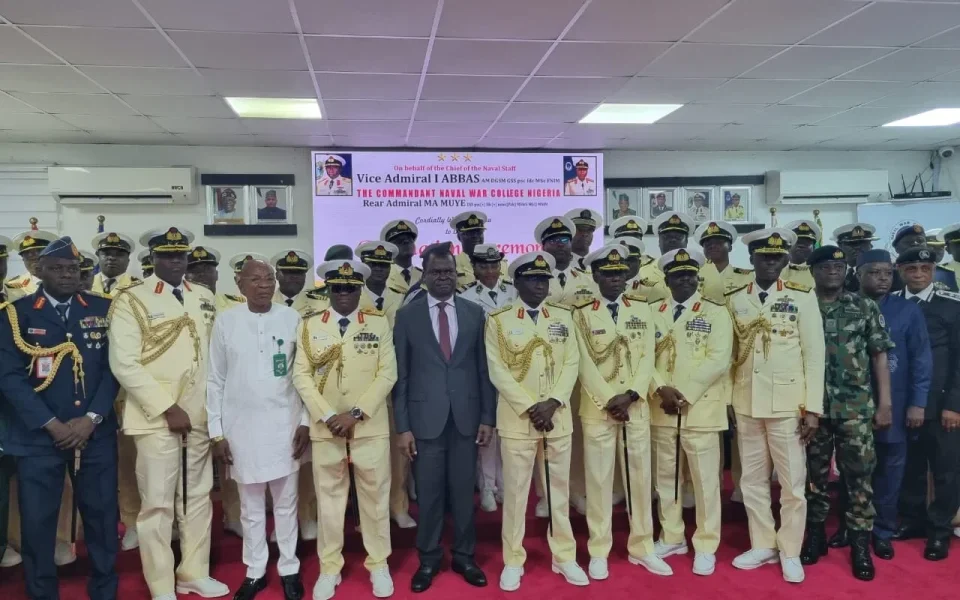
The Chief of Naval Staff, Vice Admiral Idi Abbas, has said Nigeria has recorded zero reported piracy incidents in its territorial waters for about four consecutive years.
Abbas disclosed this on Tuesday in Calabar while speaking at the graduation ceremony of participants in Naval Warfare Course 10 at the Naval War College Nigeria.
He attributed the development to improved maritime security and called on the Nigerian Navy to sustain its operational efforts against emerging threats in the country’s maritime domain.
“Encouragingly, Nigeria has maintained zero reported piracy incidents in our waters for four consecutive years, while incidents across the wider Gulf of Guinea have declined significantly.
“These gains must be sustained through persistent maritime domain awareness, credible presence at sea, regional cooperation and timely response,” he said.
The Naval Chief stressed that maritime security was closely linked to Nigeria’s economic security, given the importance of the country’s offshore resources, ports, shipping routes and energy infrastructure.
He said the Navy was intensifying operations against crude oil theft, illegal mining and other forms of economic sabotage that could undermine national revenue.
Abbas noted that Nigeria’s crude oil production reached about 1.56 million barrels per day in June 2026, stressing that maintaining a secure maritime environment remained critical to protecting the nation’s economic interests.
He urged the graduating officers to build on the progress made in maritime security by adopting emerging technologies and innovative operational strategies.
“The rapidly changing security environment requires commanders capable of integrating technology, intelligence and operational capabilities across maritime, land, cyber and other domains.
“The graduating officers are expected to build on the gains recorded in maritime security by deploying emerging technologies and innovative operational strategies,” he said.
Abbas also cited a research project presented by one of the participants, titled “Adopting Emerging Technology for Operational Effectiveness in the Nigerian Navy: The Way Forward for Naval Engineering,” as evidence of the growing importance of technology to future naval operations.
He added that the Navy’s responsibilities extended beyond the maritime environment, noting that its personnel and specialised capabilities continued to support joint operations against terrorism, insurgency and other threats to national security.
Earlier, the Commandant of the Naval War College Nigeria, Rear Admiral Muhammed Muye, said the course was designed to prepare senior officers for greater responsibilities in command, staff and strategic leadership.
A total of 34 participants completed Naval Warfare Course 10, including officers from Cameroon, Ghana and Liberia.