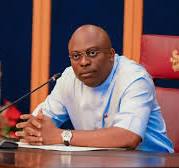
…Says Ongoing Exchange Is Driven by Political Calculations
Barrister Olalekan Festus Ojo, a Lagos-based human rights lawyer and advocate of social justice, has described the ongoing exchange between Anambra State Governor, Prof. Charles Soludo, and Peter Obi, presidential candidate of the National Democratic Congress (NDC), as a political calculation rather than a genuine effort to address governance accountability.
Ojo, who is the Managing Partner of Platinum & Taylor Hill LP, said the controversy should not be viewed merely as a historical dispute over governance but as a political development that deserves objective and thorough public scrutiny.
He maintained that testimonies from individuals with significant knowledge of Anambra State’s financial affairs make some of the claims surrounding Obi’s tenure difficult to dismiss.
According to Ojo, Governor Alex Otti, who previously served as the Chief Executive Officer of a major Nigerian bank and had direct institutional knowledge of Anambra State’s financial position, has publicly spoken positively about Obi’s financial legacy.
He also cited Dr. Ngozi Okonjo-Iweala, who served as Nigeria’s Finance Minister and Coordinating Minister of the Economy, as another prominent figure who has spoken about Obi’s management of Anambra State’s finances.
Ojo argued that the views of such individuals should be carefully considered in assessing claims about the former governor’s financial record, while noting that political interests may also influence how the issue is presented.
He further pointed to Governor Soludo’s publicly expressed support for President Bola Tinubu’s re-election and argued that this political alignment could be relevant to understanding the renewed public debate over Obi’s record.
Ojo said that if concerns over inherited debts were primarily about governance accountability, there had been several opportunities over the years for such issues to be raised before Obi emerged as a major national political figure.
He added that the renewed intensity of the allegations as Obi’s 2027 presidential campaign gains momentum raises questions about the political context surrounding the controversy.
“My advice to Governor Soludo is direct and fraternal: the most powerful legacy any governor can build is one that speaks for itself through measurable development outcomes in Anambra State,” Ojo said.
He urged Soludo to focus his attention on the state’s current challenges rather than continuously revisiting the record of his predecessor.
Ojo also advised Peter Obi to avoid becoming consumed by the public exchange.
“My advice to Peter Obi is to allow the testimonies of Otti and Okonjo-Iweala to speak with the authority they command, present his documented legacy with facts and figures, and resist the temptation to engage in a prolonged public altercation that distracts from the substantive policy conversation that his presidential campaign deserves to centre,” he said.
Addressing the people of Anambra State, Ojo urged them to assess the competing claims on the basis of verifiable evidence rather than political loyalty.
He also called on Nigerians to demand that the 2027 presidential contest focus primarily on ideas, policies and competing visions for national development rather than prolonged disputes over past state-level financial records.
“Nigeria’s problems are too urgent and too severe for its political discourse to be consumed by manufactured controversies when credible witnesses have already provided authoritative answers,” Ojo said.