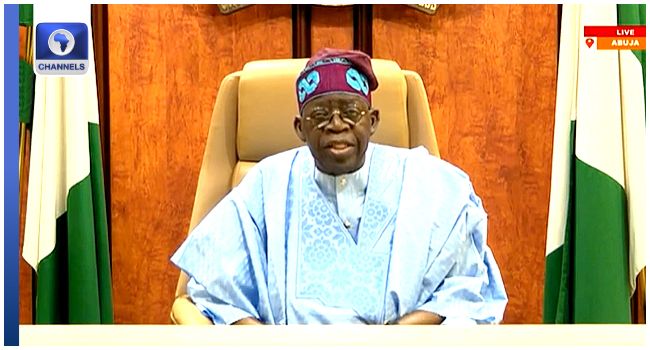
FROM REFORM TO PROSPERITY: INDEPENDENCE DAY ADDRESS TO THE NATION BY PRESIDENT BOLA AHMED TINUBU, GCFR — OCTOBER 1, 2026
My fellow Nigerians,
Sixty-six years ago today, our national flag was raised over a free and sovereign Nigeria. Since then, we have journeyed together as one nation, united by our belief in the promise of a country blessed with vast resources, cultural diversity and, above all, extraordinary people.
Our ambition has always been to build a strong, united and prosperous nation — a regional power with global influence.
The journey has not been easy. For too many Nigerians, it has been painfully difficult. We have experienced war, military rule, economic crises, insecurity and political upheaval. Yet, through all these challenges, Nigeria has endured because of the resilience and determination of its people.
It has endured through the farmer who rises before dawn to work his land, the trader who opens her shop each morning, the teacher committed to educating children, and the young entrepreneur who refuses to abandon ambition despite difficult circumstances.
We are also grateful to the men and women of our Armed Forces and security agencies who risk their lives to protect the rest of us.
Through every challenge, generations of Nigerians have held on to one belief: that this country can and will become better.
That belief is part of the inheritance of independence. Our founding fathers did not fight only for a flag, an anthem or recognition among nations. Independence was about giving Nigerians the freedom to determine their destiny and build a country capable of providing opportunity, dignity and a better life.
Sixty-six years later, it is our responsibility to fulfil that promise.
Today, as we celebrate our independence, we must honestly assess our journey, the choices we have made and the country we intend to build.
For too long, Nigeria’s promise was weakened by decisions that postponed difficult reforms and allowed deep economic distortions to worsen.
By 2023, poverty was rising and hope was fading. The situation had become extremely difficult, and we had no choice but to act.
Nigeria was like a sick patient who receives the devastating news that he has cancer. The doctor explains that treatment will be difficult and painful but offers a strong chance of recovery. The patient can choose to undergo treatment and confront the disease, or take only painkillers while allowing the illness to spread.
For too long, Nigerian leaders chose the latter option while hoping for a miracle.
They addressed symptoms while allowing the underlying problems to deepen. Huge sums were spent sustaining inefficient systems that were never designed to last, while difficult decisions were repeatedly avoided and their consequences passed from one generation to another.
When this administration assumed office, we decided to take a different path.
We chose to confront the underlying problems. The reforms that followed were difficult, and their effects were real. But we must not confuse the medicine with the disease.
Our reforms did not create Nigeria’s economic weaknesses. They confronted them.
Today, as some voices call for the abandonment of these reforms and a return to what the administration describes as unsustainable subsidies, we must remember why the journey began and how far we have come.
Three and a half years later, the administration says the evidence of an improving economic outlook is clear.
The economy has grown by more than four per cent this year, with both oil and non-oil sectors contributing to growth. Oil theft has declined, inflation has fallen substantially from its peak, foreign reserves have been rebuilt and the foreign exchange market has stabilised.
In 2025, Nigeria also recorded what the administration described as its highest-ever non-oil export revenue, exceeding $6 billion.
These developments, the President said, have been recognised by international observers, journalists, non-governmental organisations and multilateral institutions, while foreign direct investment continues to increase.
My fellow Nigerians, we have reached a turning point.
The emergency phase is over. The foundation has been repaired. Our central economic task has now changed.
Our purpose is simple: shared and widespread prosperity.
Prosperity is not merely about a larger economy, abstract figures or improved statistics. It means a Nigeria where farmers can cultivate their land safely, produce more efficiently and earn decent incomes; where factories have reliable electricity; businesses can access credit; and young people can find productive employment.
It means a country where food and transportation are affordable, education is accessible and families can look to the future with confidence.
This is the promise we must now fulfil.
Our priority is to reduce the cost of living by lowering the cost of producing and transporting the goods Nigerians consume.
Nigeria has the land and human resources to feed itself. My administration will therefore continue to expand mechanised irrigation and dry-season farming, improve access to seeds and fertiliser, increase mechanisation and invest in storage and transportation.
We are also building and completing roads, railways and ports that connect farms and factories to markets.
The logic is straightforward: when farmers produce at lower cost, fewer crops are lost between farms and markets, manufacturers spend less on electricity, trucks reach their destinations faster and businesses operate in a more competitive environment, those savings can ultimately be reflected in lower prices.
But prosperity requires more than affordable goods. It also requires productive employment.
Nigeria is a young country, with millions of young people entering adulthood every year. Our responsibility is to ensure that this demographic strength becomes an engine of production rather than a source of despair.
We are therefore placing jobs, enterprise and industrial growth at the centre of government policy.
We will use our gas resources to power new industries. We will support businesses seeking to revive factories in our industrial centres. We will expand digital connectivity to communities that have waited too long to participate in the modern economy.
We will invest in the skills employers need and support Nigerian businesses with infrastructure and financing to enable them to grow.
I want to see more Nigerians making things. I want Nigerian farms feeding our cities and supplying our factories. I want Nigerian businesses selling Nigerian products around the world.
I want to see young Nigerians building globally successful companies and creating opportunities for others at home.
I am also conscious that millions of Nigerians cannot wait for tomorrow.
Many families still struggle to afford their next meal, school fees, medical bills or transportation to work. Their difficulties did not begin with the reforms of the past three years. They are the accumulated consequences of decades of low productivity, inadequate infrastructure, limited opportunities and institutions that too often failed those who needed them most.
We cannot erase in four years what accumulated over generations. But we can change the direction.
We can build an economy that steadily lifts people out of poverty while ensuring that vulnerable Nigerians are not abandoned.
That is why we are strengthening direct support for the poorest households and improving the National Social Register to ensure assistance reaches those who genuinely need it.
It is also why the Nigerian Education Loan Fund is helping ensure that children from low-income families can pursue higher education despite financial challenges.
Through CREDICORP, working Nigerians can access consumer credit to acquire vehicles, solar systems, digital devices and other essential assets without having to save for years before making such purchases.
Working with state and local governments, we will also continue strengthening primary healthcare, basic education and essential public services on which poorer Nigerians depend.
Since 2023, the administration says it has paid salaries and pensions on time and in full and reformed the national pension system to benefit retirees and vulnerable citizens.
These programmes are not substitutes for prosperity. They are bridges to help citizens reach it.
Our objective is not simply to manage poverty more efficiently.
We will defeat it.
It will take time and discipline. It will require sustained economic growth and the creation of millions of productive opportunities across the country.
But for the first time in decades, we are undertaking this task from what I believe is a position of strength, with the fundamental direction of the economy corrected.
We confronted difficult choices and laid the foundations for lasting prosperity.
Rather than fail the promise of a better future for our children, the time has come to build that future.
The age of reform has done its work.
Now begins the age of prosperity.
An age in which the promise of Nigeria must become the lived experience of citizens from every walk of life.
We have travelled through difficult years together. We have made hard decisions together. And now, together, we must build the country those decisions have made possible.
I believe deeply in what lies ahead.
I believe in the millions of ordinary Nigerian men and women whose work, courage and determination have always been the true strength of our country.
The road ahead will still demand much from us. But we now travel it with firm footing, a clear direction and renewed hope in our collective future.
Nigeria has corrected its course. We have passed through our own Red Sea. This is not the time to look back.
Let us go forward together, with faith in ourselves, faith in our country and faith that the sacrifices we have made will yield their reward.
The Promised Land before us is a Nigeria of abundance and opportunity — a nation where prosperity is broadly shared, where every child can dream beyond the circumstances of their birth, and where our country’s immense promise is reflected in the lives of its people.
Our destination is in sight. Our foundations are strong. Our direction is clear.
So let us go forward.
No looking back.
Happy Independence Day, my fellow Nigerians.
God bless you all, and God bless the Federal Republic of Nigeria.
Bola Ahmed Tinubu, GCFR
President and Commander-in-Chief of the Armed Forces
Federal Republic of Nigeria