
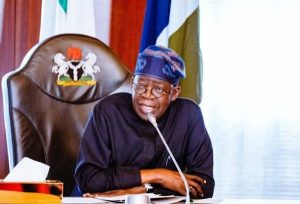
An economist, Dr. Paul Alaje, and political scientist, Prof. Abdullahi Sule-Kano, have cautioned President Bola Tinubu’s administration against equating economic stabilisation with prosperity, warning that millions of Nigerians remain trapped in poverty amid rising living costs.
The experts spoke at the 48th edition of Boiling Point Arena on Sunday night, where they questioned the impact of the Federal Government’s economic reforms on ordinary citizens and called for policies that would boost purchasing power, strengthen local production and protect the middle class.
While Alaje acknowledged improvements in public finance management and foreign reserves, he maintained that such gains did not necessarily translate into improved living conditions for Nigerians.
Sule-Kano, however, accused the administration of implementing policies that replicate the principles of the Structural Adjustment Programme (SAP) introduced in the 1980s, warning that workers and middle-income earners were bearing the brunt of the economic consequences.
The programme, anchored by veteran journalist and communication strategy expert, Ayo Arowojolu, was held virtually via Zoom and broadcast live on seven partner radio stations across Lagos, Ogun and Delta states.
The Olowu of Owu Kingdom, Oba Prof. Saka Matemilola, chaired the event and delivered the keynote address.
The discussion was themed, “Where Did the Middle Class Go? How Are Nigerians Surviving the Cost-of-Living Crisis and What Can the Government Do to Ease Hardship/Pain?”
Stabilisation Does Not Guarantee Prosperity
Alaje argued that Nigeria’s economic recovery should be assessed by the purchasing power of ordinary citizens rather than headline financial indicators.
Although he acknowledged government efforts to address public finance challenges, including fuel subsidy payments and debt servicing, he stressed that economic stabilisation was fundamentally different from economic transformation.
He explained that salary increases would provide limited relief if inflation and rising costs of food, transportation, healthcare, education and housing continued to erode workers’ earnings.
The economist urged policymakers and organised labour to prioritise improvements in real income, decent employment opportunities and domestic production.
He also questioned the sustainability of improvements in Nigeria’s foreign reserves, attributing part of the gains to borrowings, remittances and other financial inflows.
According to him, the country’s dependence on imported finished goods, coupled with weak domestic production, continued to constrain economic growth.
Alaje described a cycle in which low incomes limit savings, inadequate savings restrict investment, weak investment reduces productivity, and low productivity further depresses incomes.
He argued that breaking this cycle was essential to rebuilding the middle class and achieving sustainable prosperity.
Middle Class Increasingly Vulnerable
Sule-Kano, a former Deputy Vice-Chancellor of Bayero University, Kano, described the middle class as a vulnerable segment of society whose members could either improve their economic standing or descend into poverty.
He argued that prevailing economic pressures were pushing Nigerians who previously enjoyed financial stability into hardship.
According to him, the crisis extended beyond inflation to deeper structural problems relating to production, ownership and wealth distribution.
The political scientist accused the Tinubu administration of reproducing the principles of SAP under the guise of economic reforms, arguing that the policies had not adequately prioritised the welfare of ordinary Nigerians.
He questioned whether the gains from economic stabilisation were reaching workers and other vulnerable groups, insisting that meaningful development would remain elusive if citizens could no longer afford basic necessities.
Both experts identified the erosion of the middle class as a significant indication of Nigeria’s economic challenges.
Alaje maintained that a middle-class household should be able to afford decent housing, healthcare, education, transportation and utilities while retaining sufficient income to save and meet emergencies.
They warned that the cost-of-living crisis was affecting not only people already living in poverty but also households that previously enjoyed financial security and were now struggling to maintain their living standards.
Experts Outline Measures To Ease Hardship
Alaje identified electricity, transportation, education and healthcare as critical sectors requiring attention to drive economic transformation.
He explained that unreliable electricity increased operating costs for businesses, while expensive transportation raised the cost of moving workers and goods, ultimately contributing to higher consumer prices.
He cautioned against policies that could further increase electricity costs without adequately considering their implications for inflation and household welfare.
The economist also emphasised that affordable education and healthcare were necessary to develop the skills and productive capacity required for sustainable economic growth.
He called for targeted support for small businesses and artisans through access to equipment, skills development and financing.
Alaje further warned that government relief programmes would have limited impact if political considerations influenced the selection of beneficiaries instead of genuine economic needs.
For his part, Sule-Kano called for a development framework that directly addressed Nigeria’s structural economic challenges and placed productive activity and workers’ welfare at the centre of policymaking.
He maintained that monetary interventions alone could not deliver meaningful progress without increased domestic production and fair compensation for workers.
Prosperity Remains The Real Test Of Tinubu’s Reforms
The discussion raised questions about the effectiveness of the Tinubu administration’s economic programme, particularly whether financial stabilisation could be considered a success while millions of Nigerians continued to struggle to afford basic necessities.
Alaje urged the government to translate improvements in public finances into productive employment, stronger domestic production, higher real incomes and affordable essential services.
Sule-Kano, meanwhile, advocated a reassessment of the economic framework underpinning the reforms, alongside measures to address structural factors he believes are deepening poverty and weakening workers’ economic position.
The experts maintained that although stronger foreign reserves could improve Nigeria’s financial position, such gains would not automatically reduce food prices, lower transport fares, make healthcare affordable or enable households to save for the future.
They stressed that the ultimate measure of economic success should be whether Nigerians experience tangible improvements in their living standards and gain greater financial security.