
The National Sports Commission (NSC) has unveiled plans to create at least two million jobs through sports and raise the sector’s contribution to Nigeria’s Gross Domestic Product (GDP) to three per cent as part of efforts to transform the industry into a major driver of economic growth.
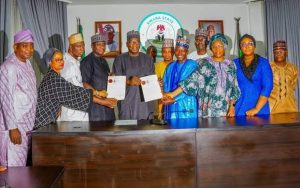
The Chairman of the commission, Shehu Dikko, disclosed this on Thursday during the inauguration of the boards of four sports federations at the Moshood Abiola National Stadium, Abuja.
Dikko said the commission was implementing reforms to move Nigerian sports beyond a traditional focus on medals and competitions towards a commercially viable industry capable of attracting investment, generating employment and supporting livelihoods.
He explained that the Renewed Hope Initiative for the Nigerian Sports Economy was designed to expand the domestic sports industry and create sustainable opportunities for athletes, coaches, administrators and other professionals.
According to him, the commission has identified more than 28,000 jobs associated with sports, covering direct, indirect and induced employment, as part of efforts to demonstrate the sector’s economic potential.
Dikko also disclosed that Nigeria won 375 medals across various sports at international competitions in 2025, describing the achievement as unprecedented.
He urged the newly inaugurated federation leaders to align their programmes with the commission’s vision by strengthening grassroots development, improving administration, investing in infrastructure and establishing clear pathways for athletes to compete internationally.
“If the federations succeed, we succeed,” he said, stressing the importance of cooperation between the commission and the federations in achieving sustainable progress.
On infrastructure financing, Dikko revealed that the commission had secured presidential approval to establish a sports infrastructure development bond, with plans to raise more than ₦1 trillion in an initial phase through the capital market.
The proposed financing mechanism is expected to support the development and improvement of sports facilities, which are essential for nurturing talent, hosting competitions and expanding commercial opportunities.
The initiative forms part of broader efforts to harness sports as an economic asset through private investment, professional development, sports tourism, sponsorships and related businesses.
Beyond athletes and coaches, an expanded sports industry could create employment opportunities in facility management, event organisation, broadcasting, merchandising, sports medicine, marketing and other support services.
Benson Unveils Padel Development Plan
Also speaking at the event, the newly inaugurated President of the Nigeria Padel Federation, Hon. Babajimi Benson, outlined plans to attract investment, establish training academies and develop sports infrastructure to position padel as a major sport in Nigeria.
Benson, who chairs the House of Representatives Committee on Defence, said the federation would focus on building a sustainable sports ecosystem through effective governance, grassroots participation and professional opportunities for young Nigerians.
He explained that his decision to lead the federation was influenced by the opportunities the fast-growing sport could offer Nigerian youths, particularly given their athletic abilities and potential to excel.
According to him, padel offers career opportunities beyond professional playing, including coaching, club management, sports administration and participation in national and international competitions.
“Padel gives them a platform whereby they can grow and gives them opportunities to either be into coaching, being in clubs, representing the country, representing their clubs and participating in international events,” he said.
Benson maintained that Nigeria should take advantage of the sport’s international growth rather than allow other countries to dominate its development.
“Nigeria must not simply watch that growth happen. Nigeria must be part of it, and ultimately, lead it in Africa,” he said.
He identified four priorities for the federation: expanding participation, developing talent, establishing a world-class competitive structure and building a sustainable organisation supported by sound governance.
To broaden participation, Benson said the federation would work to increase the number of players, clubs and courts while extending the sport beyond Lagos, Abuja and Port Harcourt to other parts of the country.
He added that schools, universities, corporate organisations and local communities would be encouraged to embrace padel to strengthen its grassroots appeal.
On talent development, he said the federation planned to establish pathways for junior players, women, girls and high-performance athletes, alongside training programmes for coaches, referees and tournament officials.
The federation also intends to introduce national competitions, rankings and championships while strengthening partnerships with the International Padel Federation and African stakeholders to align Nigerian players and officials with international standards.
Benson said he hoped to position Nigeria as a destination for major padel competitions, creating opportunities for athletes, clubs, investors and other participants in the sports industry.
He stressed that achieving these objectives would require sound governance, reliable data, technology, strategic partnerships and a sustainable commercial model capable of attracting sponsors and private investors.
“Sport cannot thrive on enthusiasm alone. We need strong governance. We need technology and reliable data. We need partnerships. And we need a sustainable commercial model,” he said.
NSC Charges Federations On Good Governance
The Director-General of the NSC, Hon. Bukola Olopade, urged sports federations to promote unity, sound administration and peaceful dispute resolution, describing cooperation as essential to the development of Nigerian sports.
Olopade commended the new leadership of the Nigeria Basketball Federation for conducting a peaceful election despite previous controversies within the body.
He said the commission had continued to intervene in disputes affecting sports administration, citing its efforts to resolve disagreements involving judo and football as examples of initiatives aimed at promoting stability.
“Sport is a family thing. We all must be united at all times,” he said.
The director-general also highlighted the commission’s regulatory powers under Section 16 of the law establishing the NSC, which he said provides for the licensing of sports federations and the withdrawal of licences where necessary.
He explained that some of the federations being inaugurated had been constituted through appointments by the commission rather than elections.
Olopade said basketball, fencing, arm wrestling and padel had the potential to generate employment, empower young people and improve Nigeria’s performance at international competitions.
He identified fencing, arm wrestling and padel as sports with prospects for winning medals at the African Games, while expressing optimism that basketball could improve its medal haul under the new leadership.
The four federations inaugurated were the Nigeria Basketball Federation, Nigeria Arm Wrestling Federation, Nigeria Fencing Federation and Nigeria Padel Federation.
The commission urged the new boards to prioritise good governance, talent identification, grassroots development and collaboration with the NSC and other stakeholders to strengthen the country’s sports industry.
