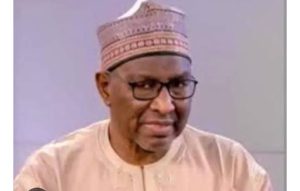
Dr Usman Bugaje, the Social Democratic Party (SDP) vice-presidential candidate for the 2027 general elections, has said the party will prioritise reducing energy costs, tackling corruption and addressing the root causes of poverty if elected into office.
Bugaje, who spoke in an interview, argued that the debate over whether to retain or remove fuel subsidy had distracted successive governments from the more fundamental question of how to make energy affordable for Nigerians and businesses.
He maintained that the SDP’s approach would focus on identifying and addressing the factors driving energy costs rather than relying solely on subsidy payments.
According to him, the party’s policy document, which he said would soon be unveiled, outlines measures to reduce energy costs, expand employment opportunities and improve the country’s productivity.
“The cost of energy is one of the most fundamental factors in the process of production. Therefore, it’s something that every government would want to prioritise,” Bugaje said.
He explained that fuel prices affect transportation costs, industrial production and the prices of goods and services, adding that affordable energy was essential for economic growth.
The SDP vice-presidential candidate criticised successive administrations for what he described as a failure to develop sustainable alternatives to fuel subsidy.
“Our focus is not so much on whether you remove subsidy or you don’t remove subsidy. Our focus is how to make energy cheaper,” he said.
Bugaje argued that the central question should be why subsidy was introduced in the first place and whether other measures could achieve the same objective without the problems associated with the existing system.
He identified local refining, increased private-sector investment in the petroleum industry and improvements in fuel transportation as some of the measures that could help lower energy costs.
According to him, addressing these factors systematically would reduce production costs and improve the profitability of businesses.
Corruption undermining energy affordability
Bugaje identified corruption as a major obstacle to reducing energy costs and improving governance, alleging that the subsidy system had been associated with the diversion of significant public resources.
He said tackling corruption was essential to ensuring that public funds were available for critical sectors, particularly education and healthcare.
“The most important thing in bringing down the cost of energy, not only the cost of energy, but the cost of governance, is to address the issue of corruption,” he said.
He argued that Nigeria needed to transition from a conventional economy to a knowledge-based economy by investing in human capital and equipping citizens with relevant skills.
Bugaje said the SDP intended to address the factors contributing to high energy costs through a systematic approach designed to prevent the benefits of government interventions from being diverted by corrupt interests.
SDP outlines plans to tackle poverty
On poverty reduction, Bugaje said the party had prioritised the issue in its proposed policy document, titled Goodbye to Poverty.
He identified poor education, inadequate skills development, low agricultural productivity and insufficient job opportunities among the factors contributing to poverty in Nigeria.
According to him, the SDP plans to strengthen education and skills acquisition to improve employability and enable Nigerians to compete for opportunities within and outside the country.
He said Nigeria had the potential to export skilled labour to other African countries, Europe and the Middle East if the necessary training and support systems were developed.
Bugaje also highlighted information technology as an area with significant employment potential, noting that expanding access to broadband and digital skills could help prepare young Nigerians for the changing global economy.
Agriculture, he said, would be another major priority for the party, given the country’s largely untapped agricultural potential and low productivity levels.
He cited tomato production as an example, stating that Nigeria produces about five to six metric tonnes per hectare, compared with an African average of approximately 19 to 20 metric tonnes per hectare.
Bugaje said improving agricultural practices and adopting suitable technologies could significantly increase output, pointing to Cuba as an example of a country with higher tomato yields that could offer lessons for Nigeria.
He also referred to research and expertise available through the Forum for Agricultural Research in Africa, an institution based in Accra, Ghana, as a resource Nigeria could leverage to improve agricultural productivity.
The SDP candidate cited Rwanda’s agricultural development following the 1994 genocide as an example of how improvements in agricultural systems could increase production and support economic recovery.
According to him, increasing productivity would improve farmers’ earnings, strengthen food security and create additional employment opportunities.
Value chains to create jobs
Bugaje said Nigeria must also develop agricultural value chains to reduce waste and create industries around products that are often discarded.
Using livestock as an example, he explained that economic opportunities extended beyond meat production to the processing and commercial use of hides, skins, bones, blood, horns and hooves.
He argued that developing such value chains would create jobs across processing, manufacturing and other related industries.
“Everything in a cow is something that can be turned into one product after the other. The blood, the skin, the bones, everything. There’s nothing you throw away, even the horns, even the hooves,” he said.
Bugaje maintained that Nigeria could generate substantially more employment from agriculture if it invested in processing and made better use of available resources.
He blamed the country’s low productivity and high levels of waste on the failure to adopt practices and technologies that have proved useful elsewhere.
Gas, pricing reforms to complement local refining
On measures to reduce inflation and the cost of living, Bugaje said local refining would help lower fuel prices by reducing dependence on imported refined petroleum products and the associated transportation costs.
He also argued that domestic refining could create jobs for young Nigerians who might otherwise lose employment opportunities to foreign suppliers.
However, he said local refining alone would not be sufficient to address the country’s energy challenges.
Bugaje called for a review of energy pricing and greater integration of natural gas into Nigeria’s energy mix, arguing that a broader approach could help reduce costs for households, transport operators and businesses.
He said the SDP would examine the various components that contribute to fuel prices and determine where interventions would be necessary.
According to him, any government intervention aimed at reducing energy costs must be transparent and structured to ensure that ordinary Nigerians benefit.
“If we have to intervene to bring down the cost, it’ll be done transparently in such a way that it won’t be an avenue for this corruption cartel to now take away whatever gains that are supposed to translate to the ordinary person,” Bugaje said.
He maintained that making energy affordable, strengthening agriculture, investing in human capital and creating jobs would be central to the SDP’s proposed economic agenda ahead of the 2027 presidential election.