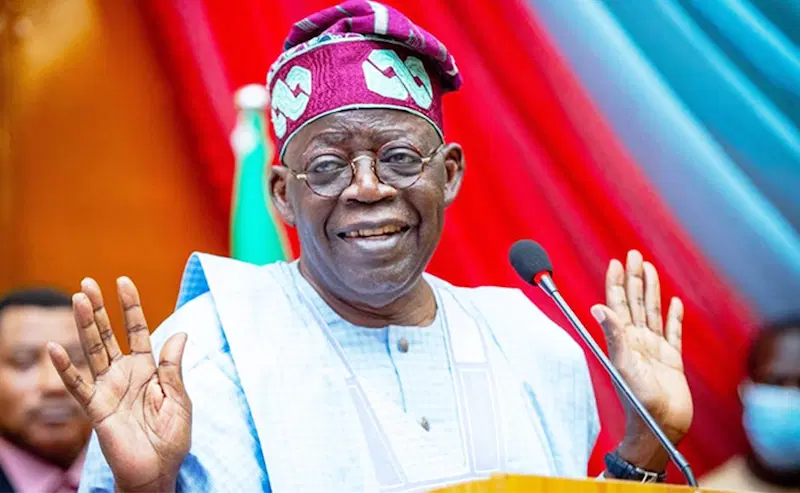
A Fellow of the Institute of Credit Administration, Asiwaju Busari Shaamsuddeen Akande, has cautioned President Bola Tinubu against excessive reliance on borrowing to fund infrastructure projects, urging the Federal Government to explore asset-backed financing and public-private partnerships.
Akande warned that Nigeria’s ambition of building a $1 trillion economy by 2030 could be jeopardised if the government continues accumulating debt without ensuring that infrastructure investments generate adequate economic returns.
His remarks come amid renewed efforts by the Tinubu administration to secure additional external loans to finance government projects.
In his assessment of Nigeria’s economic direction, the financial expert said the government must look beyond the volume of infrastructure being constructed and focus on how quickly such investments can translate into industrial output, increased business activities and higher government revenue.
He explained that excessive borrowing for projects with long gestation periods could create a mismatch between immediate debt repayment obligations and the time required for the investments to generate returns.
Akande argued that “Nigeria should reduce its dependence on conventional borrowing by exploring Public-Private Partnerships and sovereign Sukuk financing”.
According to him, such financing arrangements would enable private investors to participate in infrastructure development while sharing the associated commercial risks.
He also warned that the high cost of government borrowing could discourage commercial banks from lending to businesses, as financial institutions might prefer investing in government securities that offer attractive returns.
The expert further stressed the need to connect infrastructure projects to industrial and agricultural production centres to ensure that local businesses, particularly small and medium-scale enterprises, benefit from the investments.
He urged the government to establish mechanisms through which part of the revenue generated from infrastructure projects could be channelled towards reducing public debt.
Akande, who is also a Certified Islamic Finance Executive, maintained that achieving the $1 trillion economic target would depend not only on the scale of government spending but also on the productivity of investments, equitable access to economic opportunities and effective public debt management.