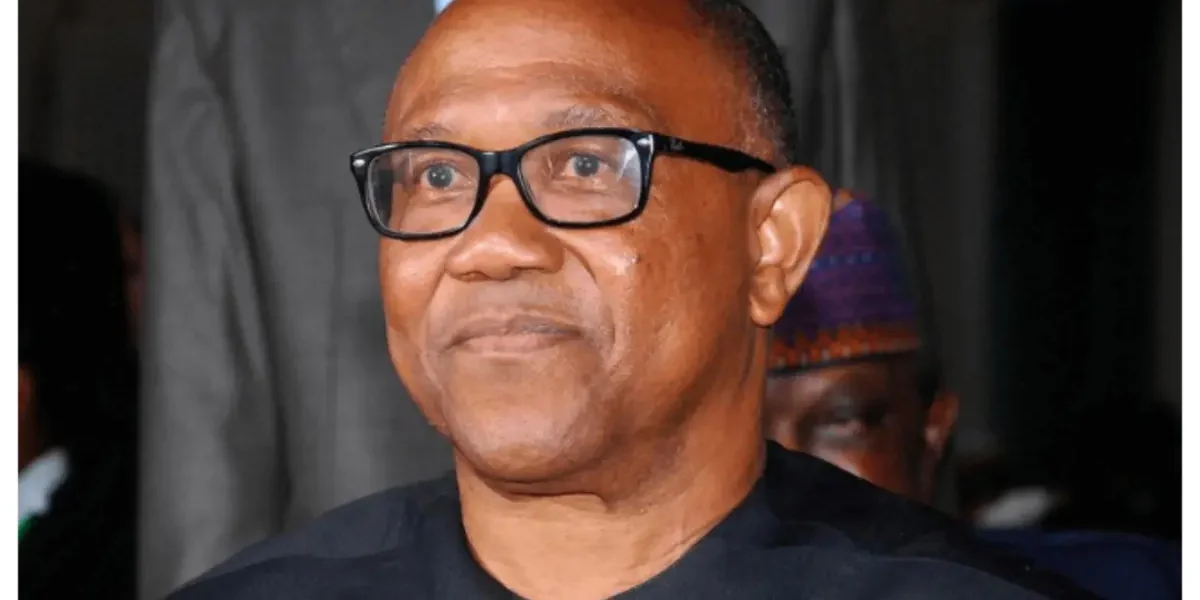
The 2027 presidential candidate of the Nigeria Democratic Congress (NDC), Peter Obi, has alleged that officials of the Nigeria Football Federation (NFF) prevented him from greeting members of the victorious Flamingos team at the Abuja airport.
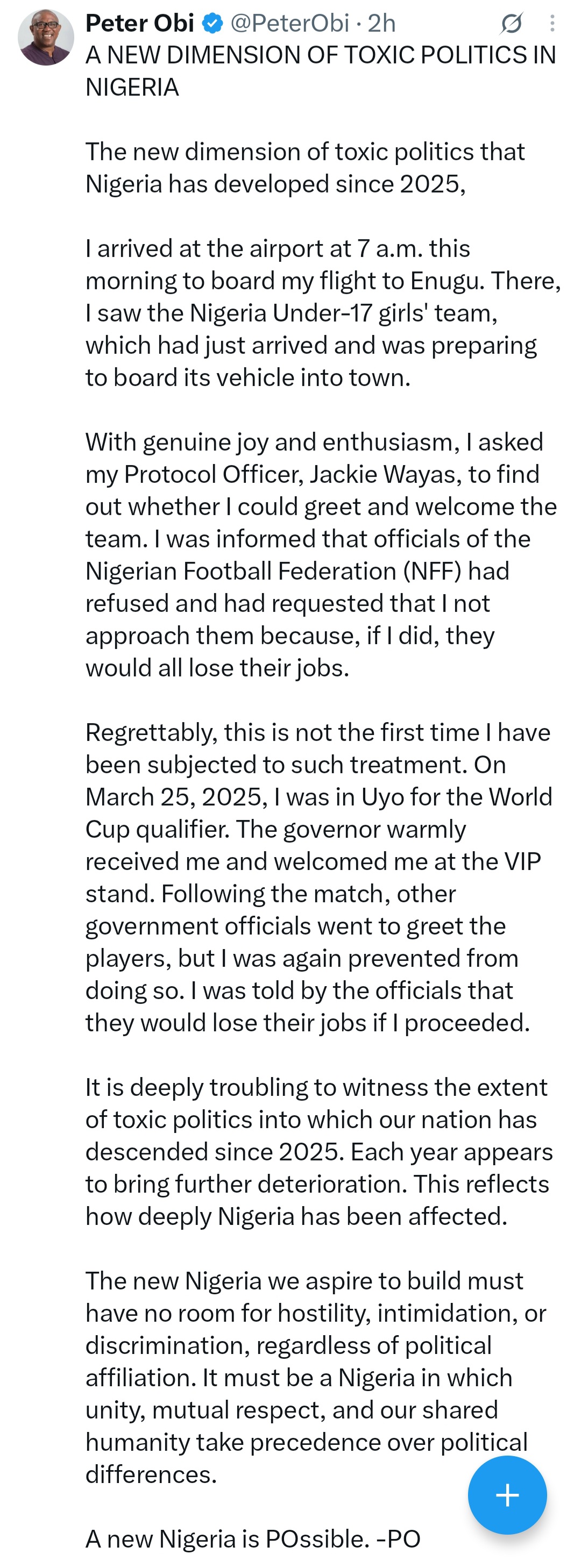
Obi made the allegation in a statement released on Monday, November 9, titled “A New Dimension of Toxic Politics in Nigeria”, in which he criticised what he described as the growing influence of political divisions in the country.
The Flamingos returned to Nigeria on Monday after defeating Japan 2-1 in Saturday’s final in Morocco to win their first-ever FIFA U-17 Women’s World Cup title, making Nigeria the first African country to achieve the feat.
Recounting his experience, the former Anambra State governor said he arrived at the Abuja airport around 7 am to board a flight to Enugu when he noticed the victorious national team.
Obi said he instructed his Protocol Officer, Jackie Wayas, to find out whether he could approach the players to congratulate and welcome them home.
However, he claimed he was informed that NFF officials had rejected the request and instructed him not to approach the team.
“I was informed that officials of the Nigerian Football Federation had refused and had requested that I not approach,” he said.
The former governor added that the incident was not the first time he had allegedly been prevented from interacting with Nigerian footballers.
He recalled a similar experience on March 25, 2025, during a World Cup qualifying match in Uyo, Akwa Ibom State, where the state governor had welcomed him at the VIP stand.
According to Obi, he was prevented from greeting the players after the match, despite other government officials being allowed to interact with them.
“Following the match, other government officials went to greet the players, but I was again prevented from doing so. I was told by the officials that they would lose their jobs if I proceeded,” he stated.
Describing the incidents as examples of what he called “toxic politics”, Obi expressed concern over what he believes is a growing culture of political hostility and discrimination in Nigeria.
“It is deeply troubling to witness the extent of toxic politics into which our nation has descended since 2025. Each year appears to bring further deterioration. This reflects how deeply Nigeria has been affected,” he said.
He called for a Nigeria where political differences would not breed hostility or discrimination, stressing the need to prioritise unity, mutual respect and shared humanity over political affiliations.