
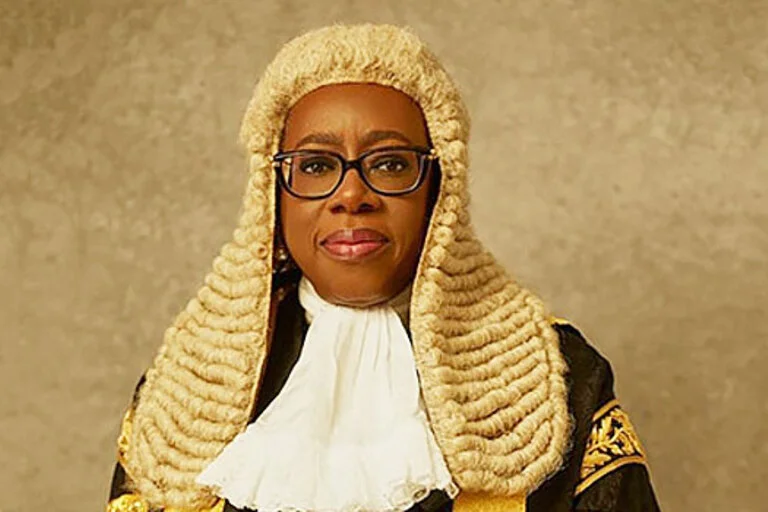
Nigeria’s Chief Justice, Justice Kudirat Kekere-Ekun, has sworn in 375 judicial officers appointed to serve on Election Petition Tribunals ahead of the 2027 general elections.
The inauguration ceremony took place on Monday at the Body of Benchers Auditorium in Abuja, as the judiciary intensified preparations for the resolution of election-related disputes.
The event also featured the unveiling of the second edition of the Judicial Electoral Manual and a capacity-building workshop designed to equip judicial officers with the knowledge required to handle electoral cases.
Speaking at the ceremony, Justice Kekere-Ekun urged the newly inaugurated tribunal members to uphold judicial independence, maintain integrity and deliver justice without fear or favour.
She emphasised that judges must remain guided by the Constitution, established legal principles and the judicial code of conduct when handling election petitions.
The Chief Justice warned against political interference and attempts to influence judicial decisions through intimidation, public pressure or unethical conduct.
She also cautioned political parties, lawyers, media organisations and members of the public against actions capable of undermining the credibility of election tribunals.
Justice Kekere-Ekun specifically warned against the misuse of ex parte applications and coordinated social media campaigns aimed at influencing ongoing court proceedings.
She stressed that election petitions must be determined strictly on the evidence presented before the tribunals and the relevant provisions of the law.
According to the CJN, public opinion and political interests must never replace legal evidence in the administration of justice.
She also reminded tribunal members of the importance of managing cases efficiently and delivering judgments within the strict timelines established by electoral laws.
President of the Court of Appeal, Justice Monica Dongban-Mensem, provided further details about the composition of the tribunal panels.
According to her, the 375 judicial officers comprise 138 judges with previous election tribunal experience and 237 newly nominated members selected from judicial institutions across the country.
Justice Dongban-Mensem emphasised that transparent, impartial and timely resolution of electoral disputes is essential to maintaining public confidence in Nigeria’s democratic process.
She urged the judges to remain professional and mindful of the intense scrutiny that often accompanies election-related cases.
Meanwhile, the Chairman of the Independent National Electoral Commission (INEC), Professor Joash Amupitan, highlighted emerging technological challenges that could affect election litigation in 2027.
He identified artificial intelligence-generated deepfakes and disputes involving the electronic transmission of election results as potential issues that tribunals may be required to address.
Amupitan stressed the need for cooperation between INEC and the judiciary to strengthen electoral accountability and protect public confidence in the democratic system.
He also emphasised the importance of ensuring that technological developments do not undermine the integrity of election proceedings.
According to the election timetable cited in the report, Nigeria’s 2027 general elections are scheduled to begin with the presidential and National Assembly elections on January 16, 2027.
Governorship and State Houses of Assembly elections are scheduled to follow on February 6, 2027.
The inauguration of the tribunal members represents a significant step in preparations for the legal disputes that may arise from the forthcoming elections.
