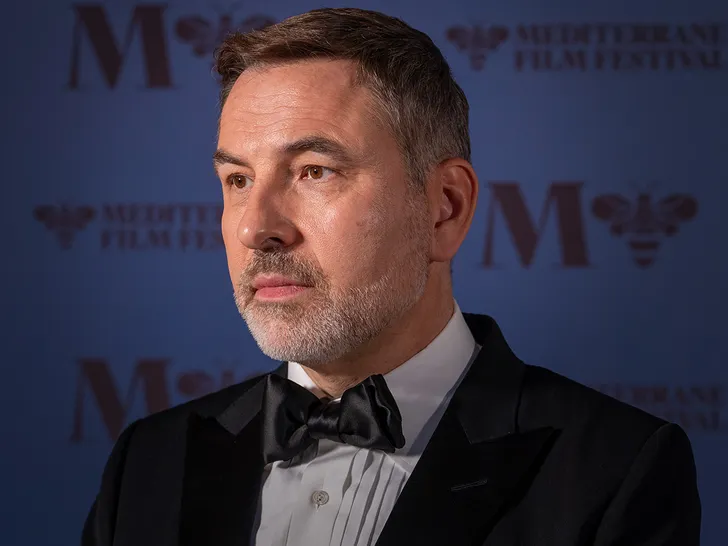
British comedian, actor and bestselling children’s author David Walliams has been identified as the celebrity who sought legal action to prevent media organisations from publishing his name in connection with allegations of inappropriate and exploitative behaviour involving girls and young women.
Walliams, widely recognised for his appearances in the BBC comedy programmes Little Britain and Come Fly With Me, has denied the allegations.
The entertainer was previously identified only by the initials “PPT” during court proceedings concerning the proposed publication of reports by ITN and The Guardian.
According to reports, Walliams has been accused of using his celebrity status and influence to pursue inappropriate relationships with girls and young women over several years.
An hour-long ITN documentary featured accounts from women who alleged they had experienced inappropriate behaviour involving the comedian.
One woman, identified under the pseudonym “Alex”, claimed she first encountered Walliams at a Little Britain signing event in London in 2004.
She said she was 15 years old at the time, while Walliams was 32.
According to her account, the comedian allegedly commented on her appearance and stared intensely into her eyes during their interaction.
Another woman alleged that Walliams sexually assaulted her at his home when she was 15.
She claimed he kissed and touched her without her consent, adding that she pulled away and told him to stop.
These remain allegations, which Walliams denies.
The controversy has also reportedly affected Walliams’s professional commitments.
According to TMZ, the comedian was removed from the upcoming British film The Road to Nevermore following the emergence of the allegations.
A source close to the production reportedly told the outlet that Walliams had been dropped from the project and that his name was subsequently removed from the film’s IMDb listing.
The production company has not been quoted in the supplied report as issuing a formal public explanation.
During the legal proceedings, Walliams’s lawyers sought to prevent ITN and The Guardian from identifying him in their reporting.
His legal representatives argued that publicly revealing his identity could pose a serious risk to his mental health, including a risk of suicide.
However, lawyers representing the media organisations maintained that reporting the allegations was in the public interest.
They argued that concerns about his mental health should be addressed through appropriate medical support rather than restrictions on publication.
Mr Justice Matthew Nicklin rejected Walliams’s application to prevent the media organisations from publishing his identity.
However, the court temporarily maintained restrictions on identifying him while the possibility of an appeal was considered.
The judge had previously warned that anyone who breached the reporting restrictions could face serious legal consequences, including imprisonment.
The case has raised questions about privacy, freedom of the press, public interest reporting and the legal protections available to individuals facing serious allegations.
Walliams continues to deny the accusations, and the court’s decision concerning publication does not establish that the alleged misconduct occurred.