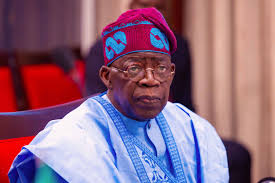
President Bola Tinubu has described Nigeria’s removal from the Financial Action Task Force (FATF) “grey list” as a strategic victory for the nation’s economy and financial governance.
The FATF, the global watchdog on money laundering and terrorist financing, announced Nigeria’s delisting during its October 2025 Plenary in Paris, France, on Friday. The decision followed Nigeria’s full implementation of a 19-point action plan aimed at strengthening its Anti-Money Laundering and Countering the Financing of Terrorism (AML/CFT) framework.
In a statement issued by his Special Adviser on Information and Strategy, Bayo Onanuga, Tinubu said the development was “not just a technical accomplishment but a strategic victory for our economy and a renewed vote of confidence in Nigeria’s financial governance.”
Nigeria was placed on the grey list in February 2023 over weak enforcement, poor inter-agency coordination, and opaque financial practices. The President said his administration viewed the designation as a call to action rather than a setback, prompting him to direct key agencies to implement sweeping reforms.
Under his directive, the Nigerian Financial Intelligence Unit (NFIU), in collaboration with the Offices of the Attorney-General and the Ministers of Finance, Justice, and Interior, coordinated comprehensive legal, institutional, and operational reforms to meet FATF standards.
Tinubu commended the Director and Chief Executive Officer of the NFIU, Hafsat Bakari, and her team for their “diligent and timely implementation” of Nigeria’s commitments, earning international recognition for tackling serious financial crimes.
Confirming the delisting, Bakari described the milestone as “a true test of the country’s resilience, coordination, and unwavering commitment to reform.”
She said, “The FATF has officially removed Nigeria from the list of jurisdictions under increased monitoring, commonly known as the grey list. This milestone marks a historic moment in Nigeria’s fight against serious financial crimes and underscores our commitment to global standards in combating money laundering, terrorist financing, and proliferation financing.”
According to her, key reforms that led to the delisting included the enactment and enforcement of the Money Laundering (Prevention and Prohibition) Act, 2022, and the Terrorism (Prevention and Prohibition) Act, 2022; the operationalisation of the Beneficial Ownership Register; and stronger supervision of designated non-financial businesses and professions.
She added that Nigeria had enhanced the capacity of its intelligence and law enforcement agencies to detect, investigate, and prosecute financial crimes while deepening international cooperation and cross-border intelligence sharing.
Bakari also praised President Tinubu, the National Assembly, judiciary, and private sector stakeholders for their support, urging all parties to sustain the momentum to maintain compliance with global standards.
At the same plenary, FATF also removed South Africa, Mozambique, and Burkina Faso from its grey list after acknowledging significant improvements in their financial integrity systems.
Analysts say Nigeria’s exit from the FATF watchlist will boost investor confidence, facilitate cross-border transactions, and attract foreign capital inflows.
Tinubu, while welcoming the development, said it marked the beginning of a new chapter in Nigeria’s financial reform journey.
“We will sustain the institutionalised reforms, deepen collaboration, and continue to build a financial system that Nigerians and the world can trust,” he affirmed.