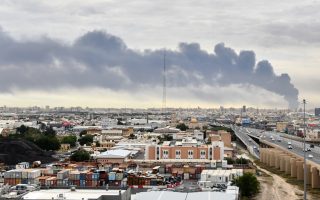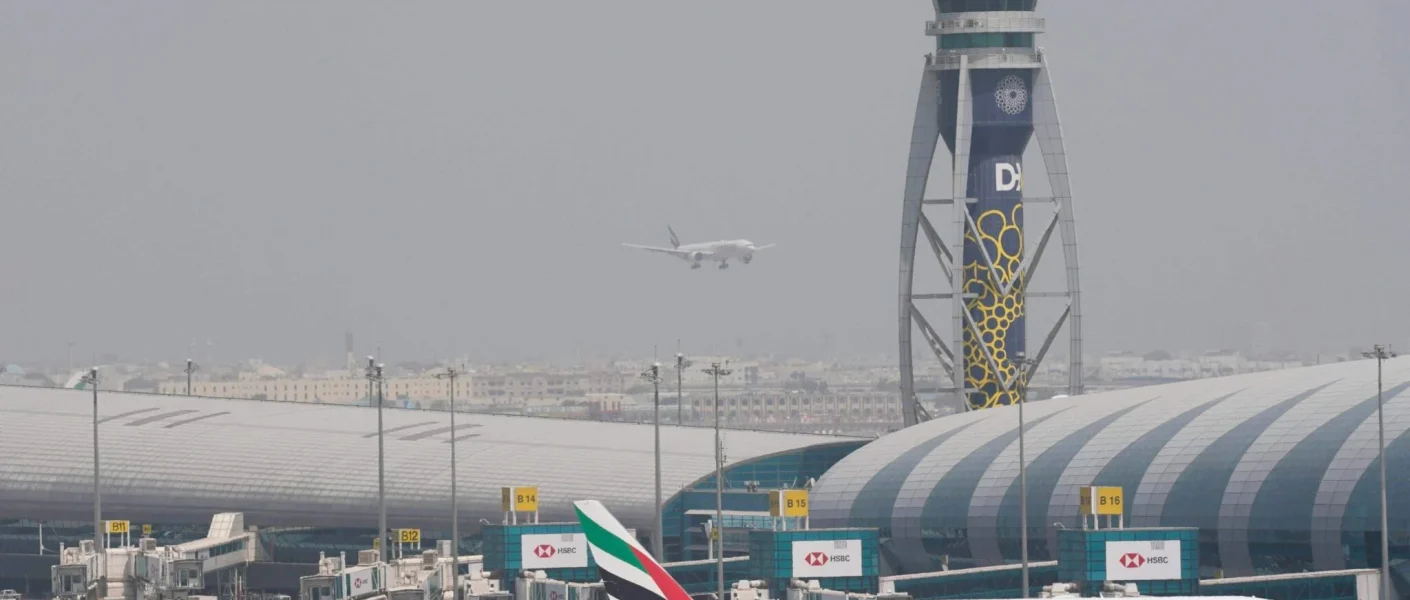
Drones fell near Dubai International Airport on Wednesday, injuring four people, while several ships were struck in or near the Strait of Hormuz, as Iran continued attacks that have disrupted oil markets and air and maritime traffic across the Gulf.
The oil-rich Gulf region has been heavily affected by Iran’s response to US-Israeli strikes that triggered the ongoing Middle East conflict, with Tehran targeting US-linked assets as well as civilian and energy infrastructure.
Iran has also intensified attacks on Gulf energy facilities and shipping routes, particularly in the Strait of Hormuz, a critical waterway that typically handles nearly 20 percent of global oil supply, contributing to sharp fluctuations in global oil prices.
According to the United Kingdom Maritime Trade Operations (UKMTO), a container ship and a bulk carrier were struck by unidentified projectiles off the UAE coast—one near Dubai and the other close to the northern emirate of Ras Al Khaimah.
A third vessel was also hit in the Strait of Hormuz off Oman, triggering a fire that was later brought under control, the UKMTO said.
Meanwhile, Saudi Arabia intercepted drones targeting the Shaybah oil field, a key component of its production capacity. Explosions were also reported over Qatar, while the UAE confirmed additional attacks.
Saudi authorities further reported intercepting seven ballistic missiles aimed at the kingdom’s eastern region and the Prince Sultan Air Base, where an American service member was killed in an earlier attack on March 1.
Analysts say Tehran appears to be attempting to disrupt major Gulf refining hubs while tightening pressure on the Strait of Hormuz, a strategy aimed at inflicting maximum strain on global energy markets.
In recent days, Saudi Aramco’s Ras Tanura facility—home to one of the largest refineries in the Middle East—has been targeted, along with the UAE’s massive Ruwais refinery, one of the largest refining complexes in the world.
The attacks have already forced QatarEnergy, one of the world’s largest producers of liquefied natural gas (LNG), to suspend production last week and declare force majeure.
Energy producers in Kuwait have issued similar warnings, indicating that circumstances beyond their control could prevent them from meeting export commitments.