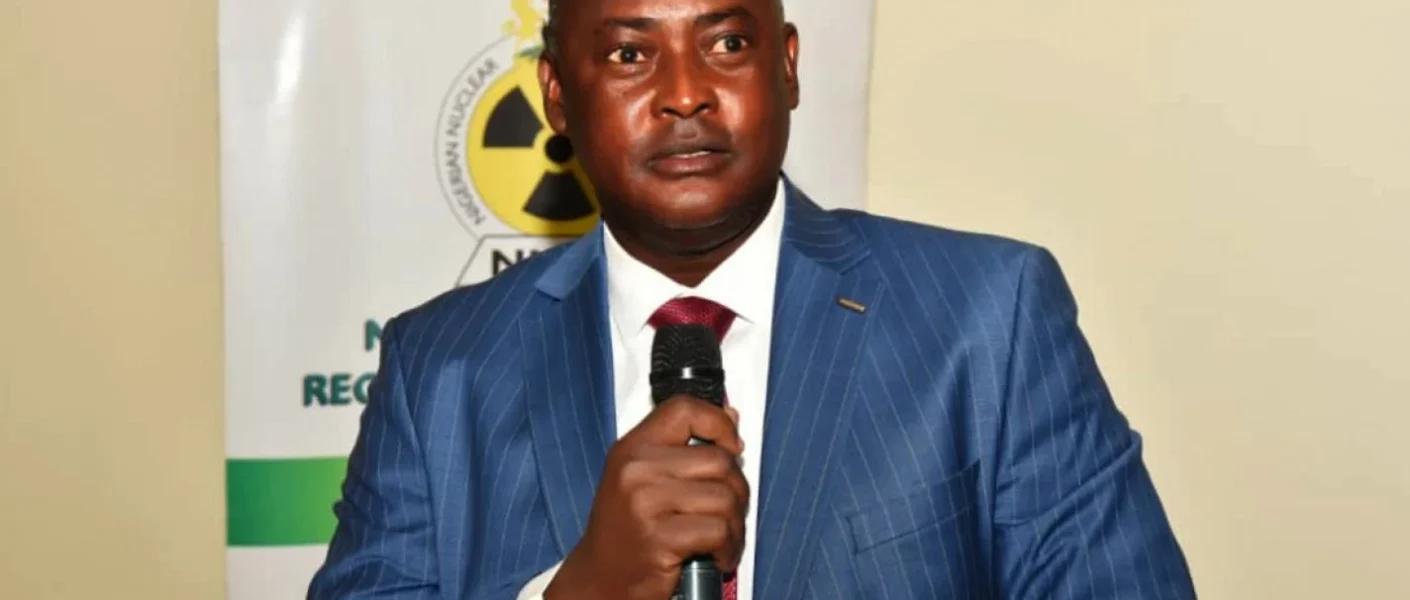
Nigeria has strengthened its nuclear and radiation safety framework following the completion of a €1 million technical cooperation project between the Nigerian Nuclear Regulatory Authority (NNRA) and the European Union aimed at preparing the country for the safe development of nuclear energy.
The Director-General and Chief Executive Officer of the NNRA, Yau Idris, disclosed this on Thursday in Abuja during a dissemination workshop marking the completion of the project titled “Increased Capacity and Capabilities of the Nigerian Nuclear Regulatory Authority (NG3.01/22).”
Idris, who was represented by the NNRA’s General Manager for Radiological Safety, Farouq Ingawa, said the initiative significantly strengthened Nigeria’s regulatory capacity and aligned the country’s nuclear safety framework with global standards.
He described the project as an important milestone in Nigeria’s long-term plan to build a credible and resilient regulatory system capable of safely overseeing nuclear and radiation technologies.
According to him, the project has positioned the NNRA to operate as a credible, independent and forward-looking regulator responsible for safeguarding people, property and the environment.
“As we mark the formal conclusion of project NG3.01/22, we look ahead with confidence. The foundations laid through this collaboration position the NNRA to remain an independent, credible and forward-looking regulator committed to protecting people, property and the environment for generations to come,” he said.
The two-and-a-half-year initiative, valued at about €1 million, was implemented through a consortium led by the Energy Conscious Organisation of Austria in partnership with several European nuclear regulatory bodies and technical experts.
Idris explained that the project focused on five key work streams aimed at improving regulatory governance, institutional processes and human capacity within the NNRA.
One of the major outcomes was the strengthening of Nigeria’s regulatory framework for nuclear safety, including the development of new regulations for licensing nuclear facilities.
“The development of the Nigerian Licensing of Nuclear Facilities Regulations and the review of regulations covering design, commissioning, operation and decommissioning have positioned Nigeria closer to full alignment with the International Atomic Energy Agency safety standards and international best practices,” he said.
Another key achievement was the establishment of an Integrated Management System designed to improve transparency, accountability and quality in regulatory decision-making within the authority.
Idris added that the project also supported the development of a comprehensive Human Resource Development and Training Plan while strengthening knowledge management within the organisation.
He said NNRA staff benefited from extensive training programmes across several European countries, where inspectors, analysts, legal officers and technical staff participated in workshops, courses and on-the-job training.
According to him, the initiative also supported preparations for a follow-up Integrated Regulatory Review Service mission by the International Atomic Energy Agency scheduled for October 2026, which will assess Nigeria’s regulatory infrastructure for nuclear and radiation safety.
The project also produced key policy instruments, including a draft National Nuclear and Radiation Safety Policy and Strategy that will guide the country’s nuclear governance.
Idris urged stakeholders to ensure the gains from the EU-supported initiative are fully institutionalised within the authority, including the full implementation of new regulations and management systems.
He expressed appreciation to the European Union and its partners for supporting Nigeria’s nuclear safety agenda, noting that international cooperation remains essential for ensuring the safe and peaceful use of nuclear technology.
Nigeria has for years explored nuclear energy as part of its long-term strategy to diversify electricity generation and reduce dependence on fossil fuels, with discussions held with international partners such as Russia and China on the possible development of nuclear power plants.
Participants at the closing ceremony included senior government officials and diplomats, among them the Permanent Secretary of the Federal Ministry of Petroleum Resources, Patience Oyekunle, and the Deputy Ambassador of the European Union to Nigeria and ECOWAS, Zissimos Vergos.
Vergos commended Nigeria’s commitment to building a strong nuclear safety regime, describing the collaboration as a demonstration of the importance of international partnerships in ensuring the safe development of nuclear technology.
Established in 1995, the NNRA is responsible for regulating nuclear safety, radiation protection and the peaceful use of nuclear technology in Nigeria.