
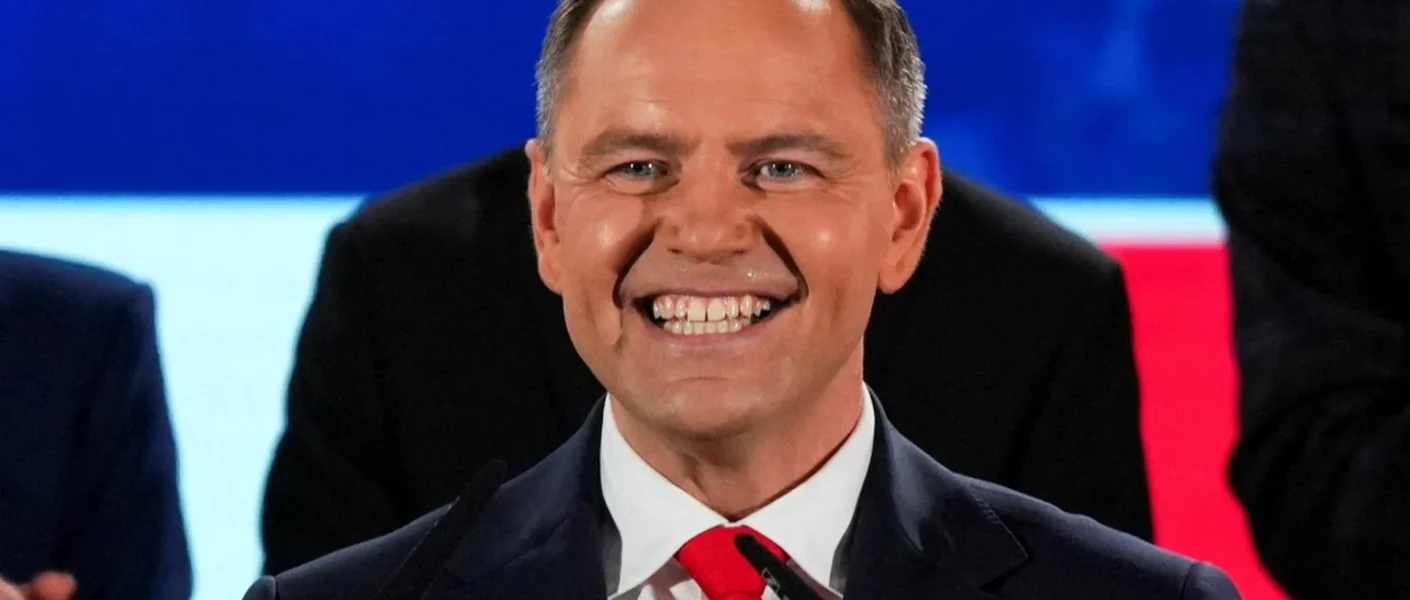
Poland’s political tensions escalated on Thursday after President Karol Nawrocki vetoed a multi-billion-euro defence loan plan from the European Union that had already been approved by parliament.
Lawmakers in Poland — the largest country on NATO’s eastern flank — last month backed the Security Action For Europe (SAFE) scheme, which would provide nearly €44 billion in loans to boost defence capabilities.
The funds are intended for air and missile defence systems, anti-drone technology and other military equipment as the war continues in neighbouring Ukraine.
However, Nawrocki — whose relationship with Prime Minister Donald Tusk’s pro-EU government has been strained — blocked the legislation.
“I have decided not to sign the law that would allow Poland to take out the so-called ‘SAFE’ loan. I will never sign a law that undermines our sovereignty, our independence, as well as our economic and military security,” the president said in a televised address.
Tusk, a strong supporter of the SAFE programme, sharply criticised the move, while his spokesperson described the veto as “an act of national treason.”
“The president has missed the chance to behave like a patriot. A disgrace!” Tusk wrote on X.
The prime minister had earlier warned that if the president vetoed the law, his government would pursue a “Plan B” to access the European funds regardless. Following the veto, he called an emergency cabinet meeting for Friday morning.
As the war in Ukraine drags on and with Russia and Belarus bordering Poland, Warsaw has increased its defence spending to 4.8 percent of GDP — among the highest in NATO.
The dispute over the SAFE programme is unusual in Poland, where political leaders traditionally maintain broad agreement on defence matters.
Nawrocki argues that the EU scheme could allow European Union authorities to exert pressure on Warsaw by monitoring how funds are spent. He also warned the loans could leave Poland with debt “for generations.”
Instead, the president proposed an alternative initiative called “SAFE 0%,” suggesting that defence spending be financed using funds from Poland’s central bank rather than EU loans.
Critics, however, doubt the feasibility of the proposal. Analysts say the veto may also be politically motivated.
Political scientist Jaroslaw Kuisz suggested Nawrocki wants to prevent Tusk from benefiting politically from the economic boost the funding could bring ahead of the 2027 general election.
“The president wants to harm the prime minister as much as possible so that he cannot reap the benefits of his immense financial success,” Kuisz said.
Another analyst, Wojciech Przybylski of the Visegrad think tank Insight, said the president’s broader goal may be to weaken the government and pave the way for a shift in power in 2027.
Meanwhile, Poland’s nationalist opposition, led by Jaroslaw Kaczynski, argues the SAFE programme could reduce cooperation with American defence companies and increase Europe’s influence over Polish defence policy.
Kaczynski claimed the agreement would bind Poland with “various dependencies” and place the country “under the German boot.”
Despite the political row, a poll by Poland’s Centre for Public Opinion Research shows that 52 percent of Poles support the SAFE plan, while 35 percent oppose it.
Nawrocki, who has frequently clashed with the ruling centrist coalition, has been labelled by critics as a “veto machine” for repeatedly blocking government-backed legislation.
