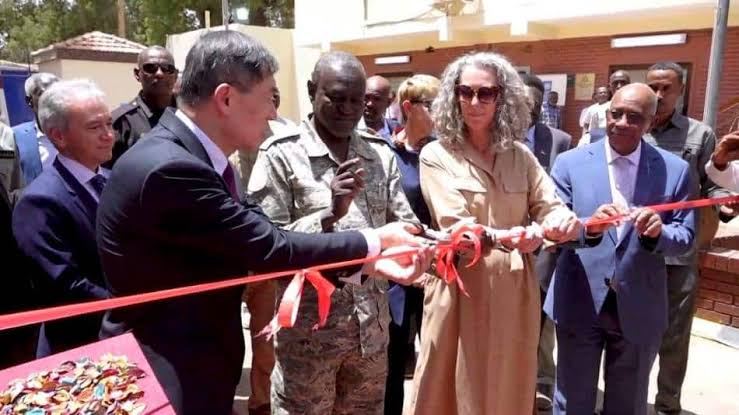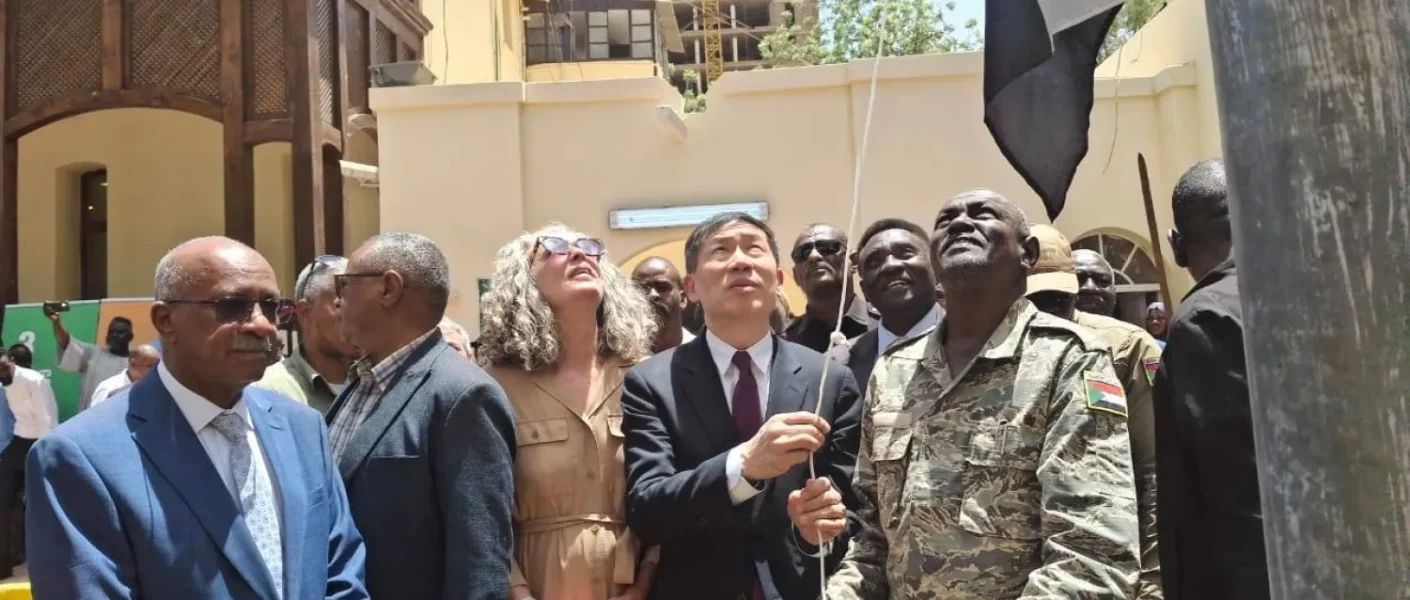
The United Nations has officially reopened its headquarters in Khartoum, Sudan, for the first time in three years, marking a significant step toward resuming operations in the capital after relocating to Port Sudan following the outbreak of war in April 2023.
The reopening ceremony on Thursday, April 2, was attended by senior government officials, including Minister of Foreign Affairs and International Cooperation Mohieddin Salem and Khartoum Governor Ahmed Osman Hamza, alongside UN representatives and officials from its various agencies.
UN Resident Coordinator and Humanitarian and Development Coordinator in Sudan, Denise Brown, described the reopening as a major milestone, enabling UN agencies to access previously unreachable areas. Speaking at a press conference in central Khartoum, she affirmed the UN’s continued commitment to supporting the state and citizens in ending the conflict and rebuilding the country.
The UN had relocated to Port Sudan shortly after clashes erupted between the Sudanese army and the Rapid Support Forces (RSF) in April 2023.
Minister Salem hailed the UN’s return as a historic moment for Sudan. “With this celebration, we send a message to our partners in the United Nations that we are working side by side for the stability of Sudan,” he said. He stressed that regions like Darfur and Kordofan would recover from what he described as the “kidnapping” by the RSF militia.
Salem highlighted the government’s commitment to peace, referencing its “Hope for Peace” initiative and affirming that no external party or armed militia would dictate terms in Sudan. He also called on the African Union to reconsider Sudan’s suspension from membership and urged IGAD to take stronger measures to support the country’s stability.
Xu Haoliang, Associate Administrator of the UNDP, noted that the return of UN agencies to Khartoum provides vital support during this critical phase. He said the UNDP will focus on humanitarian response while strengthening national institutions and local communities to aid recovery and reconstruction.
Sudan continues to face one of the region’s largest humanitarian crises, with millions displaced internally and abroad, widespread disruption to health and education services, and escalating food insecurity.
The UN’s recently announced Sudan Humanitarian Response Plan for 2026 indicates that approximately 33.7 million people will require humanitarian assistance this year, an increase of 3.3 million from 2025, underscoring the growing urgency of international support.