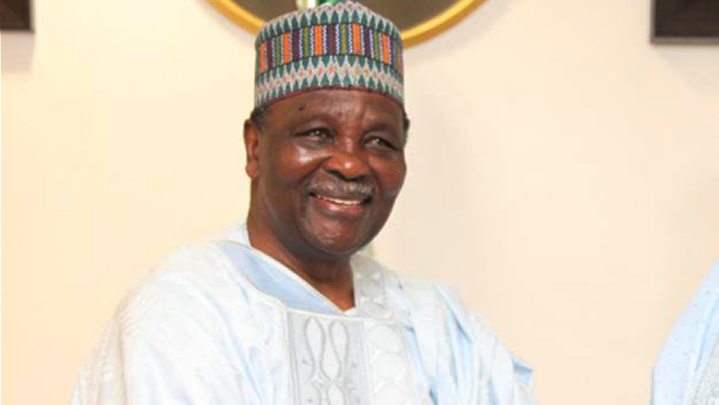
Former Head of State Yakubu Gowon has revealed that the refusal of the United States and United Kingdom to supply arms to Nigeria during the civil war forced his government to turn to the Soviet Union and, at one point, a Lebanese businessman operating in the black market for military support.
The disclosure is contained in Gowon’s newly launched autobiography, My Life of Duty and Allegiance, unveiled in Abuja on Tuesday, May 19, at an event attended by senior government officials, with President Bola Tinubu represented by Vice President Kashim Shettima.
In Chapter Fifteen of the 859-page memoir titled If The Devil’s Ready To Help, Gowon described the severe ammunition shortage faced by federal forces during the civil war, which lasted from July 1967 to January 1970. He wrote that by late 1968, Nigeria’s ammunition reserves had dropped to about half a million rounds for the entire army, making continued military operations increasingly difficult.
“As the weeks of fighting wore on, our stock of ammunition was steadily depleted… and we could not replenish them because international sales restrictions prevented suppliers from selling military hardware to Nigeria,” he wrote.
Gowon said he ordered federal troops to halt further advances after the capture of Enugu, citing the shortage of ammunition.
“Left with no choice, I ordered the Federal troops to hold their position after the capture of Enugu up to Okigwe and Umuahia because I could not, in clear conscience, commit them to further advance knowing that the ammunition to sustain the effort was in short supply,” he stated.
The former Head of State expressed disappointment at Nigeria’s Western allies, particularly in contrast to their involvement in other global conflicts at the time. He recalled meeting British and American diplomats in what he described as a pivotal moment during the war.
“If I say I’m not disappointed, it will be an understatement,” Gowon wrote. “I had a duty and responsibility to keep Nigeria united and safe… I will go to any devil to get what I need to deal with the problem.”
He said both ambassadors left without offering any firm commitment, prompting him to seek alternative sources of support.
According to Gowon, he instructed his Principal Secretary to contact the Soviet ambassador, leading to a Nigerian delegation visiting Moscow. He said the Soviet Union supplied military equipment, including MiG aircraft, which strengthened Nigeria’s capabilities during the conflict.
However, he noted that Soviet assistance did not fully resolve the immediate ammunition shortage. Gowon said he then turned to Lebanese businessman Ali Jamal, whom he described as someone deeply supportive of Nigeria’s cause.
Jamal reportedly agreed to finance the purchase of ammunition and military equipment on the condition that he would be reimbursed later without interest.
“He told me not to worry and that he would use his own money to provide the ammunition we needed but would want to be reimbursed interest-free at the shortest possible time,” Gowon wrote.
The arrangement, however, reportedly sparked internal disagreement within the Federal Executive Council after then Finance Commissioner Obafemi Awolowo objected, citing lack of due process for the payments.
Gowon said he ultimately overruled the objections, invoking his authority as Head of State to approve the expenditure.
“Although I used anger and the power of my office to win the argument… I felt proud of my team that always insisted on following due process,” he added.
He further disclosed that Jamal was eventually fully reimbursed by the government. The memoir, which spans 36 chapters, chronicles Gowon’s life from his upbringing in Plateau State through his military career, the civil war period, his 1975 ouster, and subsequent years in exile and academic study.