
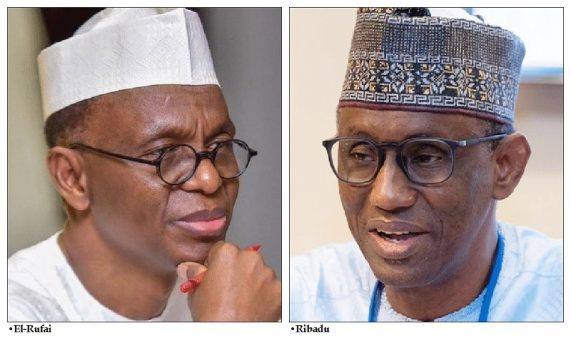
The trial of former Kaduna State governor, Nasir el-Rufai, over allegations of treason and breach of national security continued on Monday at the Federal High Court in Abuja, with prosecutors presenting evidence tied to an alleged intercepted conversation involving the National Security Adviser, Nuhu Ribadu.
During the hearing, the prosecution played a 43-minute television interview in which el-Rufai allegedly claimed that a private conversation involving Ribadu had been wiretapped and forwarded to him. Prosecutors said the former governor also defended the alleged interception during the interview, arguing that governments commonly monitor communications.
A prosecution witness told the court that investigators later questioned Ribadu, who reportedly confirmed that the conversation referenced by el-Rufai had indeed taken place between him and the chairman of the Independent Corrupt Practices and Other Related Offences Commission (ICPC).
According to the witness, the ICPC chairman also acknowledged the conversation after portions of the interview were played to him.
The prosecution further stated that the programme anchor, Charles Aniagolu, activist-lawyer Deji Adeyanju and cameraman Ugochukwu Agalayana were subsequently invited for questioning.
Aniagolu reportedly confirmed that el-Rufai admitted during the interview that someone intercepted the conversation and sent it to him, while also insisting that such surveillance practices were common in government. Statements obtained from Aniagolu and Adeyanju were admitted into evidence as Exhibits C, C1 and E without objection from the defence.
A separate statement from Agalayana was also admitted as Exhibit D after the cameraman confirmed he set up the recording equipment used during the interview, although he said he did not pay attention to the discussion itself.
The prosecution witness told the court that investigators concluded el-Rufai made what they described as an “open confession” regarding the alleged interception during the interview. According to the witness, the investigation team believed the act was capable of threatening national security and therefore recommended prosecution.
A preliminary investigation report submitted by the prosecution was admitted into evidence as Exhibit F.
During cross-examination by defence counsel Paul Erokoro, the witness admitted investigators did not examine any communication devices belonging to Ribadu, obtain IP addresses or conduct forensic analysis related to the alleged interception.
However, the witness maintained that such steps were considered unnecessary after Ribadu allegedly confirmed the authenticity of the conversation mentioned in the interview.
The witness also acknowledged that el-Rufai never directly claimed he personally carried out the interception, but insisted the former governor repeatedly maintained that the conversation had been tapped and sent to him.
When asked whether el-Rufai may have been exaggerating during a politically charged television interview, the witness replied that he regarded the former governor as “a person of integrity” and believed he meant what he said.
Following the cross-examination of the first prosecution witness, Justice Joyce Abdulmalik adjourned the case until June 22 and 23 for further hearing.