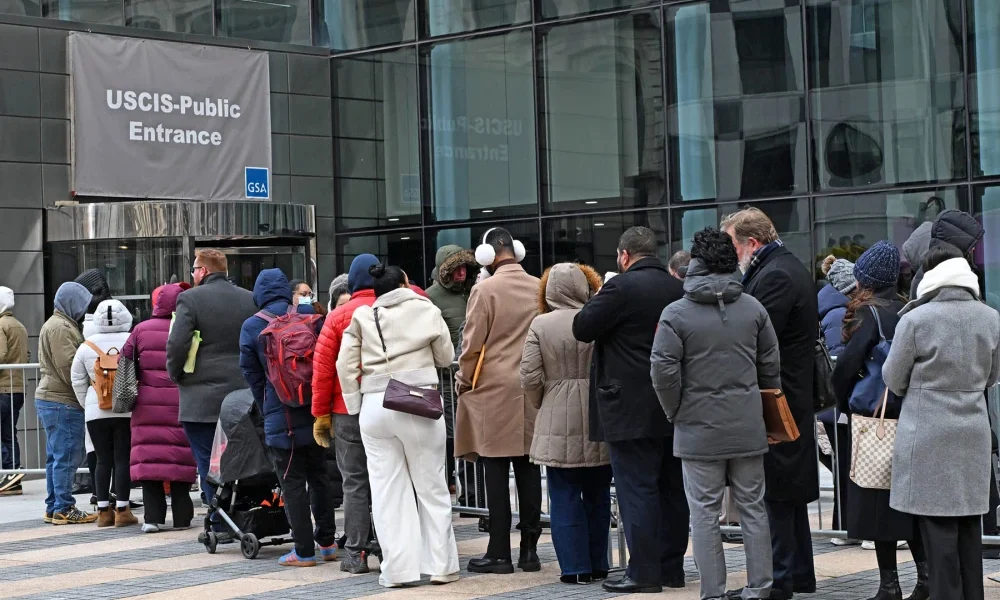
A US federal judge on Friday, June 5, ruled that several immigration policies adopted under President Donald Trump’s administration were unlawful after they effectively blocked applicants from 39 countries from receiving decisions on asylum claims, work permits, green cards, and citizenship applications.
Chief U.S. District Judge John McConnell, sitting in Providence, Rhode Island, struck down the measures introduced by U.S. Citizenship and Immigration Services (USCIS), saying they left affected applicants from parts of Africa, Asia, Latin America, and the Middle East in prolonged “legal limbo.”
He said individuals who had followed all required legal procedures were nonetheless left “stuck waiting, for months on end, for benefit requests that USCIS refuses to adjudicate,” despite complying with laws established by Congress and agency regulations.
McConnell, an appointee of former President Barack Obama, ruled that the policies were enacted without proper statutory or regulatory authority and were influenced by “anti-immigrant sentiments” that are not permitted to guide government decision-making.
He wrote that the delays could not be blamed on applicants themselves but were based solely on “the happenstance of their birth.”
The decision marks a win for a coalition of immigrant rights groups and labor unions that filed suit in March challenging the USCIS policies.
“This ruling reaffirms a basic principle: the federal government cannot shut down lawful immigration pathways or discriminate against people based on where they come from,” said Skye Perryman of Democracy Forward, which represented the plaintiffs.
The policies were introduced amid a broader immigration crackdown following a November shooting in Washington, D.C., in which two National Guard members were attacked. Prosecutors say the suspect, Afghan national Rahmanullah Lakanwal, has pleaded not guilty.
Following the incident, Trump publicly called for a “permanent pause” on migration from what he described as “Third World countries,” and expanded travel restrictions to include 39 nations.
Countries affected by full or partial bans included Afghanistan, Iran, Haiti, Somalia, Venezuela, and Syria, with the administration citing national security and vetting concerns.
Judge McConnell said the USCIS measures effectively suspended immigration processing for people from those countries, placing “the lives of countless individuals on hold.”
He concluded that the agency had failed to follow the law, writing that it had “neither followed the law nor done things the right way,” and had violated both immigration statutes and administrative rules governing its authority.