
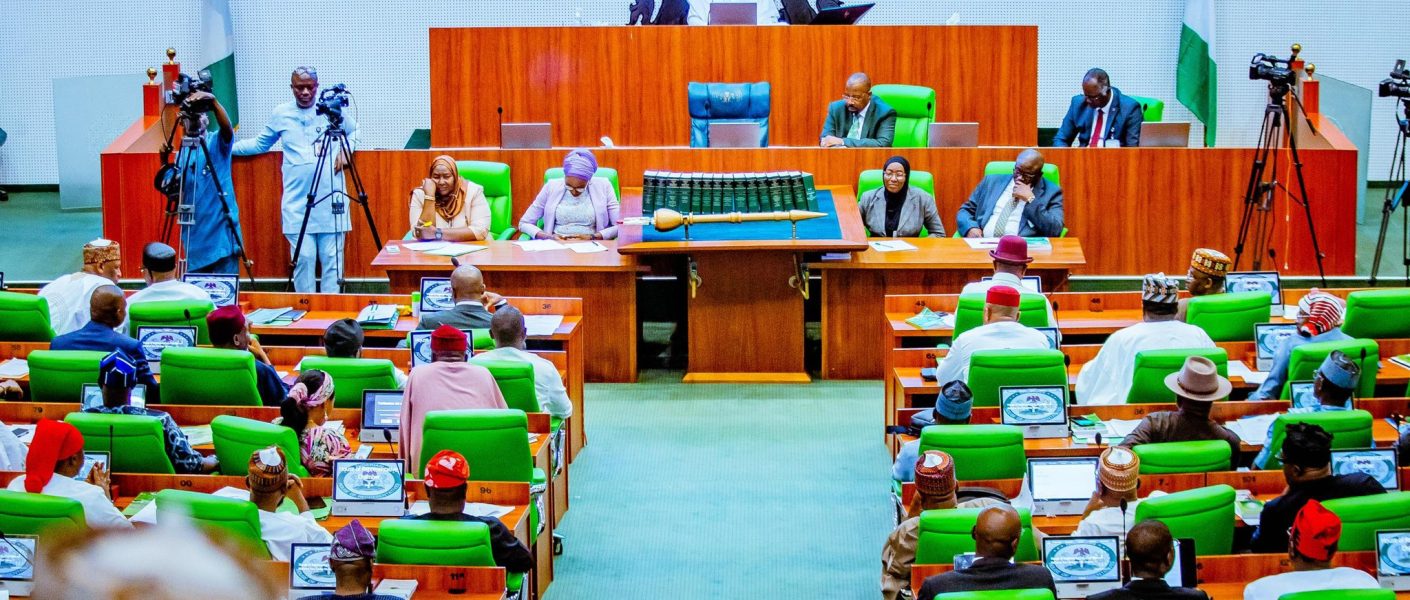
The House of Representatives has commenced a clause-by-clause review of President Bola Tinubu’s executive bill seeking to establish state police, with lawmakers indicating they may adopt the Senate-approved version with only minor amendments.
The exercise began during a meeting of the House Committee on Constitution Review, chaired by the Deputy Speaker, Benjamin Kalu, who described the proposed legislation as a key constitutional reform aimed at strengthening Nigeria’s security architecture.
Kalu said the House intends to build on the work already completed by the Senate to speed up the passage of the bill, which he described as a priority for addressing the country’s growing security challenges.
He recalled that the House had earlier passed its own Constitution Alteration Bill on State Police on June 11 before lawmakers proceeded on recess. However, the decision was reversed on July 14 after President Tinubu transmitted an executive bill on the same subject, allowing lawmakers to consider the President’s proposal instead.
According to Kalu, President Tinubu, as Commander-in-Chief of the Armed Forces, is well placed to initiate comprehensive reforms capable of improving Nigeria’s internal security.
He noted that the executive bill has already passed its first and second readings in the House, while stakeholder consultations held during the National Assembly Open Week fulfilled the public hearing requirement for the proposed legislation.
Kalu urged members of the Constitution Review Committee to carefully examine each provision of the bill to ensure it reflects the interests and aspirations of Nigerians.
Describing the proposal as one of President Tinubu’s signature constitutional reform initiatives, the Deputy Speaker noted that the President has consistently advocated for a multi-tier policing system since his tenure as Governor of Lagos State.
He added that although the executive, legislature and judiciary operate independently, all three arms of government remain committed to strengthening national security through meaningful constitutional reforms.
Kalu also disclosed that both chambers of the National Assembly are working closely together to harmonise their efforts and accelerate the constitutional amendment process. He expressed confidence that the bill would receive presidential assent once passed by the legislature.
The committee is using the Senate-approved version of the executive bill as its working document during the clause-by-clause review.
According to Kalu, the executive proposal closely mirrors the version previously considered by the House, with only a few additions, including provisions covering interpretation, transitional arrangements and saving clauses to facilitate the implementation of a state policing system.
He further revealed that the Senate introduced about eight minor amendments, which the House Committee will examine and adopt where appropriate.
The ongoing review marks another significant step toward establishing a constitutionally recognised multi-level policing system designed to improve security and enhance law enforcement across Nigeria.