
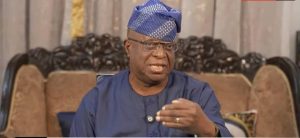
Professor Femi Otubanjo, a research professor at the Nigerian Institute of International Affairs (NIIA), has described political rallies as ineffective platforms for communicating government policies and programmes to Nigerians, arguing that they primarily serve to mobilise and energise party supporters.
Otubanjo also said President Bola Tinubu was not constitutionally or politically obliged to campaign in all 36 states and the Federal Capital Territory, stressing that modern communication technologies offered more effective ways of reaching voters.
In an interview with Joy Anigbogu, the professor discussed the limitations of political rallies, calls for presidential candidates to disclose their health status, and the relevance of nationwide campaigns and presidential debates ahead of the 2027 general elections.
On whether Tinubu’s failure to visit every state for campaign activities suggested a lack of regard for Nigerians or raised concerns about his age and fitness for another term, Otubanjo said a distinction must be made between the president’s official responsibilities and his role as a candidate of the All Progressives Congress (APC).
He explained that when Tinubu campaigns, he does so as an APC candidate rather than as the president of the country, adding that rallies should not be mistaken for platforms through which candidates can effectively communicate their programmes to the entire electorate.
“What you call campaign rallies in Nigeria are a misnomer. They’re merely political rallies,” he said.
According to Otubanjo, political rallies are primarily intended to bring together people who already support a candidate or political party, rather than persuade undecided voters.
He argued that the large crowds and enthusiastic displays often associated with Nigerian political rallies do not necessarily translate into meaningful communication about policy proposals or governance plans.
Using population estimates to support his argument, the professor said that even if every resident of the 36 state capitals and the Federal Capital Territory attended a rally, the total audience would still represent only a fraction of Nigeria’s population.
He further estimated that rallies attracting between 30,000 and 50,000 people across 37 locations would reach only a small percentage of Nigerians.
“The political rally is not an instrument of communication with the public. It’s a modus of energising your supporters,” he said.
Otubanjo maintained that rallies were better understood as opportunities for parties to reassure their existing supporters, strengthen internal cohesion and encourage continued political participation than as avenues for converting opponents.
He suggested that candidates seeking to communicate their programmes to a wider audience should make greater use of television, radio and other communication channels.
Health disclosure and presidential fitness
The NIIA research professor also addressed calls for presidential candidates to disclose their health status and demonstrate their fitness for office, particularly in light of concerns surrounding the age and health of political leaders.
Otubanjo said mandatory health disclosure was not necessarily an established requirement, but acknowledged that Nigerian political culture often discouraged public discussion of personal health conditions.
Citing former United States President Franklin D. Roosevelt, who had polio before assuming office and used a wheelchair, he argued that physical disabilities or health challenges did not automatically prevent individuals from performing presidential duties.
He also referred to concerns about the health of other political leaders, including Donald Trump, while acknowledging that public disclosure practices differed between countries.
According to Otubanjo, Nigeria’s cultural environment could make political officeholders reluctant to disclose their health conditions because such information might dominate public discussion and overshadow their policies and official responsibilities.
“I think, really, part of our own culture here, which is unfortunate, is that we don’t declare our health,” he said.
He added that a president who disclosed a health challenge could find that public attention shifted almost entirely to the condition, with critics interpreting subsequent decisions or actions through that lens.
However, Otubanjo agreed that there was no inherent reason a president should be unable to acknowledge personal health limitations.
During the interview, the interviewer noted that former US President Joe Biden had acknowledged concerns about his fitness during the 2024 presidential campaign and that Trump’s health check-ups had also received public attention.
Otubanjo maintained that Nigeria’s cultural context differed from that of the United States, arguing that attitudes towards health disclosure were influenced by local social expectations.
Technology and the future of political campaigns
On whether presidential candidates should campaign nationwide, participate in debates and communicate their plans directly to voters, Otubanjo argued that traditional campaigning had become less central in an era of rapid technological advancement.
He said the internet, artificial intelligence and established party structures offered political organisations alternative ways to distribute campaign messages and engage voters at different levels.
“I can say to you that campaigns are obsolete,” he said, referring to traditional campaign methods and the reliance on physical rallies.
Otubanjo explained that effective political communication depended partly on a party’s organisational structure, including its presence at polling-unit, ward, local government, state and national levels.
He also highlighted the role of community influencers and grassroots mobilisers in disseminating political messages and organising supporters.
According to him, political rallies should be viewed mainly as mobilisation exercises, while television and radio broadcasts could provide broader opportunities for candidates to explain their positions and reach audiences beyond those physically present at campaign venues.
He argued that candidates and political parties should therefore reconsider how they allocate resources and use available communication platforms to engage the electorate.
His remarks come amid ongoing public debate about Tinubu’s campaign activities, his fitness for another term and the need for presidential candidates to provide Nigerians with clear explanations of their programmes and policy priorities ahead of the 2027 elections.