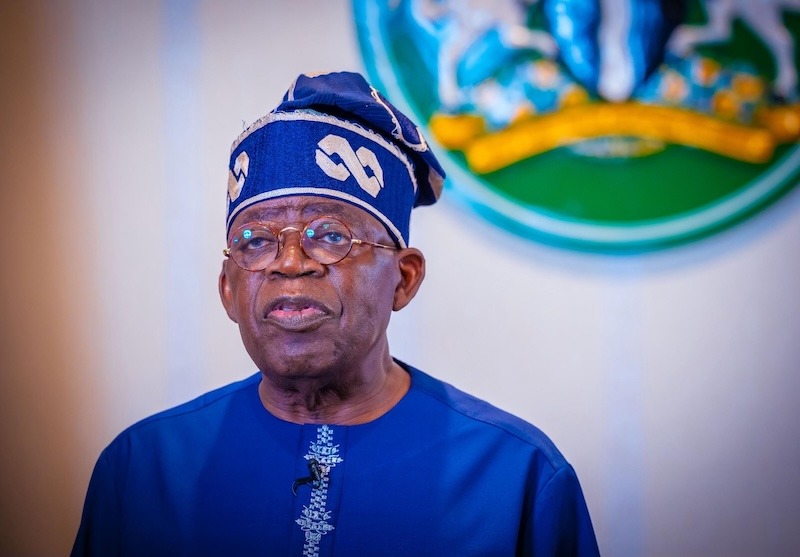
President Bola Tinubu has said Northern Nigeria will emerge as the biggest beneficiary of his administration’s economic reforms, arguing that the removal of fuel subsidies saved the country from deeper fiscal crisis and freed resources for infrastructure and productive investments.
Tinubu’s position was presented by the National Chairman of the All Progressives Congress (APC), Nentawe Yilwatda, who represented the President on Tuesday at the second edition of the Policy Roundtable organised by the APC Professionals Forum in Abuja.
The event, themed “The Asiwaju Scorecard Series,” focused on assessing the achievements and economic policies of the Tinubu administration.
Highlighting key economic indicators, the President said Nigeria’s gross external reserves had risen to about $52.7 billion as of August 2026, while real Gross Domestic Product (GDP) grew by 4.43 per cent in the second quarter of the year.
He also noted that inflation had moderated to about 15.4 per cent, linking the economic developments to his administration’s broader ambition of growing Nigeria into a $1 trillion economy by 2030.
Tinubu identified major infrastructure projects, including the Sokoto-Badagry Super Highway, Lagos-Kano rail corridor and the Ajaokuta-Kaduna-Kano (AKK) gas pipeline, as key projects expected to transform economic activities across the North.
“The biggest beneficiaries of this economy will be the Northern part of Nigeria, because they will now be trading with countries, trading with Niger, trading with Chad, trading with Burkina Faso, trading with Southern Sudan, trading with Northern Cameroon, trading with Central African Republic.
“The North is the next business destination of Nigeria,” the President said.
However, the President’s assessment has attracted mixed reactions from prominent regional groups.
The Arewa Consultative Forum (ACF) and the Middle Belt Forum (MBF) rejected the claim, arguing that the administration’s economic policies had worsened poverty, inflation and the cost of living in many northern communities.
The Northern Christian Association of Nigeria (CAN), however, backed the administration, saying Tinubu’s structural reforms and distribution of infrastructure represented an improvement over previous governments.
The APC leadership also criticised opposition proposals ahead of the 2027 general elections, particularly calls to restore fuel subsidies.
Dr Isa Yuguda, Chairman of the Board of Trustees of the APC Professionals Forum, warned that returning to the previous subsidy regime could reopen avenues for financial leakages and weaken the government’s fiscal position.
According to Yuguda, the funds saved through the subsidy removal are currently supporting programmes and projects including student loans, border security and regional transportation infrastructure.
He cautioned that reversing the policy could undermine the financial framework supporting these initiatives.