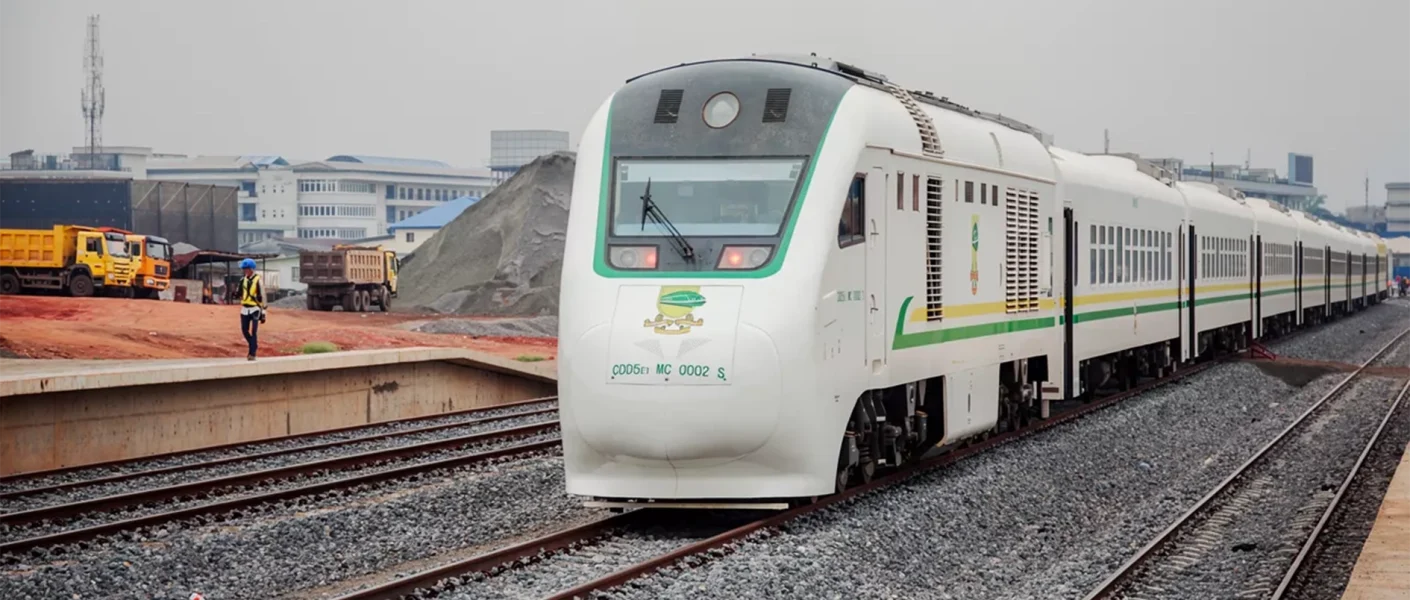
The Federal Government has announced plans to develop a high-speed railway connecting Lagos to Maiduguri, with trains expected to operate at speeds of up to 360 kilometres per hour.
Permanent Secretary of the Ministry of Transportation, Olufunso Adebiyi, disclosed this on Monday in Abuja at the opening of the 19th National Council on Transportation.
The four-day event, themed “Developing an Effective Transport System for Nigeria: The Role of Integrated Transportation,” is focused on strengthening Nigeria’s transport infrastructure and improving coordination among various modes of transportation.
Adebiyi said the proposed Lagos-Maiduguri high-speed rail corridor was part of the Federal Government’s broader strategy to reduce the country’s heavy reliance on road transportation by expanding rail, maritime and air infrastructure.
He described the railway sector as undergoing a “rebirth,” noting that several major corridors had been completed and were already operational.
Among the completed routes, he listed the Port Harcourt-Aba, Warri-Itakpe, Lagos-Ibadan and Abuja-Kaduna rail lines, while noting that work was ongoing on several other projects nationwide.
“The Kaduna–Zaria–Kano line is nearing completion and should open by December. The Kaduna–Daura–Katsina line is progressing, the Katsina–Jibia–Maradi link is targeted for next year, and work continues on Kano–Dutse,” Adebiyi said.
He also disclosed that the Federal Government had approved light rail projects for Lagos and Kano, with plans to introduce similar systems in other state capitals.
On freight transportation, the permanent secretary said the government was promoting rail freight to reduce the number of heavy-duty trucks operating on Nigerian roads.
According to him, the expansion of dry ports would allow containers to be transported closer to their final destinations, reducing road congestion, accidents and damage to highways.
Adebiyi further revealed that the Federal Executive Council had approved the establishment of a smart national transport data bank under a design-build-finance-operate-and-transfer model.
He said the centralised platform would contain information on drivers, vehicles, number plates and transport operators across the country.
The system, he added, would also introduce standardised manifests at motor parks to capture details of vehicles, drivers, passengers and destinations.
“It will also introduce standardised manifests at motor parks to record vehicle, driver, passenger and destination details,” he said.
Adebiyi explained that the system would strengthen the government’s ability to identify passengers involved in road accidents and track traffic violations.
“This means that anytime a vehicle has an accident anywhere, you can pick the manifest and know who is inside and for what purpose, and computerised plate numbers will also make it easier to track traffic violations,” he said.
The permanent secretary also disclosed that six standardised bus terminals had been approved as a pilot project.
He said the terminals would feature passenger waiting areas, information systems, police posts, vehicle inspection bays, mechanic workshops, restaurants and restrooms.
Transport operators, he added, would be required to comply with safety and regulatory standards, with sanctions imposed on those found violating the requirements.
In the maritime sector, Adebiyi said reconstruction and automation projects were ongoing at Nigerian ports as part of efforts to improve cargo handling, ease congestion and reduce transportation costs.
He noted that government investments in the transport sector were also generating employment, with about 9,000 young people currently engaged across two major projects.
According to him, about 4,000 youths were employed on one project, while another 5,000 were engaged on a separate project.
Adebiyi also cited the Federal University of Transportation as part of the government’s efforts to develop specialised manpower to support the country’s expanding transportation industry.
He said the administration’s long-term objective was to establish a seamless and integrated transport network that would enable the efficient movement of people and goods across road, rail, air and waterways.
According to him, an integrated transportation system would reduce logistics costs, improve safety, minimise the environmental impact of transportation and boost productivity across the Nigerian economy.