
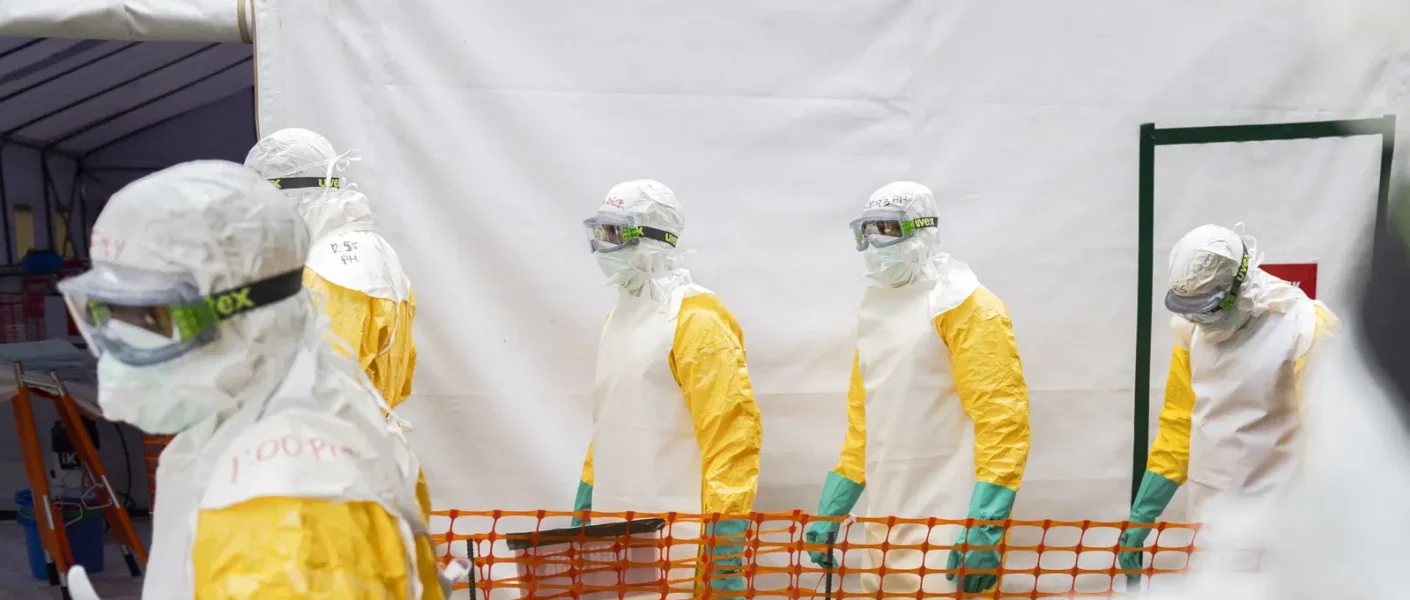
The Africa Centres for Disease Control and Prevention (Africa CDC) has reportedly raised serious concerns over a major Ebola outbreak, warning that African countries are not yet winning the battle against the deadly disease.
According to the report, the outbreak has resulted in 10,172 confirmed infections and 4,932 deaths, prompting urgent discussions among African health ministers on strengthening the continent’s response.
Africa CDC Director-General Jean Kaseya reportedly delivered the warning during an extraordinary meeting attended by more than 40 African health ministers.
Speaking about the reported scale of the crisis, Kaseya reflected on his decades of experience responding to Ebola outbreaks and the devastating impact the disease has had on affected communities.
“I have worked on Ebola outbreaks for more than 30 years. I have never stopped feeling the weight of each life lost,” he said.
He added that the latest figures showed the need for stronger and more coordinated action.
“Yesterday I stood before more than 40 African Ministers and said what the data tells us: we are not winning so far. 10,172 confirmed cases. 4,932 people are gone.”
According to the report, the outbreak was first declared in the Democratic Republic of the Congo (DRC) in May 2026 and involves the Bundibugyo species of the Ebola virus.
The DRC is said to be the worst-affected country, accounting for 10,141 confirmed cases and 4,928 deaths across eight provinces.
Other reported cases include 20 infections and two deaths in Uganda, as well as nine infections and two deaths in Kenya.
France and Nigeria have reportedly recorded one imported case each, with no fatalities in either country.
In Nigeria, the reported case involved a traveller who had recently visited Uganda and tested positive for Ebola on October 20.
The patient was subsequently said to have been transferred to Switzerland for specialised medical treatment.
According to the report, the Nigeria Centre for Disease Control and Prevention (NCDC) is monitoring 54 people identified as contacts of the infected individual.
African health ministers agree on stronger response
During the emergency meeting, health ministers reportedly agreed to improve preparedness across the continent, particularly in countries that have not recorded infections.
The proposed measures include strengthening disease surveillance, improving coordination between neighbouring countries and increasing monitoring at international borders.
Ministers also reportedly agreed on the importance of keeping commercial borders open while implementing stronger public health checks to reduce the risk of transmission.
Kaseya stressed that an Ebola outbreak in one African country should be treated as a warning for the entire continent.
“Ebola anywhere in Africa demands preparedness everywhere in Africa,” he said.
He also expressed confidence that cooperation between African governments and health institutions could help bring the outbreak under control.
“We will get there, together,” he added.
Lessons from previous Ebola outbreaks
The Africa CDC chief also referred to the devastating consequences of the 2014–2016 Ebola epidemic in West Africa.
That crisis caused widespread loss of life, disrupted education, separated families and placed enormous pressure on already vulnerable healthcare systems.
Kaseya cited estimates suggesting that approximately five million children experienced educational disruptions, while 23,000 lost one or both parents.
He also noted that the epidemic caused nearly $3 billion in economic losses.
“We already know what an uncontrolled Ebola outbreak costs,” he said.
“The data is hard to hear, but it is also our best chance to change course.”
The reported developments underline the importance of early detection, effective contact tracing, public health communication and cooperation between countries in responding to infectious disease outbreaks.